
Martín Vizcarra Faces Legal Scrutiny Amid Preventive Detention Request
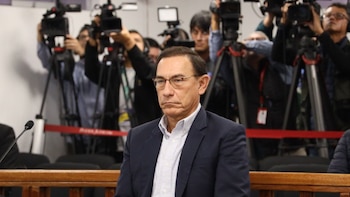
Martín Vizcarra, the former president of Peru, appeared in court on Tuesday as part of a significant legal proceeding questioning the request for his preventive detention. This hearing unfolds at a crucial juncture, where prosecutor Germán Juárez Atoche of the Lava Jato investigation team argues that the former leader poses a risk of escape due to the imminent conclusion of his trial.
With the case now in the hands of Judge Victor Alcócer of the fifth court of preparatory investigation, the matter weighs heavily on whether the arguments from the Prosecutor’s Office will be deemed sufficient for Vizcarra to face serious penalties.
During the proceedings, prosecutor Juárez Atoche asserted that Vizcarra lacks labor roots strong enough to prevent his departure from Peru, emphasizing that a travel ban will be in effect next week. He criticized Vizcarra for not respecting the directives set by the Judicial Branch, particularly highlighting his participation in political activities even with a prohibition against holding public office.
In response, Vizcarra dismissed the prosecution’s motives, labeling them a "majadería" and insisting that he has legitimate ties to the country through his involvement in his wife’s business.
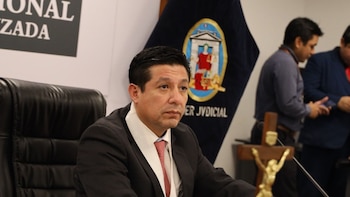
Notably, prosecutor Juárez Atoche had previously pursued charges against former president Ollanta Humala and his wife Nadine Heredia, leading to Humala’s imprisonment while Heredia sought political asylum.
As Vizcarra navigates through this legal storm, his situation becomes increasingly precarious. Criminal lawyer Benji Espinoza forecasts a strong likelihood of incarceration for the former leader, praising prosecutor Germán Juárez Atoche’s diligent work on the case.
In a recent interview, Espinoza remarked on the severity of the request for preventive detention, stating, “(Will Martín Vizcarra be imprisoned or not?) It raises the question of a preventive detention request.” He asserted that the necessity of such a measure stems from substantiated grounds rather than any abuse of legal proceedings.
The prosecutor’s case has been described as “consistent and solid” by legal analysts. Criminalist Carlos Caro echoed this sentiment, stating that the call for preventive detention is reasonable given the circumstances.
Caro explained that preventive detention is warranted only under two conditions: when there is a high probability of conviction or when a risk of flight or obstruction of justice exists. The prosecutor’s claim of a potential flight risk is highlighted by Vizcarra’s frequent travels within the country, especially seen in images devoid of state security personnel.
However, Caro cautioned that the argument of flight risk should be evaluated critically. He pointed out that security personnel are meant to protect individuals, not to prevent their travel entirely. Thus, he urged the court to consider the foundations of the prosecutor’s claims thoroughly.
The case of former president Vizcarra reflects a broader narrative within Peru, where political leaders often find themselves ensnared in the web of corruption charges. His fate now hinges on the judicial determination of proportionality in the context of the evidence provided. The ultimate decision holds significant implications not just for Vizcarra personally, but also for the integrity of Peru’s political landscape and the strength of its legal institutions.