
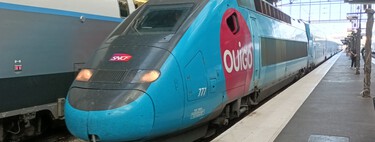
Since the introduction of competition in the Spanish railways, those who keep track of the latest developments regarding Spanish trains have been eagerly awaiting the quarterly report from the CNMC on high-speed rail in Spain, much like children anticipate the arrival of the Magi.
This time, questions have arisen concerning how Ouigo has planned its entry into the Andalusian corridor . The company has prioritized entering southern Spain rather than concentrating on its Madrid-Barcelona line.
And the numbers have spoken.
Lower Presence, Lower Prices, and a New Battle in Andalusia
The CNMC report reveals interesting insights about Ouigo’s strategies aimed at maintaining high occupancy rates while simultaneously lowering prices in new markets.
Earlier this year, Ouigo launched its new lines in Andalusia, providing service to major cities like Seville and Malaga, with stops in Córdoba . This initiative utilized double compartment trains that were initially meant for the Madrid-Barcelona route, as detailed in an article on electionomista.es.
The report indicates that Ouigo’s offered seats have decreased by 17.3% as they shift their resources toward these new corridors, impacting pricing directly.

The competition in the Madrid-Barcelona corridor is fierce. Ouigo has barely managed to surpass Avlo in terms of market share, claiming only 15.2% compared to 24.2% for Avlo and an overwhelming 47.1% for Renfe’s Ave . When combined with Avlo’s share, Renfe manages to transport six out of ten travelers on this route.
In contrast, Ouigo has reduced its market presence on this competitive line, where price sensitivity is less pronounced. Tickets remain significantly more expensive compared to other competitors. Notably, the average fare on the Madrid-Barcelona route reaches €61.92 , yet this is still the most popular option among travelers.
Recognizing that its core battle lies in markets with fewer travelers and greater price sensitivity, Ouigo has shifted focus to Andalusia in the first quarter of the year.
As a result, the average price for high-speed travel from Madrid to Málaga has dropped to €36.83 , representing a 17.2% decrease from the previous year. Ouigo’s average ticket price stands at €26.89 , making it the most affordable option in this segment. Similar trends are seen in routes to Seville , where ticket prices have fallen by 17.9% , averaging €39.30 , while Ouigo offers tickets for €29.09 on average.
Here, pricing plays a crucial role. For comparison, an Ouigo ticket from Madrid to Barcelona averages €36.56 , significantly lower than the €62 charged by Renfe. The steady market maturity in this corridor reflects a stabilization in prices, shown by a minor decline of only 0.9% .

However, in Andalusia, Renfe is feeling the pressure. As a result, its own ticket prices to Seville and Málaga are becoming increasingly competitive, closely aligning with Ouigo’s, with average differences ranging between €14 to €15 . This is a stark contrast to the staggering €25 discrepancies seen on the Madrid-Barcelona route.
Photo | Eric Salard
In summary, as Ouigo expands into new territories within Spain, the strategies they adopt and the market dynamics they face will be crucial in determining their success. The competition among rail operators continues to shape travel options and pricing strategies, benefitting passengers with more affordable and varied travel opportunities.