
The Impact of Trump’s Announcement on Oil Markets
A truce between Iran and Israel announced by President Donald Trump had an immediate impact on energy markets. According to the Financial Times, the price of Brent crude fell by as much as 5.6% on the morning of June 24, reaching $67.50 per barrel after news of the ceasefire.
However, market volatility did not cease throughout the day. Prices rallied partially after Israel accused Iran of violating the truce and threatened a “strong response.” By the close of the day, OilPrice data indicated that the price of Brent remained around $67. This fluctuation reflects how the oil market continues to be extremely sensitive to geopolitical headlines .
Market Dynamics Preceding the Announcement
Just less than two months ago, a “perfect storm” had driven oil prices below $60 due to tariffs, refinery shutdowns, and overproduction. The outbreak of conflict between Iran and Israel had caused oil prices to surge significantly. As Bloomberg explained, military offensives rekindled one of the market’s greatest fears: supply disruptions from Iran, the third-largest producer in the region.
Nonetheless, this spike was short-lived, with Brent briefly surpassing $80 per barrel only for a few hours. Traders detected no significant damage to critical infrastructures or disruptions in crude flows, causing expectations to cool rapidly.
The Threat from the Strait of Hormuz
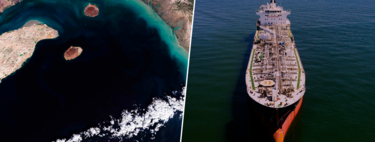
A persistent threat remains. Despite initial containment, the Strait of Hormuz continues to be a significant friction point. This narrow strait, only 9 kilometers at its narrowest point, is crucial as nearly 20% of the world’s crude oil passes through it. Iran has repeatedly threatened to close it if the situation escalates, which would trigger one of the worst scenarios for global markets.
This tension has prompted concrete reactions. Several Chinese oil tankers have been instructed to avoid the area, indicating that, although there is currently no open conflict, navigational risks are genuine and affect the logistical decisions of key players like China.
Why Prices Haven’t Escalated Significantly
A crucial difference exists today compared to previous crises. Despite the tensions, prices have not surged as they did in the past, attributable to structural factors like high production and ample reserves. The boom in shale oil production in the USA, along with increases from Canada, Guyana, and Brazil, provide a buffer in the global market. Even if Iranian exports—around 2 million barrels per day—were to stop, OPEC+ could likely fill the gap without significant disruptions, as stated by Bloomberg.
Additionally, the same source highlighted that even China , the largest consumer of oil in recent decades, is showing signs of reaching a peak in its demand, alongside its domestic production capabilities.
Factors Shaping Future Oil Markets
A fragile equilibrium characterizes the immediate future of the oil market, dependent on three major factors. The first, and most critical, is the Strait of Hormuz: if Iran decides to close—or credibly threatens to do so—this critical passage, prices could spike dramatically. The second is the response from the United States and Israel. Should the truce officially collapse or military reprisals intensify, a new cycle of uncertainty and market volatility would emerge. Finally, China’s position as the main buyer of Iranian crude plays a crucial role. Any decision from Beijing—be it a tactical withdrawal, increased transportation caution, or diplomatic pressure—could alter the current balance.
At present, traders seem to assume that the situation will remain contained without any real disruption in supply. However, with the environment so charged, a single spark could thrust oil back into the eye of the storm.
Image | Pexels
Xataka | Geography has given Iran its best weapon against the USA: a red button to shoot up global oil prices.