
Israel and Iran: A Fragile Ceasefire and Regional Tensions
Israel announced on Tuesday the end of its military offensive against Iran, which began on June 13, after accepting a bilateral ceasefire proposed by U.S. President Donald Trump. According to the Israeli government, it managed to neutralize the “dual threat” of the nuclear program and Iranian ballistic missiles. The government also warned that it would respond to any violations of the agreement.
Trump confirmed that the truce took effect at 04:00 GMT, urging both parties to show mutual respect. This announcement came after renewed clashes wherein Israel bombed northern Iran, resulting in nine fatalities, while Iran retaliated with missile attacks on Beersheba, claiming four lives. Air raid sirens sounded in Tel Aviv and other cities.
While Israel has confirmed its adherence to the ceasefire, Iran has not officially ratified the agreement. Iranian Foreign Minister Abbas Araqchi denied that any pact was signed but stated that Tehran would not continue its attacks as long as Israeli hostilities cease.
On the day prior, Tehran launched missiles at the U.S. Al Udeid base in Qatar, in response to a Washington-ordered bombing against three nuclear facilities in Iran. The international community is observing with caution to see if the truce will hold.
Below is the live coverage of the Israel-Iran conflict:
Israel Confirms No Attacks on Iran Following Netanyahu-Trump Call
Israel confirmed on Tuesday that it will refrain from new attacks against Iran following a conversation between Prime Minister Benjamin Netanyahu and U.S. President Donald Trump, who stated that the ceasefire between the two countries “is in effect” and must be respected.
“Following President Trump’s call with Prime Minister Netanyahu, the Israeli government refrained from conducting new attacks,” stated an official communication from the Israeli Prime Minister’s Office. However, the statement also noted that Iran violated the agreement at least twice, prompting a targeted response: the bombing of an Israeli Air Force radar system outside Tehran.
This declaration marks a gesture of restraint in a region of heightened tension, following several days of crossfire and mutual warnings. The Israeli government insists that its intervention was a proportional response to Iranian provocations, intending to maintain stability under the terms of the current ceasefire.
With or Without a Ceasefire, the World Drowns in Oil
Regardless of the conflict’s situation, the crude market continues to face oversupply
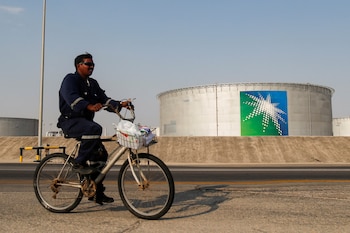
After the war, comes the hangover. While the hysteria surrounding the closure of the Strait of Hormuz gripped the oil market in recent days, the reality couldn’t be more different: a wave of crude from the Persian Gulf is heading towards a global oil market already facing oversupply, causing Brent crude to trade below $70 per barrel on Tuesday.
Israel Responded to Iran with a Symbolic Airstrike Following Ceasefire Violation
The Israeli Air Force carried out a limited strike against an Iranian radar system north of Tehran in response to the launch of two Iranian ballistic missiles towards Israeli territory. The strike, described by Israeli officials as “small” and symbolic, came just hours after a ceasefire between both parties commenced.
Most Israeli aircraft involved returned without incidents, military sources confirmed.
According to sources close to the Israeli government, the target of the raid was selected for its symbolic value, avoiding a large-scale offensive that could trigger a new phase of conflict.
Qatar Announced Legal Measures Against Iran Following Attack on U.S. Bases on Its Soil
Qatar will take diplomatic and legal measures against Iran after the Iranian attack on the U.S. military base at Al Udeid, located on its territory. This was announced Tuesday by Qatari Prime Minister Sheikh Mohammed bin Abdulrahman bin Jassim Al-Thani, marking a new point of tension in the Persian Gulf.
“The violation of Qatar’s sovereignty is unacceptable, and all necessary diplomatic and legal actions will be taken. We hope that this matter can be contained swiftly and that this chapter can be closed,” the Prime Minister stated.
Israel Promised to Respond ‘with Strength’ After Accusing Iran of Ceasefire Violation
The IDF intercepted over 15 Iranian drones overnight, although Tehran denies launching missiles after the ceasefire was announced by Trump.
Israel promised on Tuesday to respond “with strength” to what it termed a violation of the fragile ceasefire with Iran, after accusing Tehran of launching missiles and drones against Israeli territory just hours after the truce announced by U.S. President Donald Trump.
Donald Trump Urged Israel Not to Bomb Iran Despite Ceasefire Violation
Before heading to the NATO summit in The Hague, the President expressed his disappointment over the continuation of hostilities.
U.S. President Donald Trump demanded on Tuesday that Israel immediately stop its attacks on Iran, following mutual violations of the ceasefire announced by the White House. In a message posted on Truth Social, Trump wrote in all caps: “ISRAEL. DO NOT DROP THOSE BOMBS. IF YOU DO, IT WILL BE A SERIOUS VIOLATION. BRING YOUR PILOTS HOME, NOW! DONALD J. TRUMP, PRESIDENT OF THE UNITED STATES.”
Turkey Urged Iran and Israel to Respect the Ceasefire Announced by the U.S.
Grossi Urged Diplomacy and Proposed a Meeting with Iran
The Director General of the International Atomic Energy Agency (IAEA), Rafael Grossi, announced that he sent a letter to Iranian Foreign Minister Abbas Araghchi, aiming to arrange a meeting and revive nuclear cooperation amidst the new escalation between Iran and Israel. The proposal came shortly after the announcement of a ceasefire between both countries.
The ceasefire, however, was quickly undermined. Iran launched ballistic missiles at Israel, which responded with threats of retaliation. In this context, Grossi stated on social media that resuming dialogue between Tehran and the IAEA might pave the way for a diplomatic solution regarding Iran’s nuclear program.
Grossi reiterated that the IAEA’s role is both technical and diplomatic but warned that a lack of transparency and cooperation makes independent verification challenging. The initiative to resume contact aims to reactivate oversight mechanisms that have stalled in recent years amidst growing regional instability.
Oil Prices Dropped Following the Ceasefire Between Iran and Israel
The price of oil fell sharply following the announcement of a ceasefire between Iran and Israel, reducing tensions in one of the critical regions for global energy supply.
In the markets, the reaction was immediate. Brent crude fell by 2.9%, to $69.40 per barrel, while West Texas Intermediate lost 3%, trading at $66.48. Both contracts hit lows not seen since the second week of June. This drop follows a week when prices reached five-month highs, boosted by the risk of a military escalation between regional powers.
The reduction in geopolitical risk also affects production expectations. Iran, the third-largest OPEC producer, could regain export capacity if the conflict doesn’t interfere with its energy infrastructure. This explains, in part, the sharp correction in the market, which had built in a risk premium during high-tension days. According to analysts like Priyanka Sachdeva, compliance with the ceasefire will be crucial for price evolution.
Drone Attacks Targeted Military Bases in Iraq Amid Regional Tensions
The main targets were radar systems at Camp Taji and Imam Ali bases, both suffered “severe damage,” but no casualties were reported.
Iraq’s government announced on Tuesday the opening of an investigation following a series of suicide drone attacks that affected radar systems in at least two military bases. Although no fatalities were reported, authorities condemned the attacks as “cowardly and treacherous” and warned that they represent a dangerous escalation amid the regional conflict.
In this rapidly evolving geopolitical landscape, both optimism and skepticism are palpable regarding the sustainability of the ceasefire between Israel and Iran. The international community remains vigilant, hopeful that diplomatic efforts can pave the way for lasting peace and stability. The conflict’s repercussions extend beyond immediate military engagements, impacting the global oil market and regional alliances. As stakeholders navigate this complex scenario, a singular truth remains: lasting peace will require concerted efforts from all involved parties.
General News – 2