

Political Landscape in Buenos Aires: Kicillof vs. Kirchnerism
As Cristina Kirchner remains sidelined amidst significant political turmoil, the Peronist faction is gearing up for the upcoming elections, focusing heavily on the complexities arising from the recent judicial rulings against Kirchner. The political scene in Buenos Aires is witnessing renewed negotiations among various factions, particularly between the Kirchnerists and the provincial leadership under Axel Kicillof. This situation raises essential questions about the future direction of Peronism and its electoral strategy.
Kicillof’s assertive stance signals a willingness to engage with Kirchnerist representatives on equal terms, a marked shift from previous dynamics. Recently, he emphasized, “We are starting to design a table to discuss a joint list. This is a commitment,” underlining his determination to shape the negotiations. Such statements demonstrate Kicillof’s intent to assert his influence within the leadership, moving away from being perceived merely as a subordinate within the Peronist hierarchy.
The Intricacies of the PRO-Kirchnerist Coalition
On the opposing front, the PRO (Propuesta Republicana) is keen to negotiate terms favorable to its agenda, motivated by the potential benefits that may arise from engaging with La Libertad Avanza (LLA). One senior PRO leader candidly stated, “If we are granted some of the positions we are requesting, we will paint ourselves any color they want.” This reflects the urgency within the PRO to solidify its position ahead of the impending elections.
With the provincial elections set for September 7, the current negotiations have reignited with vigor, despite an earlier pause due to Kirchner’s legal challenges. The dialogue among the political heavyweights is crucial, given the stakes involved in crafting a unified electoral front. Notably, this new coalition is rumored to adopt the name “Peronism,” stepping away from the more divisive labels like Unidad Ciudadana and Frente de Todos, which have been associated with past elections.
Public Mobilization and Political Alliances
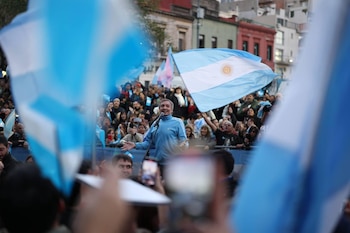
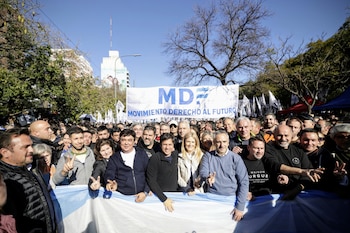
The recent mobilization in support of Kirchner serves as a demonstration of strength from the Frente Renovador, asserting the need for a cohesive front amid rising tensions. This show of unity was amplified by a highly publicized rally where Kicillof made appearances, further differentiating himself from La Cámpora, which has a substantial presence in the demonstrations.
The motif of “Solidarity yes, generosity no” has become a rallying cry among the mayors pushing for autonomy from Kicillof’s administration, highlighting their demands for greater independence within the framework of the upcoming elections. This infighting illustrates the delicate balancing act that the various factions must navigate in light of recent developments.
As the planning for electoral alliances begins — led by officials from both the Justicialist Party (PJ) and Frente Renovador, the intricacies of negotiation are crucial. The upcoming discussions are expected to bear significant importance as they set the stage for the electoral landscape just weeks before candidacies are finalized.
The Impact of Kirchner’s Absence
Kirchner’s absence from the political arena has shifted focus toward other key figures, notably Javier Milei, who is keen to capitalize on this vacuum. Polls indicate that public sentiment has largely remained stable despite the recent legal setbacks faced by Kirchner, suggesting that the political landscape may not dramatically change in the short term. Furthermore, the Casa Rosada is actively analyzing these implications and strategizing accordingly.
In the upcoming discussions, Diego Santilli, Cristian Ritondo, and Guillermo Montenegro will represent PRO in talks with LLA. Notably, Karina Milei is expected to play a crucial role in these negotiations, emphasizing the stakes involved for her party and the continuation of her political legacy.
With all eyes on the first electoral district, speculations surrounding potential candidates reveal a strategic pivot away from the traditionally contested areas of Peronism towards less antagonistic regions. The ongoing dialogues reflect a calculated effort by various factions trying to align their goals with the realities of the electoral map.
As negotiations continue and party alignments evolve, the focus remains on the future trajectory of Peronism in Buenos Aires and the broader implications for Argentina’s political landscape. The landscape is set for a defining electoral season as alliances are forged and the strategies begin to take shape.