

When one thinks of Australia , images of strange, sometimes dangerous animals come to mind. This image is both a playful exaggeration and a reflection of the country’s rich history. Ironically, Australia is often viewed through the lens of its British colonial past, particularly after Captain James Cook claimed the eastern coast in 1770. However, some historians propose an alternative narrative: that Australia was initially discovered by the Spanish .
The Misunderstood Year: 1606
The reality is that Britain didn’t discover Australia at all. The classical Greeks speculated about the existence of “Terra Australis Incognita” —or the “Unknown Southern Land”—long before the Europeans arrived. It wasn’t until 1606 that navigators began to explore this hypothesis in earnest. The Dutch sailor Willem Janszoon became the first European confirmed to make landfall in Australia, charting its northern coast.
A British Claim and a New Beginning
By 1770, Captain Cook arrived on the scene, exploring and claiming the eastern coastline for Great Britain . This marked the establishment of what we now know as New South Wales , and the British subsequently transported convicts to the region in 1788 , transforming Australia into a penal colony.
The Spanish Perspective
However, the narrative of Australia’s discovery may have deeper roots. Pedro Fernández de Quirós , a Portuguese explorer working for the Spanish crown, embarked on a journey in 1605 to find the fabled Terra Australis . After navigating through regions like modern-day Vanuatu and Tahiti, he believed he had found this elusive land and named it “Austrialia del Espíritu Santo.”
Lost at Sea: Navigational Tales
Quirós’ fleet split, and Captain Luis Váez de Torres set out to find the main ship. While traversing the waters between Australia and New Guinea , he returned to Espíritu Santo but never actually landed on the Australian continent. Nevertheless, the Torres Strait is named in his honor, and some historians, like George Collingridge , have suggested he unknowingly discovered Australia.
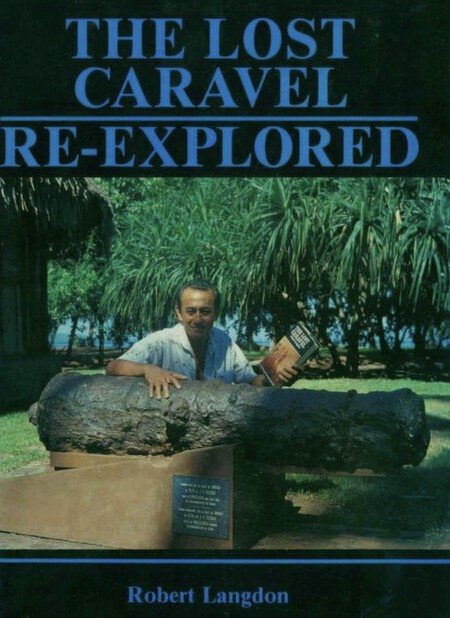
Robert Langdon’s Findings
Fast forward to the modern era, where Robert Langdon , an Australian historian, put forth the theory that the Spanish were indeed the first Europeans to arrive in Australia. He based his argument on the discovery of Spanish cannons in the Amanu Atoll , located between Australia and New Zealand. In his book “The Lost Caravel,” Langdon claimed these cannons belonged to the San Lesmes , a Spanish caravel that reportedly shipwrecked in the region, triggering exploration of the Oceanic territories.
The Architectural Connection
Another thread Langdon weaves into his theory is the existence of hórreos , traditional Galician structures used for storing grain. He speculated that these structures might have influenced architectural styles in Oceania, citing the patakas found in Polynesia, New Zealand, and Australia as similar. However, this claim is contentious, as such structures can be found worldwide and aren’t exclusive to Galicia.
Eucalyptus Trees: A Cultural Link
Langdon also pointed to the eucalyptus , an endemic Australian species found in Galicia. He claimed these trees were transported to Spain by 19th-century cargo ships, establishing a cultural connection between the two regions. Additionally, he noted the presence of Indigenous Australians with lighter skin and eyes, which he argued was indicative of some historical contact.
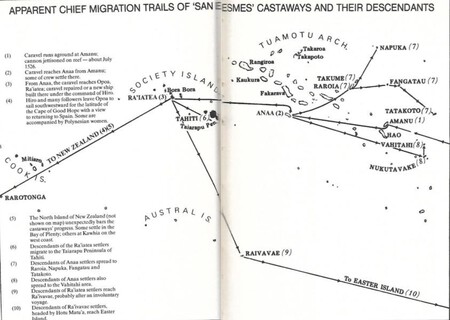
The proposed route taken by the descendants of the shipwrecked San Lesmes.
A Lack of Conclusive Evidence
Despite Langdon’s intriguing theories, the prevailing consensus among historians is that while the Spanish did make several voyages to Australia, it was the Dutch and British who conducted the most significant explorations and ultimately settled the continent. Despite the lack of evidence supporting Langdon’s claims, he is not alone; other theorists have come forth with alternative histories, claiming that various nations may have made earlier discoveries.
Even if Quirós had survived, some theorists humorously speculate that Australians might have been speaking Spanish and enjoying paella today. Yet, it remains undeniable that Indigenous Australians, with their rich cultures, inhabited the land for tens of thousands of years before any European arrived, and these encounters have forever altered their existence.