

Uncovering the Massive Data Leak: 16 Billion Credentials Exposed
A recent investigation by CyberNews has unveiled a staggering collection of 16 billion leaked passwords . While this revelation might seem alarming, it is important to note that this library isn’t a new mass data breach. Instead, it is a compilation of 30 large datasets that have been previously compromised. Should we feel relieved that this is “only” a rehashing of what has already happened?
Somewhat, but not completely.
This is not a new data heist . Although the researchers from CyberNews have not disclosed their sources, they indicate that this massive library consists mainly of “supermassive datasets containing billions of credentials.” These leaks—while old—may include data from users of major platforms like Google, Facebook, and Apple. However, CyberNews has yet to provide substantial evidence to support these claims. Notably, they mention that none of these datasets were previously discovered, except for one containing 184 million credentials mentioned in Wired last May.
However, it remains dangerous. Such a compilation can serve as a significant starting point for various cyberattacks. Given the sheer volume of data, it is highly likely that there are a significant number of duplicate credentials within this expansive database.
No recent data theft from Google, Facebook, or Apple. Although reports from CyberNews and Forbes suggest that these major platforms have had credentials exposed, any leaks would be related to historical data breaches —certainly not recent ones. If such breaches had occurred recently, these companies would be obligated to formally disclose these incidents, especially in the United States, where the SEC Form 8-K is used for disclosing significant events that affect their operations.
Should I be concerned? To some extent. It’s essential to be aware that these data breaches offer cybercriminals access to millions of user-password combinations across various services. This access could lead to account takeovers and serve as a base for further attacks. This threat is present every day, not only when a new security leak surfaces.
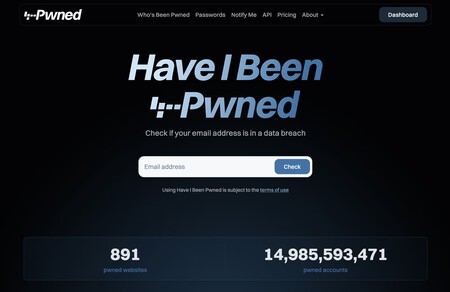
Have I Been Pwned is a useful service that allows users to check if their email addresses have been compromised in previous data breaches. Interestingly, the number of hacked accounts listed on this platform is nearly 15 billion , mirroring the figures mentioned by CyberNews.
Check if you’ve been hacked. There has been a straightforward method for years to check if your email and password have been exposed in any data breaches. The Have I Been Pwned service allows users to do this quickly. Upon checking, it is intriguing to discover that the database it works with features nearly 15 billion hacked accounts, closely resembling the figures reported by CyberNews, as if their new library essentially aligns with the database managed by cybersecurity expert Troy Hunt.
Take action accordingly. Once you enter your email, you may discover services where your account could have been compromised. In such cases, it’s crucial to change your password as soon as possible for those services and, if feasible, strengthen the security of that password. There are various methods to achieve this, such as creating a strong password , using a password manager , implementing two-factor authentication —which is highly recommended—or transitioning to passkeys if the service supports it.
Stay vigilant. The precautions we discussed should not only be taken after a breach occurs; they should be implemented beforehand. Prevention is better than cure, and it’s wise to regularly review the security of our online accounts, especially the most sensitive ones. Email accounts (like Gmail) are particularly delicate since they are often used to reset passwords across numerous services. Utilizing tools to verify the security status of our accounts can significantly reinforce them. For example, Google provides a security dashboard that users can access anytime to configure necessary settings and avoid potential threats afterwards.
In conclusion, the exposure of 16 billion credentials is a critical reminder of the ongoing threat of cyberattacks. Cybersecurity is not just about reacting to breaches; it’s about proactive measures and awareness. As individuals, we must take responsibility for our online security, utilizing the tools available to safeguard our data effectively.