
Changing Trends: British Tourists Seeking New Destinations
For many years, when a British family planned their summer vacation, they often had to consider dates, accommodation, which airline to choose, and what clothes to pack. However, the destination was typically not up for debate: they were heading to Spain . Particularly, the Mediterranean coast, the Balearic Islands, or the Canary Islands were favored for their sun, warmth, beautiful beaches, scenic views, and exquisite food . Recently, though, this once clear choice is less certain; a growing number of Britons are opting for slightly more southern latitudes , heading towards northern Africa instead.
The reason for this shift is straightforward: rising prices are prompting many to abandon destinations like Catalonia and the Balearic Islands for Tunis or Morocco .
Rising Costs. British tourists love Spain, and it’s easy to see why. Just a stroll through the sunlit streets of the Canary Islands, Catalonia, the Balearics, or the Costa Blanca demonstrates this enthusiasm. Recent data from Spain’s National Statistics Institute (INE) indicates that in 2024 , the influx of tourists from the UK rose by 6.6% , totaling 18.4 million travelers and enabling Spain to record nearly 94 million international visitors last year.
However, the influx of tourists is not the only figure on the rise; costs are increasing as well. The latest national price index reveals that accommodation costs in hotels, hostels, and pensions have significantly escalated—up 7% compared to last year. Looking further back, RTVE estimates that hotel prices have surged by more than 50% since the pandemic.
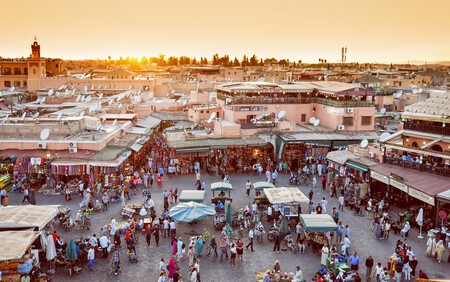
Looking to Northern Africa. With this background of rising prices, despite its strong appeal, more and more families in the UK are opting for alternative , more affordable holiday destinations. This has drawn their interest towards northern Africa, including countries like Egypt, Tunisia , and Morocco .
This trend was recently highlighted by the *Daily Mail*, noting that it’s not a new phenomenon. The travel sector has observed a steady response from British tourists to the price hikes in Spain and Portugal , leading many to look southward to northern Africa. In late 2024 , *Mirror* reported on families choosing to swap the Canary Islands for Egypt for their winter holidays.
A Surprising Statistic: 39%. Beyond the anecdotal reports from travel agencies, several statistics shed light on the growing interest in north Africa among British travelers. For instance, Booking has noted that between January and May, searches related to Tunisia increased by 68% compared to the same months in 2024 . In Egypt, the growth was 64% , and in Morocco, 39% .
This isn’t merely hypothetical planning; change is already underway. This summer, the platform TUI UK reported a 30% increase in reservations for Egypt compared to the previous year. Tunisia also saw double-digit growth in demand, with a strong uptick in interest for Morocco.

Increased Interest, More Flights. British airlines have swiftly recognized this interest and have begun enhancing their connections with the continent. This year, 19,847 flights are expected to depart from UK airports bound for northern Africa, more than double the 8,653 flights recorded before the pandemic. Connections to Spain and Portugal will also grow, but at a much slower rate—around 10% and 9% , respectively.
In this new context, Morocco has an added advantage: proximity. A British traveler heading to Alicante will spend about two and a half hours in flight. In contrast, reaching Cairo takes considerably longer, but the trip to Marrakech is under four hours.
Is There a Significant Price Difference? Yes. While traveling to Tunisia or Morocco involves longer flights, the cost of accommodation works in the travelers’ favor. EuroWeekly has calculated that a seven-night stay in Agadir costs around £889 per person, whereas similar Mediterranean packages in Marbella, Santorini , or Mykonos can range between £1,000 and £2,700 .
“There’s a growing trend, especially among families, toward more economical destinations,” stated Sebastien Ebel , CEO of TUI Group, emphasizing that more people are choosing to vacation in Egypt instead of the Canary Islands. Even at that time, EasyJet Holidays had reported increased demand for other African destinations, including Morocco.
Prices… and More. The inclination for more Britons to consider holidaying in Tunisia or Morocco instead of the Balearics or Canaries can be attributed to more than just price differences. Other factors are in play, such as the democratization of the travel market, with an increasing number of travelers seeking budget-friendly options while willing to explore alternatives if Spain doesn’t meet their financial constraints. “We often see new clients with lower incomes wanting to travel within an £800 budget,” Ebel observed.
Another crucial factor centers on what tourists find in Tunisia, Morocco, or Egypt: warm destinations rich in heritage, sun-kissed beaches, stunning landscapes, and competitive hotels that have improved significantly in recent years to offer quality comparable to what British travelers expect in Spain or Portugal. This new trend aligns with protests in certain areas of Spain, such as the Balearics or Catalonia, where residents are expressing fatigue over mass tourism .
Images | Heidi Kaden (Unsplash) and Calin Stan (Unsplash)
The north of Spain has been expressing grievances regarding mass tourism for years. Regions like Asturias are discovering the bitter consequences of losing their tourist base.