
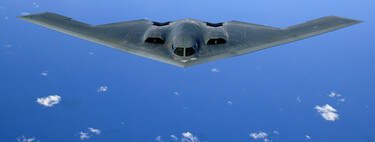
In recent headlines, Spain has become a focal point in the geopolitical landscape of military deployments, especially regarding the growing tensions between Israel and Iran . The strategic location of Spain offers it a unique position as a “technical stopover” for various military conflicts in which the United States has been involved. This military escalation brings into question Spain’s role and whether it can outright refuse the use of its air bases by U.S. forces.
Military Reinforcements from Spain. According to recent reports, the United States has significantly ramped up its military presence in the Middle East , utilizing key infrastructures in Europe, including Spanish bases . This was confirmed by Defense Minister Margarita Robles, who stated that Washington had begun to use the bases in Rota (Cádiz) and Morón de la Frontera (Sevilla) for parking tanker aircraft . This measure is part of ongoing bilateral defense agreements between the two nations.
Robles clarified that the deployment of these aircraft operates within the limits set by existing defense treaties. Specifically, the agreements allow for up to 15 refueling aircraft in Morón. However, international media like the BBC have reported that more than 30 KC-135 aircraft have arrived over the past few days, stationed throughout Spain, England, and Scotland.
Logistical Support for Fighters. The role of these tanker aircraft is strategic; they extend the operational range of combat aircraft such as the F-16 , F-22 , and F-35 , which the Pentagon has mobilized to the Persian Gulf region.
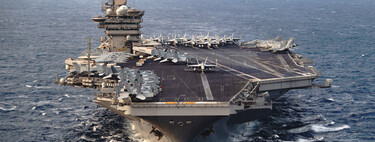
According to Reuters, this air reinforcement includes the deployment of an American aircraft carrier , showcasing a comprehensive combat capacity. While Secretary of Defense Pete Hegseth has emphasized that this deployment serves strictly defensive purposes , U.S. military sources confirm that these platforms have already been utilized to intercept drones and missiles launched by Iran in response to Israeli attacks.
Reactions in Spain. The use of Spanish military facilities by the United States has raised concerns within the Spanish parliamentary framework. The political party Podemos has lodged a series of inquiries in Congress, seeking explanations for the arrival of the tanker aircraft at Morón . Their letter expresses suspicions regarding the facilities being used as logistical stops to support military operations for Israel.
Podemos has also questioned whether the Spanish government was aware of these movements and whether it monitors their purpose. This raises ongoing debates about operational sovereignty and Spain’s indirect involvement in a high-intensity international conflict.
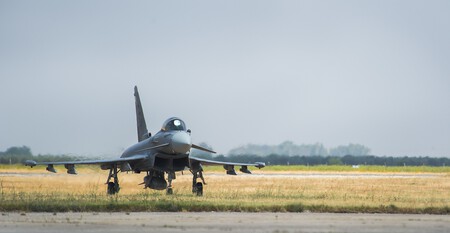
An Eurofighter Typhoon from Ala 11 in Morón in 2015
Legal Basis and Precedents. The current utilization of Rota and Morón bases by the U.S. falls under a strategic relationship that began in 1953 when Spain, then under the Franco dictatorship, signed the so-called Madrid Agreements . In exchange for military and economic assistance, the installation of American bases on Spanish territory was authorized. This initial network included bases in Zaragoza , Torrejón de Ardoz , Morón , and Rota , marking Spain’s first steps toward integration with NATO , which wouldn’t fully materialize until 1982.
The current legal framework for the shared use of Rota and Morón was established through the Cooperation Agreement for Defense signed on December 1, 1988, between the governments of Felipe González and Ronald Reagan amid the final stages of the Cold War. This treaty has been amended three times to adapt to evolving geostrategic and operational requirements.
According to the Ministry of Defense , the second amendment protocol fixed a validity period of eight years , expiring on May 22, 2021. However, an automatic yearly extension provision exists, allowing for continued collaboration unless one party expresses otherwise six months in advance. This process has continued, albeit with some exceptions.
Operational Limitations. While American jurisdiction applies in certain areas within the bases, Spain retains sovereignty and political control over their strategic use. The U.S. cannot utilize these facilities unilaterally and must seek explicit permission from the Spanish government, as stipulated in the agreement.
This principle remains intact, but it hasn’t created obstacles in previous military actions, such as during the Iraq and Afghanistan wars, where Spanish governments authorized unrestricted U.S. use of the bases. In 2021, Spain also allowed both bases to temporarily host Afghan collaborators during their evacuation from Kabul .
Military Presence. Under the treaty, the U.S. can maintain up to 2,200 military personnel , 36 aircraft , and 500 civilians at Morón, though the current contingent is closer to 600 personnel . In Rota, the allowed limit is 4,250 military and 1,000 U.S. civilians .
These figures indicate a gradual reduction compared to previous decades. In 2023, plans were confirmed to move the rapid response force for Africa from Morón to a base in *Italy*, highlighting operational retreats that directly impact the employment and economies of surrounding areas, which receive about two million euros annually from the U.S. presence.
Potential for Veto. To the pressing question: Could Spain deny the use of its air bases regarding the Israel-Iran conflict ? The short answer is yes. Historical precedents exist, such as the return of Torrejón in 1991 and Zaragoza in 1992. Moreover, in 1986, Felipe González’s government announced it would not automatically renew the treaty and demanded the withdrawal of U.S. F-16s from Torrejón, leading to their ultimate removal.
Hence, the lack of automatic renewal implies that the U.S. must vacate the premises if the Spanish government deems it necessary, a legal right proven throughout Spain’s history with NATO and U.S. agreements. This flexibility grants Spain the legal authority to deny specific operations involving Morón or Rota for refueling or supportive air missions.

The Delicate Balance. While Spain is not expected to engage in the Middle Eastern war , the arrival of U.S. tankers supporting Israel’s offensive raises substantial implications. The Spanish government’s position reflects a blend of caution and concern over the situation. Robles reiterated the extreme delicacy of the scenario, advocating for rapid de-escalation and a lasting peace agreement. However, the military coordination with the U.S., even though regulated by bilateral treaties, leaves Spain vulnerable to the unpredictable escalations of an intricate conflict.
Furthermore, the influx of additional air assets, the movement of stealth fighters, and the potential for U.S. preemptive strikes increase pressure on the Spanish government. It must balance its role in NATO , its relationship with Washington , and growing public unease regarding a palpable military involvement that is becoming increasingly evident on the runways of its air bases.