
As missiles fly through the air between Israel and Iran , the Israeli Air Force has confirmed a new strike on facilities near Tehran . According to their version, at least a couple of F-14 Tomcat fighters were among the targets. One of the available videos shows the impact on what would be one of the few units still in service, nearly half a century after being manufactured.
That a U.S. fighter jet retired in 2006 continues to fly in one of Washington’s primary adversaries is not a coincidence. The reason lies in the convoluted — and sometimes contradictory — nature of history.
A Purchase, a Revolution, and a War
The story of the F-14 in Iran begins in the 1970s. The Shah, still a strategic ally of the United States, decided to acquire dozens of Tomcat fighters for his air force, in a military package worth approximately 2 billion dollars. To facilitate this, he sent his pilots to train in California.
However, everything changed in 1979 with the Islamic Revolution. The relationship between Iran and the United States deteriorated rapidly. Ayatollah Ruhollah Khomeini ordered the arrest of many of those pilots and left the F-14s grounded. But the situation took a new turn in 1980, when Iraq invaded Iran. The authorities opted to free the aviators, leading to a race against time to reactivate a fleet for which there were no longer spare parts available.
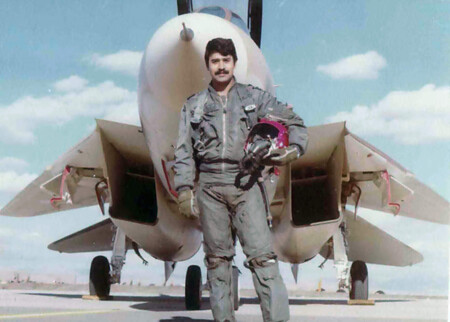
An Iranian pilot alongside an F-14
Maintaining an F-14 in flight is no easy task. Each flying hour required significantly more maintenance, and many of its components were impossible to manufacture locally. With no access to Western technology, Iran turned to smugglers, the black market… and surprisingly enough, even to the United States. During the 1980s, amid the Iran-Contra scandal, the Reagan administration secretly authorized arms sales to Tehran in exchange for the release of hostages.
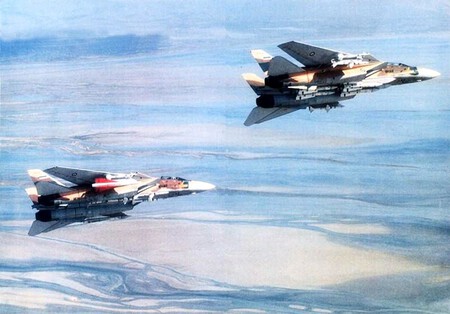
Iranian Tomcats equipped with multiple missiles in flight
Today, nearly half a century after that order from the Shah, the F-14 Tomcat continues to appear in Iran. There are no official figures regarding how many remain or how many are actually operational. Some have been spotted in parades, others in blurry videos. Now, according to Israel, at least two would have been destroyed in a recent strike near Tehran.
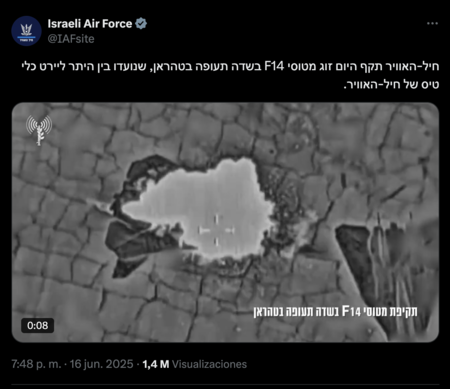
Israeli Air Force announcing the impact on Iranian F-14s with this publication
The continued presence of an F-14 in 2025 is not just a technical rarity. It is a reminder of how intricate history can be. A fighter designed for U.S. aircraft carriers, intended to confront the Soviet Union , and retired nearly twenty years ago, still plays a role — in one form or another — in one of the most serious military tensions of the moment.
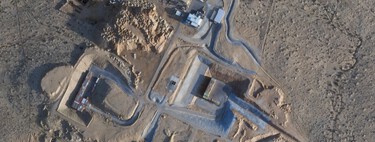
The Tomcat was a technological marvel. But it is also an improbable survivor: it shifted from ally to enemy, sustained by makeshift engineers, clandestine networks, and the very oversights of those who sought to ground it forever.
Images | Nasim News Agency | IRIAF | Shahram Sharifi | IIAF 2 U.S. Navy (via Wikimedia Commons)
In summary, the paradox of the F-14 Tomcat serves as an intriguing narrative reflecting the complexities of international relations and military strategies, illustrating how past alliances can transform into current hostilities.