

The Israeli-Iranian conflict is steeped in paradoxes, particularly when it comes to the issue of nuclear capabilities . For over three decades, Israel has warned that Iran is on the verge of acquiring nuclear weapons—a narrative often met with skepticism. Though Israeli officials like Benjamin Netanyahu have been vocal about this threat, with notable instances such as his infamous cartoon bomb presentation at the UN in 2012, the reality of Iran’s intentions remains questionable. Intelligence assessments from the U.S. and the International Atomic Energy Agency (IAEA) assert that there is no definitive evidence that Iran has made a decision to create a nuclear weapon.
Concern Over Iranian “Bombs.” It’s important to acknowledge that while Iran has enriched uranium to levels close to military-grade and possesses sufficient reserves to potentially produce several nuclear warheads, there is still no evidence of an active weapons program. Instead, Iran has become what experts call a “ threshold state ,” capable of producing nuclear weapons if it chooses to do so, but without crossing that threshold as of now.
Nuclear Concerns are One-Sided. As Israel intensifies its military operations to neutralize what it perceives as an existential threat (Iran’s nuclear program), it does so under the shadow of its own nuclear arsenal . This nuclear capability, while never officially acknowledged, is growing progressively more evident. The Israeli military’s objectives involve dismantling Iranian installations that experts suggest could enable Iran to develop nuclear weapons within a matter of months.
Paradoxically, Israel has maintained a strategic silence regarding its own nuclear program. Its diplomatic stance is intentionally ambiguous: Israel asserts it will not be the first nation to “introduce” nuclear weapons into the Middle East . This carefully crafted rhetoric not only embodies a cautious approach but also helps conceal a well-established and expanding nuclear capability.
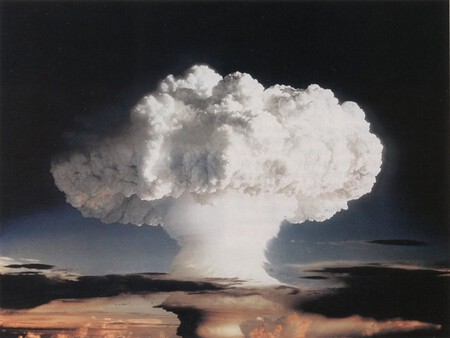
Fear from the Shadows. Reports suggest that Israel possesses at least 90 nuclear warheads ready for deployment, according to conservative estimates. Although it has the smallest arsenal among the nine countries recognized as nuclear powers, its delivery system is advanced, featuring ballistic missiles , modified fighter jets, and submarines equipped with nuclear-capable missiles, forming a robust deterrence triad.
Israel’s absence from the Nuclear Non-Proliferation Treaty (NPT) further emphasizes its unique legal standing. The NPT, which came into force in 1970, only recognizes five nuclear weapons states— the United States, Russia, China, France, and the United Kingdom —as having developed nuclear weapons before 1967. Any other nation joining must, in theory, renounce such arms. Israel’s avoidance of this commitment ensures it retains the strategic freedom to operate without international inspections or explicit limitations.

The Secret of Dimona. A crucial aspect of Israel’s nuclear program is Dimona , located in the Negev Desert . Established in 1958 with French support, this facility has been out of reach of any international monitoring since U.S. inspections in the 1960s. Declassified intelligence documents indicated as far back as 1960 that Dimona housed a plutonium reprocessing plant , indicative of military objectives. By 1967, Israel was suspected of developing nuclear explosives, and by the Yom Kippur War in 1973, the U.S. had accepted that Israel possessed nuclear bombs.
Over the decades, satellite images have documented significant expansions at Dimona , and more recent reports suggest that Israel may even be constructing a new reactor to enhance its plutonium production capabilities, essential both for nuclear weapons and certain peaceful applications.
Silent Deterrence. Unlike many countries that depend on the U.S. nuclear umbrella for protection, Israel has chosen to rely on its own nuclear deterrent. This strategic independence suggests that Israel not only has nuclear weapons but is ready to use them as a last resort if its existence is threatened. Although these weapons have never been employed in warfare, reports acknowledge their readiness during the 1967 and 1973 conflicts.
There is also speculation regarding Israel’s involvement in clandestine nuclear tests, notably during the Vela incident in 1979, which detected a double flash explosion near the Indian Ocean. While Israel denied involvement, records from President Jimmy Carter reflected strong suspicions of collaboration between Israel and South Africa for this covert test. Despite the lack of confirmed documents, the secrets surrounding these events continue to fuel speculation.
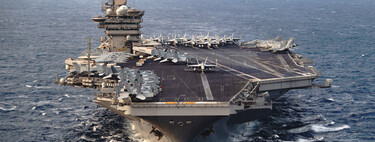
Strategic Logic. Despite its official opacity, the existence of Israel’s nuclear arsenal is tacitly accepted due to its exclusion from external protective measures. Experts interpret its exclusion from U.S. deterrence policies as a clear, albeit non-verbal, acknowledgment of its independent nuclear capabilities. This decision is deeply rooted in Israel’s philosophy that only it can assure its survival.
The New York Times has noted that this perspective stems from the foundational trauma of the Holocaust , articulated by Ernst David Bergmann , the former chairman of Israel’s Atomic Energy Commission, who stated that nuclear weapons were the only guarantee that “we will never again be led like sheep to the slaughter.” This principle continues to guide Israel’s nuclear doctrine: maintaining a sufficiently ambiguous capability to evade international reaction while retaining power to deter actual aggression.
Images | Planet Lab, The Official CTBO