
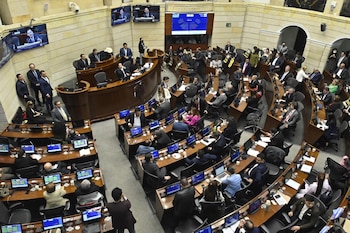
Political Turmoil in Colombia: Senate Rejects Popular Consultation 2.0
On the night of June 17, 2025, the Colombian Senate made a significant decision that stirred various reactions on social media by denying the Popular Consultation 2.0 initiative. This initiative, proposed by President Gustavo Petro, aimed to include additional questions regarding planned reforms, seeking the citizens’ votes to push these initiatives forward. The rejection marks another setback for the current administration, which seemingly anticipated the defeat.
With 52 votes against and only 2 in favor, the outcome was heavily influenced by the absence of members from the Historical Pact party during the vote—a strategic move by the interior minister Armando Benedetti intended to disrupt quorum. Consequently, the Senate dismissed the government-driven project, which sought to add four more questions to the already approved 12 inquiries from the first consultation. These new queries were aimed at potential modifications to the health care regime, bringing the total number of questions to 16.
The Controversy Behind the Vote
The voting process was rife with controversy. After the conclusion of discussions regarding the labor reform, where the government coalition celebrated notable victories, members of the ruling party opted to leave in what some described as a disgraceful retreat. Senator Juan Felipe Lemos from the U party criticized his colleagues, stating, “They ran out like vermin to avoid serving Colombia.”
Adding complexity to the situation was the national registrar, Hernán Penagos. On the same day as the Senate’s decision, he formally declined to organize the consultation initiated by decree from President Petro. Penagos indicated that the registrar’s office would await clarification from the high courts concerning the legality of the initiative.
Opposition Celebrates a Political Win
The opposition celebrated this latest resolution with the chant: “Fuerza Miguel,” a tribute to Senator and presidential hopeful Miguel Uribe from the Centro Democrático party, who is currently battling for his life in intensive care at Bogotá’s Clínica Fundación Santa Fe. This chanting resonates among governmental critiques as they monitor outcomes following the Senate’s rejection of the initial consultation back on May 14.
In the context of this ongoing power struggle, President Petro now faces increased challenges regarding his agenda, as the failure to ratify this popular consultation could deter future legislative efforts. The day’s events highlight the volatile political landscape in Colombia, where every decision can lead to significant repercussions across government and civil societies.
Public Reactions and Implications
Public reaction to the Senate’s decision has polarized Colombian society. Many citizens view the rejection as a blow to democratic engagement and a sign that the current administration may struggle to enact meaningful reforms. Critics argue that denying public consultation stifles essential discussions about labor and health reforms critical to improving citizens’ lives.
Conversely, proponents of the Senate’s decision argue that it preserves institutional integrity, preventing what they perceive as a rushed and flawed process. They see the efforts to organize a consultation as detrimental to the political system, emphasizing the need for clarity and thorough legal examination on reform proposals.
This political scenario showcases the deepening divide in Colombian politics, where coalitions shift rapidly and the influence of public sentiment remains crucial. With each proposed initiative, stakeholders must navigate through intense scrutiny, legislative negotiations, and unforeseen circumstances that can change the status quo overnight.
As the situation unfolds, observers will be keen to see how this decision affects President Petro’s future actions. With potential implications for the upcoming elections, how the government aligns itself with public sentiment in the face of adversity will be paramount. Will this recent set of events serve to galvanize support for Petro’s reform efforts, or will it lead to further isolation from segments of the electorate?
The political narrative surrounding the Popular Consultation 2.0 and its aftermath continues to evolve. As upcoming sessions unfold, stakeholders from various sectors remain vigilant, awaiting responses from the administration and the judiciary. This dynamic landscape underscores the delicate balance of power, public opinion, and institutional integrity, reminding us that the political climate is always in flux.
In conclusion, the Colombian Senate’s rejection of Popular Consultation 2.0 indicates a critical moment in the nation’s governance, prompting significant repercussions across various fronts. The evolving nature of Colombia’s political environment continues to pose challenges that might redefine the relationship between government and citizenry, shaping the future legislative landscape.