
How the AVE Transformed Travel Between Santiago de Compostela and Madrid
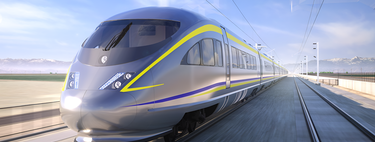
The arrival of the AVE (Alta Velocidade Española) in Galicia has significantly altered travel dynamics between Santiago de Compostela and Madrid. With the capability to reach the capital in just three hours, the AVE has become an appealing option for day trips. This development has had clear repercussions for air travel in the region, resulting in fewer available seats and increased prices.
Skyrocketing Airline Fares
Traveling from Santiago de Compostela to Madrid and back in a single day is now approximately four times more expensive by plane than by train. According to La Voz de Galicia, booking an early morning flight with Iberia can escalate to around 480 euros for a round trip when returning the following morning.
In stark contrast, booking an AVLO train ticket for an early morning departure at 5:47 AM and returning at 10:19 PM costs around 123 euros. This substantial price difference makes the train an economically sound choice for travelers.
Long-Term Trends
Not only does the disparity exist in the short term, but data collected by Xataka indicates that it persists over the long haul as well. Using Skyscanner to find the cheapest flight options, they discovered that on Tuesday, July 15, flying from Galicia to Madrid could cost as much as 217 euros for the earliest morning flight, regardless of whether travelers opt for Iberia or Ryanair. If one wishes to arrive an hour earlier, the price jumps to 311 euros with Iberia, and 395 euros with Vueling.
Those working in Madrid who wish to enjoy weekends back in Galicia are also feeling the heat. An early Monday flight with a return late Friday will set the traveler back at least 169 euros with a combination of Ryanair and Iberia. Traveling solely with Iberia raises costs to 240 euros.
Cost-Effective Train Journeys
For the same day on July 15, the cost of round-trip train travel from Santiago to Madrid is 76.40 euros on AVLO trains. For a longer stay, leaving on a Monday morning and returning on Friday evening costs only 98 euros. This starkly contrasts with the airplane’s minimum fare of 217 euros, proving the train is the more budget-friendly option.
Why Are Airline Prices So High?
The recent surge in airfares is attributed to Iberia transferring its route operations to Air Nostrum, which uses smaller planes. This shift has resulted in significantly fewer available seats, driving up prices and complicating ticket availability. Many residents of Santiago de Compostela, like Carlos García from Foro Cívico, express confusion over the change, pointing out that the previous direct Iberia flights to Madrid were often fully booked.
The Shift in Competitiveness
Air travel’s competitiveness has also suffered due to timing. Currently, the earliest Iberia flight arrives in Madrid at 10:35 AM, well into the workday, which diminishes the appeal for those needing to travel for work. The necessary logistics for airport travel only add to the time lost.
In contrast, the AVE offers direct service to downtown Madrid. The first train from Santiago departs before 6 AM and arrives in Madrid before 9 AM. A return trip on the last AVLO train at 8:23 PM makes it a more convenient choice for day trips.
Trains: The More Practical Option
Despite being theoretically quicker, the train has become the preferred transport mode for day trips to Madrid for business. The time lost to airport requirements, such as check-in and security, means that the actual travel time on the train is more efficient. Moreover, passengers benefit from internet connectivity while on the train, allowing for productive work, an option that is often limited on planes.
A Widespread Phenomenon
The Santiago de Compostela-Madrid route serves as a notable example of how high-speed rail can overshadow air travel. A similar phenomenon has occurred in China, where long-distance high-speed rail has resulted in declining airline revenues due to increased passenger preference for train service. The combination of superb connectivity and the convenience of city-center arrivals has made rail journeys the transport of choice for many long-distance travelers.
As air travel prices continue to climb and service diminishes, it seems the AVE has secured its place as the go-to mode of transport between Santiago de Compostela and Madrid for many passengers, ultimately reshaping regional travel for the foreseeable future.