
China’s Rare Earth Dominance: A Geopolitical Gunpowder Keg
The recent rare earth agreement announced last night reveals more than just a commercial truce; it unveils a powerful truth: China wields the most sophisticated geopolitical weapon we’ve encountered. This weapon has the potential to cripple entire sectors of any developed economy, akin to the subtle turn of a tap.
China now controls the entire ecosystem of rare earth elements. This control extends across:
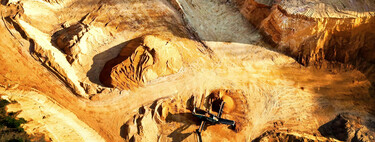
- The mines of Ganzhou
- Processing plants
- The required technical know-how
- Specialized workforce
Even the only U.S. mine, located at Mountain Pass, sends its raw materials to China for refining. This situation mirrors the difference between holding oil reserves and dominantly overseeing the world’s refineries. China has built a near-total monopoly over elements that serve as the lifeblood of the digital economy:
- Without neodymium, there are no wind turbines.
- Without dysprosium, there are no Tesla motors.
- Without terbium, there are no iPhone screens.
Deng Xiaoping foresaw this scenario in 1992, stating, "The Middle East has oil. China has rare earths." Three decades later, his prophecy has morphed from words into reality, marking our present landscape.
The striking irony is that the West has financed its own vulnerability. Over the past decades, American and European companies offshored the extraction and processing of "dirty" minerals to China, reveling in the profit margins that their specialization allowed. This dependency has come at a strategic cost.
The Evolution of Supply Chains and Vulnerability
Now, the very companies that created the supply chains aimed at maximizing efficiency are grappling with a bitter truth: they have also optimized their own vulnerability. In a practice that might be dubbed "civilized blackmail," China won’t fully turn off the spigot but will slow down the supply with bureaucratic hurdles. Companies face demands for forms, factory photos, client lists, and production details—each request serving not just as a bureaucratic impediment, but also as an invitation to industrial espionage.
When China negotiates, it does so from a position of strength. The agreement, lasting only six months, serves as a constant reminder of this power imbalance. Each Western company is now acutely aware that its production is dependent upon China’s goodwill. Should any geopolitical tensions rise, the resulting industrial blackout could be almost instantaneous.
Economic Interdependence as a Double-Edged Sword
The West is now awakening to the realization that economic interdependence can morph into a lethal weapon. China has demonstrated that in our technological era, controlling critical materials translates into control over the rules. As tensions escalate internationally, Western companies may be forced to reckon with whether they are prepared to pay the significant economic and strategic costs of reclaiming their mineral sovereignty.
The agreement reached last night merely postpones the inevitable moment of decision for Western nations. The question remains: how much longer will they tolerate this precarious dependency? China has convincingly won this round, and it possesses the strength and resources needed to triumph in future confrontations.
Conclusion
The intricacies of the rare earth element market have made it a focal point of geopolitical strategy, with China demonstrating a profound understanding of the elements that drive modern economies. As nations navigate this challenging landscape, the balance of power may continue to tip in favor of those who effectively control these vital resources. The posturing, negotiations, and supply chain intricacies surrounding rare earth elements will undoubtedly shape the future of global relations and technological advancements. Western economies must act decisively to safeguard their interests, lest they find themselves increasingly at the mercy of geopolitical maneuvers orchestrated by China.
