
Modern military aviation is saturated with advanced and sophisticated jet fighters, but the backbone of the United States Navy continues to rely on a reliable veteran: the F/A-18E/F Super Hornet. This multi-role combat aircraft, which began operations in 1995, has continuously received upgrades to maintain its relevance in a fast-evolving aerial battlefield. Among these enhancements is the IRST Block II, an advanced infrared search and track system designed by Lockheed Martin.
The IRST Block II is integrated into a modified central fuel tank and is priced at approximately $16.6 million per unit, according to a recent GAO report. Its primary function is to detect aerial threats from long distances without activating radar, enabling pilots to “see without being seen.” This feature becomes invaluable in scenarios involving stealthy enemy fighters, long-range drones, and in environments with severe electronic warfare threats.
Theoretical Leap in Tactics: Practical Problems Looming
Although the IRST Block II has reportedly undergone real-world operational testing, it faces significant challenges, particularly regarding its reliability. The same GAO report mentions that the system experiences failures on average every 14 hours of flight, while the minimum durability requirement from the Navy stands at 40 hours. This failure margin presents formidable obstacles in deploying the IRST Block II on a large scale.
During operational tests conducted between April and September 2024, the IRST Block II demonstrated unstable performance. A report by DOT&E revealed that the system encountered unexpected resets mid-flight, software glitches, and hardware failures requiring immediate engineering support from Lockheed Martin, suggesting that the Navy’s maintenance crew could not address these issues independently.
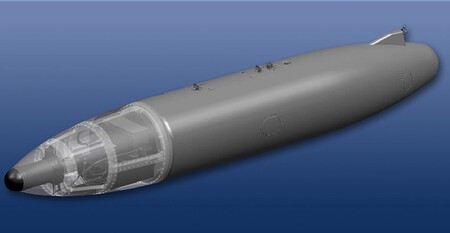
Failures extend beyond software issues. A prior 2023 GAO report highlighted that between 20% and 30% of the produced components failed to meet technical specifications. Concerns were raised regarding the microelectronic systems, cooling frameworks, and overall assembly quality of the pod. While some issues have been addressed, many remain, further complicating deployment.
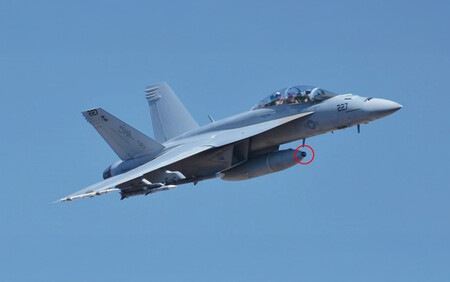
The timeline for the program has deteriorated year after year, with full-rate production decision delays pushing it further down the schedule. Originally set for early 2025, this delay poses serious implications. The IRST Block II is not merely an optional enhancement; it plays a pivotal role in ensuring that the Super Hornet remains competitive against contemporary fighter jets from adversaries like China and Russia.

Ironically, while the Navy is still striving to rely on its flagship sensor, the U.S. Air Force has already incorporated similar systems into its F-15 and F-16 fleets. Meanwhile, in Western Europe, the Eurofighter Typhoon has also adopted a comparable solution. The complications arising from carrier operations are proving to be a significant challenge for the U.S. Navy as it seeks to modernize its fleet.
As military aviation technology rapidly advances, the ironies and challenges faced by the U.S. Navy’s attempts to equip its older platforms with modern capabilities become more pronounced. The integration of the IRST Block II symbolizes both an aspiration and a struggle, reflecting the complexities of marrying legacy systems with cutting-edge innovations in the fast-paced realm of air combat.