

The Rise of Chinese Electric Vehicle Manufacturers in Semiconductor Development
In 2025, Chinese companies face numerous challenges. The nation is rapidly attempting to reduce its dependence on the United States, with the semiconductor industry emerging as a critical factor in this endeavor. The future will belong to those who dominate chip technology, and Xiaomi is stepping up to the challenge with its innovative chip, the XRing 01. This strategy distinctly contrasts with Huawei, which has faced restrictions from U.S. technology access. With support from TSMC, Xiaomi is positioning itself to carve out its niche in the competitive tech landscape.
Xiaomi’s Pioneering Move
Xiaomi is not just resting on its laurels. The company is diligently developing its own chips for electric vehicles, aiming to lessen reliance on firms like Qualcomm and NVIDIA. Other players are equally invested; for example, Xpeng has recently launched an SUV, the G7, featuring a processor designed by its own team.
Understanding the Xpeng G7
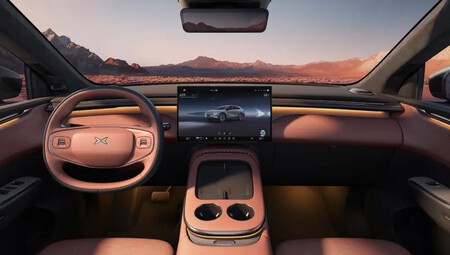
Before diving into the details of the chip, it’s essential to understand the vehicle it powers. The Xpeng G7 was unveiled as a direct competitor to the Tesla Model Y. With a sophisticated dual battery system providing a range of 702 kilometers (based on Chinese homologation cycles) and producing 292 horsepower, the vehicle stands out in a crowded market, especially with its integration of three Turing chips designed by Xpeng itself.
Innovative Chip Technology
The three Turing chips are named after the legendary computer scientist Alan Turing. Each chip reportedly triples the processing capacity of standard chips. Collectively, the three Turing chips offer performance equivalent to nine NVIDIA Drive On chips, a dominant player in the autonomous vehicle sector. Xpeng invested five years into the development of these chips, marking a significant technological leap in the EV market.
"There are so many different chips in a car that when we decided to create internal chips, we chose to tackle the most challenging one: the AI chip," said an Xpeng representative during the launch.
The combined processing power of these chips exceeds 2,000 TOPS (over 700 TOPS per chip), which is impressive compared to the 250 TOPS of NVIDIA’s Drive Orin chips released in 2022. This level of capability allows for potential Level 3 autonomous driving functions, although they are not yet activated.
The Significance of Domestic Chip Production
Xpeng’s strategy reflects a growing trend among Chinese electric vehicle manufacturers to develop domestic chips to mitigate dependency on U.S. suppliers like NVIDIA. Although specific details about the factory producing Xpeng’s chips have not been disclosed, it is widely known that there has been an exchange of talent between NVIDIA and Xpeng over the past few years.
Xpeng is also dedicated to developing its own software platform that integrates seamlessly with its advanced hardware, including LiDAR sensors, high-resolution cameras, and millimeter-wave radar systems featured in its lineup.
Collaboration and Competition in the Industry
Xiaomi is not alone in this venture. Nio, another major Chinese vehicle manufacturer, announced its first in-house intelligent driving chip, the Shenji NX9031, built on a 5nm architecture. Meanwhile, Huawei is also actively developing chips for brands like AITO, Luxeed, and Maextro.
What’s noteworthy is that both Xiaomi and Nio do not seem keen on forming partnerships with U.S. companies. The Shenji NX9031’s development reflects a strategic choice to minimize reliance on foreign technology for chip design while still utilizing external resources for manufacturing.
Expansion into European Markets
As part of its global expansion strategy, Xpeng recently introduced models such as the G6, G9, and P7 to Spain. This paves the way for the possible debut of the G7 in European markets. Xpeng is actively seeking factories within Europe to bypass tariff pressures and broaden its market presence beyond China.
By concentrating on local production and design, these companies are making strides not just in the electric vehicle sector but also in the broader semiconductor landscape. This aligns with China’s goal of technological independence and positions these manufacturers favorably in a fiercely competitive global market.
The movement towards domestic chip innovation among Chinese automakers signifies a shift in the industry, where local skill and technology may soon rival established Western companies, setting the stage for a new era in electric mobility and autonomous driving solutions. As these companies forge ahead, they not only enhance their prospects but also reshape the landscape of the global automotive market.