
A tragic incident involved a Boeing 787 Dreamliner operated by Air India, which crashed shortly after taking off on Thursday from Ahmedabad en route to London Gatwick. According to reports by Reuters, there were 242 people on board, and current estimates suggest that over 200 might have lost their lives. Rescue and identification efforts are ongoing, while an investigation has been launched, which may take months to complete. This accident has once again placed Boeing in the spotlight amidst ongoing scrutiny from previous incidents, especially concerning the 737 Max series.
A Key Model for Boeing: No Fatal Accidents Until Now
The 787 Dreamliner has been one of Boeing’s most significant technological investments in the 21st century. According to the company, it entered service in 2011 with All Nippon Airways and has since delivered more than 1,000 aircraft to airlines worldwide. Major airlines operating the model include Qatar Airways, British Airways, and Singapore Airlines, alongside Air India, which operates around 30 Dreamliners.
Aviation Safety Network records indicate that prior to the AI171 incident, the Dreamliner had not experienced any fatal accidents during commercial operations. This history bolstered its reputation as a modern, efficient, and reliable aircraft for long-haul routes. As reported by FlightGlobal, the aircraft involved was delivered to Air India in January 2014, amassing over 41,000 flight hours and nearly 8,000 takeoff and landing cycles, which is typical for its age.
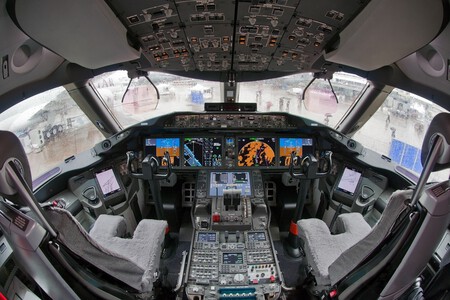
The 787 marked a turning point in the manufacturing of commercial aircraft. Boeing explains that it is the first model designed from scratch with a structure predominantly made of composite materials , such as carbon fiber-reinforced plastics. This innovative feature allows it to reduce weight by approximately 20% compared to traditional fuselages, resulting in lower fuel consumption and increased range.
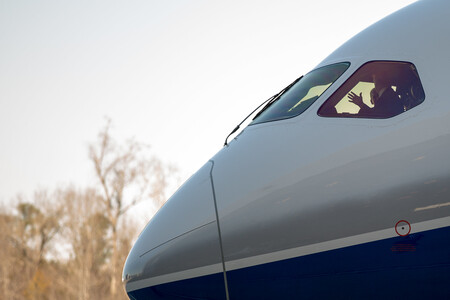
One notable feature of the 787 Dreamliner is its capability to be equipped with two types of engines , depending on the airline’s selection: the General Electric GEnx-1B or the Rolls-Royce Trent 1000. Both engines share key characteristics, including high bypass ratios, reduced fuel consumption, lower emissions, and advanced manufacturing technologies, such as the use of composite materials or 3D-printed components.
What We Know About the Accident So Far
The Air India flight AI171 departed from Sardar Vallabhbhai Patel International Airport in Ahmedabad at 1:39 PM local time, heading to London Gatwick. There were 242 individuals on board, including passengers and crew. Merely a minute after takeoff, the aircraft’s signal was lost in flight tracking systems when it barely reached 190 meters in altitude. According to the Indian Civil Aviation Authority, the plane did issue an emergency call (mayday), but there was no subsequent response.
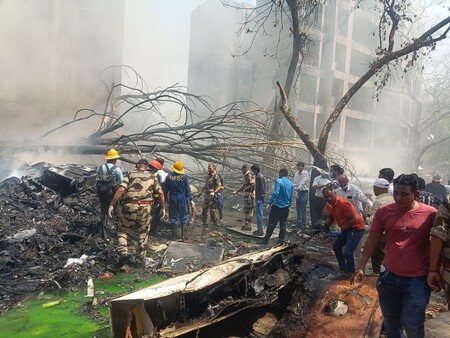
The aircraft crashed in the residential area of Meghani Nagar, west of the city, colliding with a building that served as a medical residence . Images released by authorities show the tail of the aircraft embedded in the structure.
As of now, authorities have confirmed the recovery of at least 200 bodies, with several injured individuals transported to local hospitals. Initially, there were fears of no survivors, but later reports indicated that at least one person survived: a British citizen, as confirmed by local media such as Hindustan Times.
Among the passengers were 169 Indian citizens, 53 British nationals, seven Portuguese, and one Canadian. Air India has activated an emergency assistance center and set up a support team for the families of those affected. Operations at Ahmedabad airport have been temporarily suspended.
Boeing’s Response as Questions Mount
In the wake of the accident, Boeing issued an official statement indicating that they are in contact with Air India and have activated their technical assistance protocols. “We are in contact with Air India regarding flight 171 and are ready to provide support,” the company stated. Boeing also expressed its condolences to the victims’ families and to personnel involved in the emergency response efforts.
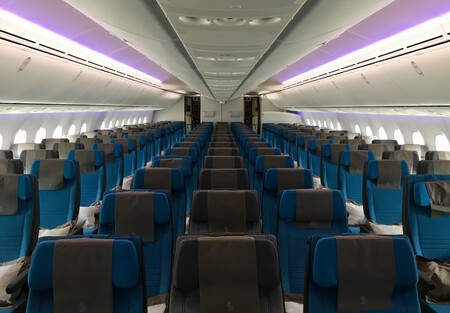
Up until now, the American manufacturer has not reported any fatal incidents involving the 787 in commercial operations. However, this crash occurs at a sensitive time for Boeing , which remains under scrutiny from regulatory agencies and the industry itself due to a series of problems linked to other production lines, especially the 737 Max.
Between 2018 and 2019, two fatal accidents involving that model (in Indonesia and Ethiopia) resulted in 346 deaths and led to a global grounding of the entire Max fleet. More recently, in January 2024, a door plug detached mid-flight from a 737 Max 9 operated by Alaska Airlines, reigniting concerns over the quality of manufacturing and internal oversight protocols at the company.

It is still too early to ascertain the exact cause of the flight AI171 tragedy. Investigations concerning accidents of this nature require time, technical analysis, and international cooperation . At this point, there is not enough evidence to assign accountability to either the airline or the manufacturer. The analysis of the black boxes will be crucial to understand what transpired in the final moments of the flight. Until then, any conclusions would be premature.
Images | Daniel Eledut | City of North Charleston | Edward Russell | H. Michael Miley (CC BY-SA 2.0) | CISF
Eb Xataka | Otto intends to break molds with the Phantom 3500: goodbye to passenger windows, hello to immersive screens.