
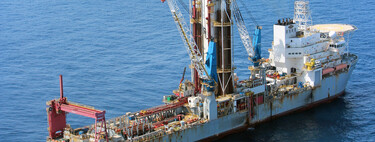
The New Frontier of Ocean Exploration: China’s Meng Xiang
In the realm of scientific exploration, the aspirations of legendary authors like Jules Verne in his novel “Journey to the Center of the Earth” remain tantalizingly out of reach. However, the exploration beneath the ocean floor is advancing at an unprecedented pace. This is exemplified by the ambitious new vessel recently launched by China, designed to reach incredible depths beneath the ocean.
Meng Xiang, which translates to “Dream” in Chinese, is a colossal ocean drilling ship , crafted entirely within China. It is engineered to penetrate the sea bed to a record depth of 11,000 meters . The primary goal of this project is to break through the Earth’s crust and reach the mantle—an area of geological intrigue that has only been studied indirectly until now—while simultaneously fostering new scientific endeavors and exploring alternative energy sources .
A Remarkable Vessel: Spanning 179.8 meters in length and weighing 42,600 tons , the Meng Xiang is now China’s largest scientific research vessel, positioning the country as a maritime superpower. Although the ship will focus on operations in the South China Sea until 2035 , its design allows it to operate in any ocean across the globe, enabling it to withstand super typhoons and the most extreme maritime conditions.
What Sets It Apart: The standout feature of the Meng Xiang is its drilling system —the world’s first hydraulic drilling tower capable of lifting up to 907 tons . This innovative design serves a dual purpose: to carry out drill explorations for oil and gas while concurrently extracting geological core samples for scientific research. Its deep drilling capacity will enable it to obtain direct samples from the transition zone of the Earth’s layers, an achievement reminiscent of the historic “Mohole Project” pursued in the United States during the 1960s, which laid the groundwork for ocean drilling but ultimately fell short of its target. The technologies and innovations aboard the Meng Xiang have the potential to achieve what the Mohole Project could not.
The Unexplored Frontier: Since Andrija Mohorovičić , a Croatian seismologist, discovered the boundary known as the “Moho” in 1909 , it has remained one of the most coveted frontiers in geology. This discontinuity marks the point where the lighter crust of the Earth transitions into the denser rocks of the mantle. Until now, our understanding of this crucial layer has been derived from seismic data and analyses of volcanic mineral samples. China’s initiative aims to combine scientific inquiry with resource extraction, propelling the country’s global standing in both domains.
What treasures may lie beneath? Besides exploring for oil, the Meng Xiang aims to seek out gas hydrates , a vast potential energy source trapped in the sea bed under high-pressure and low-temperature conditions. Mastering the extraction of these hydrates could dramatically shift the global energy landscape , in which China aspires to lead.
As the world watches, the Meng Xiang stands as a monument to human ambition and scientific ingenuity, emblematic of a future where the depths of our oceans might reveal secrets that we have only begun to imagine. With every inch of drilling, China not only furthers its scientific knowledge but also strengthens its position in the competitive energy arena, cementing its role as a leader in both exploration and extraction.
As nations around the world observe China’s latest breakthroughs in ocean exploration, the implications extend beyond mere scientific discovery. The Meng Xiang represents a substantial leap towards understanding the very foundations of our planet while simultaneously unlocking new avenues for energy resources that could reshape economies on a global scale. In the quest to tap into depths that promise untold treasures, the future of ocean exploration has never looked so bright and potentially transformative.