
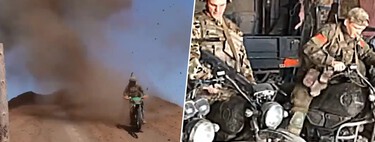
The Moscow-Pyongyang Connection: A New Axis in Military Collaboration
In early June, the nature of the alliance between Moscow and Pyongyang came to light. Reports indicated that North Korea had been sending weapons and soldiers to Russia in its invasion of Ukraine. In return, Russia was providing Kim Jong-un with what he desires most: a functional military . This alliance raises the fundamental question: what are the stakes involved?
The answer lies in Iran . According to General Kyrylo Budanov, the head of Ukrainian military intelligence, Russia has started to transfer critical technology to North Korea. This includes capabilities for producing long-range kamikaze drones and high-precision ballistic missiles . Consequently, Pyongyang is evolving into a key node in Russia’s war machinery, significantly altering the military balance in Asia.
Among the systems being shared is the ability to manufacture Shahed-136 drones , which are known as Geran in Russia. Originally designed in Iran, these drones are responsible for a significant portion of the massive aerial attacks on Ukraine. Currently, Russia produces around 2,000 Shahed drones monthly and plans to increase that number to 5,000 . Outsourcing production to North Korea allows Russia to maintain its offensive momentum without overwhelming its own industrial capabilities.
Equipping Pyongyang with this technology means that North Korea can potentially saturate South Korea’s air defenses or even re-export drones back to Russia for use in Ukraine, fostering a cycle of military collaboration that solidifies a new authoritarian bloc on the global conflict landscape.
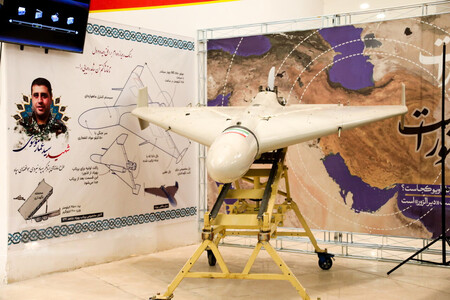
A Shahed 136 drone
The gains for North Korea extend beyond drones. Budanov detailed that Moscow has significantly enhanced North Korea’s ballistic missile capabilities, particularly with the KN-23 missile , also known as Hwasong-11 . Early models sent to Russia were ineffective due to poor accuracy and structural flaws. However, thanks to direct technical collaboration with Russian specialists, these missiles have been redesigned for lethal precision , carrying implications that stretch far beyond the conflict in Ukraine. The transfer of technology is also reportedly extending to long-range air-to-air missile systems and potentially, more alarmingly, submarine-based ballistic missile systems .
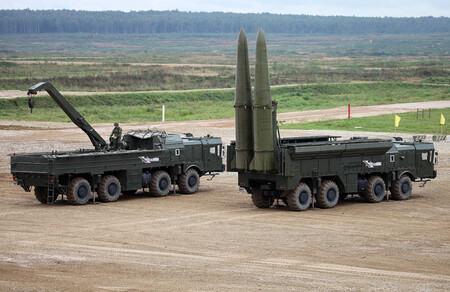
KN-23 missile
While Budanov refrains from revealing exact details, it is clear that the development of North Korea’s naval nuclear deterrent is being directly supported by Moscow. This significantly amplifies Pyongyang’s destructive potential and undoubtedly alters the strategic landscape in Northeast Asia.
In addition to technical support, North Korea has delivered a stockpile of artillery to Russia, including 122 mm D-74 howitzers and 170 mm Koksan self-propelled guns . These artillery pieces have proven to be both accurate and effective in the battlefield, with reports indicating that Russia has received 120 units , and further shipments are expected.
The commitment between these two nations is further evidenced by North Korea sending approximately 11,000 soldiers to the Russian oblast of Kursk. This affiliation extends beyond logistical support. An agreement reached during a visit to Pyongyang by Russian Security Council Secretary Sergey Shoigu allows for the entry of North Korean labor migrants to fill the void left by Central Asian workers, who are deemed vulnerable to Western influence.
Many of these “workers” may end up signing military contracts, effectively becoming North Korean soldiers serving Russia and expanding North Korea’s presence on the front lines without officially declaring it.
In this context, the strengthening of the Russia-North Korea axis not only addresses immediate operational needs but also serves long-term strategic interests. Moscow gains armaments, soldiers, and valuable time, while Pyongyang receives advanced technology, implicit diplomatic support, and an unprecedented opportunity to position itself as a military power beyond the Korean Peninsula.
The collaboration is rooted in a logic of mutual survival : while Russia seeks to sustain its offensive in Ukraine at all costs, North Korea gains access to sophisticated precision systems, operational nuclear armaments, and advanced drones, significantly boosting its threat capability, especially towards South Korea and other regional actors.
Consequently, the alliance signifies a fundamental shift in the dynamics of global power. It poses a significant challenge to established balances, as authoritarian actors share sensitive military technology to circumvent sanctions, accelerate their ambitions, and defy existing geopolitical norms. Thus, the battlefield in Ukraine transforms once again into a testing ground for a new military architecture that transcends its borders.
Image credits: National Police of Ukraine, Presidential Executive Office of Russia, Mehr News Agency, Vitaly V. Kuzmin
This development indicates that North Korea is not merely a military ally in Russia’s offensive but a strategic partner reshaping the military landscape, raising alarms among global powers.