

The New Ecuadorian Intelligence Law: Key Aspects and Implications
The Ley Orgánica de Inteligencia de Ecuador officially went into effect this Wednesday after its publication in the Registro Oficial. The law was approved by the National Assembly with 77 votes in favor, sufficient for its adoption. This legislation creates the Sistema Nacional de Inteligencia, and it has faced opposition from various sectors, claiming potential violations of fundamental rights.
The government of President Daniel Noboa promoted this law as part of a broader security strategy aimed at dismantling criminal organizations operating within the country. This initiative comes in response to a surge in violence that has placed Ecuador among the nations with the highest homicide rates in the region. Noboa declared a state of "internal armed conflict" in January 2023, reflecting the country’s dire security situation.
Controversial Provisions of the Intelligence Law
One of the most contentious aspects of the law is the authority it grants to intelligence agencies to request access to citizens’ information from telecommunications companies. This includes historical and real-time data on communications, connections, device locations, and any other data that aids in identifying and locating individuals.
The law specifies that such requirements must adhere to the principles of necessity and proportionality, ensuring they are not applied arbitrarily. Despite this, skepticism remains regarding the potential for abuse of these powers.

Currently, the law requires that phone taps necessitate a judicial order, although specifics will need to be detailed in the yet-to-be-released regulatory framework.
Another hot-button issue is the legal allowance for intelligence agents to use false identities during their operations. The law asserts that agents can utilize aliases without facing legal repercussions.
Structure of the National Intelligence System
The Sistema Nacional de Inteligencia will comprise seven subsystems covering various sectors such as police, military, financial, presidential, tax, customs, and penitentiary. All systems will be coordinated by a central authority, which will also have the power to issue internal regulations governing their activities.
Moreover, this system will have a budget for “special expenses” with reserved characteristics, free from taxation and public procurement regulations. Only the Contraloría General del Estado will have the authority to audit this budget, following procedures to be defined in the law’s regulations.
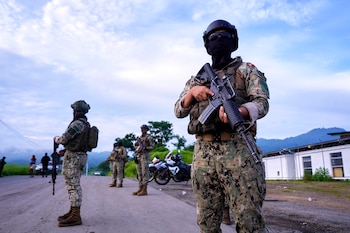
The executive branch defended the law’s approval as a crucial step in bolstering the state’s response to organized crime. Legislative support came from factions aligned with the government and parts of the Pachakutik movement, along with several independent legislators.
The law’s implementation occurs within a national security emergency context. Official data suggests that Ecuador recorded over 8,000 homicides in 2023, with authorities identifying drug trafficking organizations as the primary culprits behind the escalating violence.
In conclusion, the adoption of the Ley Orgánica de Inteligencia is a significant development in Ecuador’s ongoing battle against organized crime. While touted as a necessary measure for enhancing security, it raises critical questions about civil liberties and the potential for overreach in the use of intelligence. As the implementation process unfolds, the balance between security and fundamental rights will undoubtedly be a pivotal area of scrutiny for both lawmakers and citizens alike.