
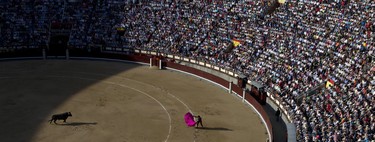
Morante de La Puebla: A Historic Event in Las Ventas
On the past Sunday, Morante de La Puebla participated in the traditional charity bullfight in Las Ventas, Madrid. The excitement among the attendees was palpable as it was considered a historic milestone: the matador opened the Puerta Grande of the plaza for the first time, cementing his status as a leading figure in contemporary bullfighting . However, it also confirmed that bullfighting is no longer the popular entertainment of decades past, but rather a cultural artifact appealing to a specific niche of conservative youth .
The “Moranties” Phenomenon
Morante de La Puebla is regarded as one of the most important bullfighters today, which makes his success somewhat unsurprising. However, what has drawn attention is the remarkably young demographic of his followers. A viral video, posted by Las Ventas’ own account, showcased fervent supporters rushing towards the Puerta Grande . This resulted in a tumult that caused traffic jams, prompting police to visit the matador at his hotel to request identification and explanations.
The fervor of the youth was so intense that they attempted to carry the bullfighter on their shoulders back to his hotel, two kilometers away from Las Ventas, which would have necessitated blocking a main artery in Madrid, Calle Alcalá . This serves as just the latest sign of youthful passion for the national celebration .
The Cayetano Power
This enthusiasm aligns with the broader claims of the “cayetana” youth movement, who have embraced the national festival through a rightist lens. These young individuals do not shy away from identifying with a conservative ideology , effectively taking bullfighting into the realm of identity politics. Recent events with Morante clarify the prevailing codes: they transform bullfighters into rock stars, intertwining fun and ideological combat with a spectacle that they understand carries controversy.
Pop Culture Meets Tradition
This youthful crowd, although not monolithic, consists of various social strata and activist intentions, similar to their adult counterparts. They are reclaiming beliefs that were previously seen as taboo for their age, such as Catholicism . Groups like Hakuna have risen to massive pop phenomena, while they also worship a pantheon of modern idols , blending kitsch and provocation, including figures like Victoria Federica and Tamara Falcó.
A Political Weapon
Recently, bullfighting has turned into a political weapon wielded between factions, contrary to traditional norms. Conservative parties defend bullfighting as a tradition tied to Spanish values , while leftist factions advocate for its abolition. In 2023, a debate arose regarding whether bullfighting should be included in the Cultural Voucher program, providing 400 euros for young people’s cultural expenses. The Supreme Court ultimately mandated that Minister Miquel Iceta include bullfighting in the voucher .
Ten years prior, while the PP was in power, bullfighting was regulated with a National Award of 30,000 euros, effectively recognizing it as a cultural asset. Conversely, leftist parties have tried for years to counter this recognition. In 2024, the coalition Sumar eliminated the National Bullfighting Award, provoking a backlash from the PP and various conservative regional governments, which created alternative awards to reinforce institutional support for bullfighting.
In 2025, almost 664,000 signatures compelled Congress to debate whether to remove the legal protection of bullfighting as a cultural heritage. The prohibition or regulation of bullfighting would now be under regional jurisdiction, turning the spectacle into a mere cultural war. This division is evident in voting patterns, with only 5.2% of PSOE voters supporting bullfighting, while 58% of PP and 61% of Vox voters stand in favor.
Is It That Important?
Although bullfights are increasingly popular on social media, the attendance figures are waning. Between 2010 and 2013, the number of bullfighting events decreased from 16,698 to 15,883 , touching historic lows during the pandemic. However, there has been a recovery: in 2023-2024, over 6.2 million spectators attended more than 20,950 events , marking the highest figure in fifteen years. It’s essential to approach these statistics cautiously, as they encompass grand corridas as well as popular festivities like encierros and vaquillas .
Despite initiatives like “streaming bullfights” failing to take off, it’s evident that there’s a renewed interest among youths towards bullfighting. Yet, as with many traditional celebrations, the data remains ambiguous, as the events vary widely in nature.
From Entertainment to Reclamation
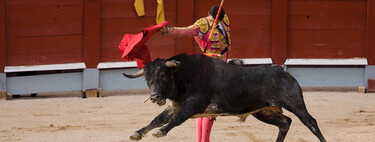
A look into the history of bullfighting reveals its fluctuating public perception from its origins. The earliest reference in Spain dates back to 1080 , initially associated with entertainment for the nobility during the Middle Ages. Despite clashes with the Church, notably in 1567 when Pope Pius V threatened excommunication for supporting bullfights, it remained tied to power through centuries, with kings like Philip III and Philip IV being ardent fans. Over time, the release of bulls in streets and squares led to celebrations such as toros de fuego and toros embolados .
Nonetheless, bullfighting remained a noble pursuit until King Philip V prohibited it, relegating the spectacle to common folk who embraced it as a brutal entertainment, with many bullfighters being butchers or slaughterers. Ironically, the spectacle faced opposition from enlightened monarchs like Carlos III , who banned bullfighting in 1778 , yet later kings like Fernando VII reinstated it, responding to the growing economic interests tied to livestock and bullfighting venues.
In the early 20th century, various reforms softened the spectacle, protecting horses from the brutality seen by audiences, finally enabling modern bullfighting that appealed to a broader public.
Despite the ongoing debates and controversies, the interest toward bullfighting remains strong among a younger demographic. Cultural and political affiliations continue to shape the narrative, crafting a complex yet fascinating aspect of contemporary Spanish life.