
Dr. Saurabh Sethi, a gastroenterologist, recommends quickly discarding two risky kitchen utensils to avoid serious health issues.
How often do we purchase kitchen utensils without giving them much thought, drawn in by a seasonal offer or an appealing design? However, some items that we use daily to prepare our meals pose grave risks to our health. It’s not just about what we eat, but also how we prepare it. From black plastic kitchen tools to non-stick pans, some of these products can release toxic substances or contain hazardous materials . A gastroenterologist warns us about two of these utensils. Let’s find out which ones to avoid.
Among the kitchen utensils to eliminate are plastic cutting boards
When contemplating the harmful substances we face daily, household cleaning products often come to mind first. Nonetheless, they are not the only elements that could endanger our health . According to an article published in British press and relayed by the website TOP Santé, Dr. Saurabh Sethi strongly urges readers to swiftly remove two kitchen utensils that could be serious health hazards.
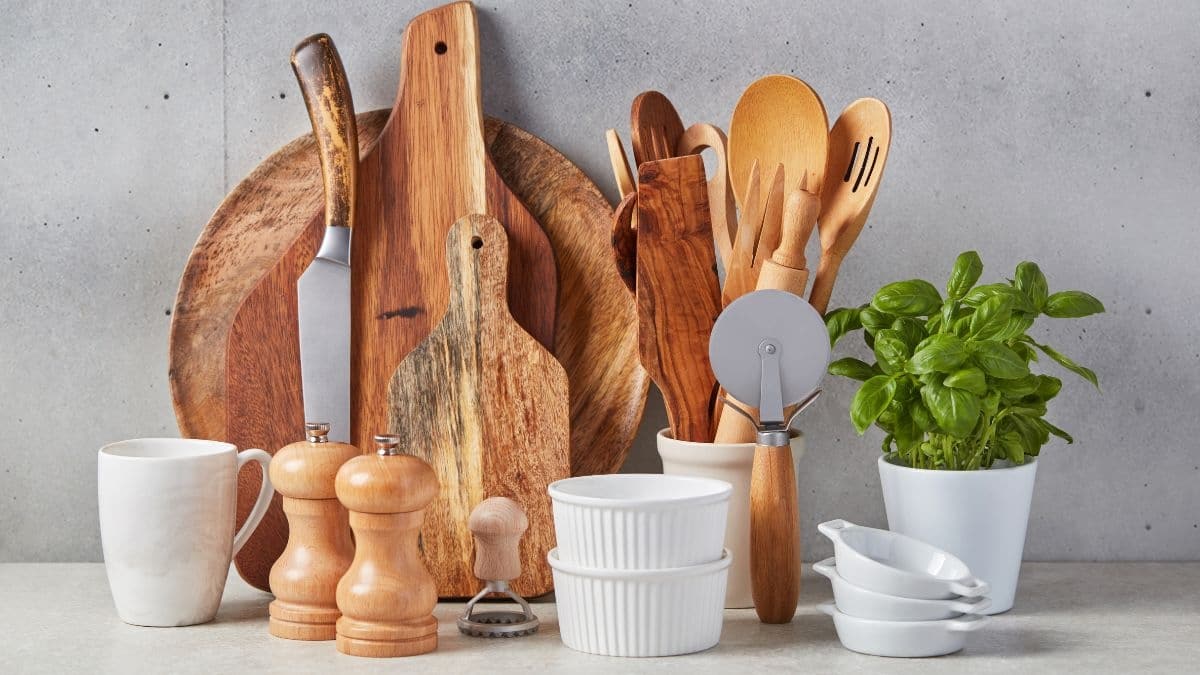
Dr. Sethi states that one of the kitchen utensils to avoid is plastic cutting boards. “They can degrade over time, releasing microplastics into your food. These can accumulate in the body. Opt for a wooden board to minimize risks,” the doctor explains, as reported by TOP Santé.
Exposure to microplastics can provoke inflammation, respiratory issues, and autoimmune diseases. It may also increase the risk of certain cancers, particularly bladder cancer . Furthermore, recent research published in the journal Applied and Environmental Microbiology also indicated that microplastics, less than 5 millimeters, could contribute to the alarming rise of antibiotic resistance.
No dishwasher!
If you’re considering purchasing a wooden cutting board for your health, absolutely avoid putting it in the dishwasher! “Prolonged exposure to water, along with the associated heat, can cause warping and cracking,” stated Henry Liu, founder and CEO of Cangshan Cutlery Company, in an interview with Eating Well.
To clean it, you can use baking soda or a mixture of coarse salt with half a lemon or apple cider vinegar . For tough stains, hydrogen peroxide is a good option. A fine-grit sandpaper can also help polish the embedded marks on your board.
Beware of non-stick pans!
According to Dr. Sethi, non-stick pans that are scratched or chipped are also among the harmful kitchen utensils. “They contain PFAS, linked to high blood pressure, cholesterol issues, and reproductive problems,” cautions Dr. Sethi.
PFAS (per- and polyfluoroalkyl substances) are a group of chemicals that carry numerous health risks. They are now recognized as endocrine disruptors, tending to accumulate in our bodies and disrupt hormonal functions.
Additionally, according to the doctor, these substances have been associated with obesity, certain hormone-dependent cancers, such as those of the testes or kidneys. They may also weaken the immune system’s effectiveness against vaccines and can influence fetal development during pregnancy.
These compounds are often found in Teflon non-stick pans. If you examine the color of your pan’s inner surface, a black coating might indicate the potential presence of carcinogenic substances .
If your pan is in good condition but you have doubts about its composition, checking the list of materials or components in the coating can be beneficial. Manufacturers are increasingly indicating whether their products are free of PFAS or PFOA (a subcategory of PFAS).
Therefore, for your kitchen utensils, look for labels like “PFOA-free,” “PTFE-free,” or “PFAS-free.” If this information is not clear on the packaging or online, don’t hesitate to contact the manufacturer directly for more details.
Source: Top Santé