
| IN BRIEF |
|
The field of robotics is witnessing remarkable advancements, thanks to innovations like the Tron 1 from LimX Dynamics. This bipedal robot is not just another technological marvel; it showcases an impressive ability to adapt to various environmental challenges. The latest video released by the company features Tron 1 successfully accomplishing a unique mobility challenge inside a moving truck, generating much interest and admiration for its advanced capabilities. This feat highlights the growing potential of humanoid robots in real-world applications.
Tron 1: A Dynamic Robotic Challenge
Launched last year, the Tron 1 robot serves as a sophisticated research and development platform for engineers and researchers in humanoid robotics. With interchangeable foot limbs, it can be tailored to different walking styles and terrains. Its adaptive motion control system recognizes material changes and automatically modifies its software configuration, thus ensuring smooth operation in diverse mobility conditions. Due to its versatility , Tron 1 has found applications in numerous mobility research projects.
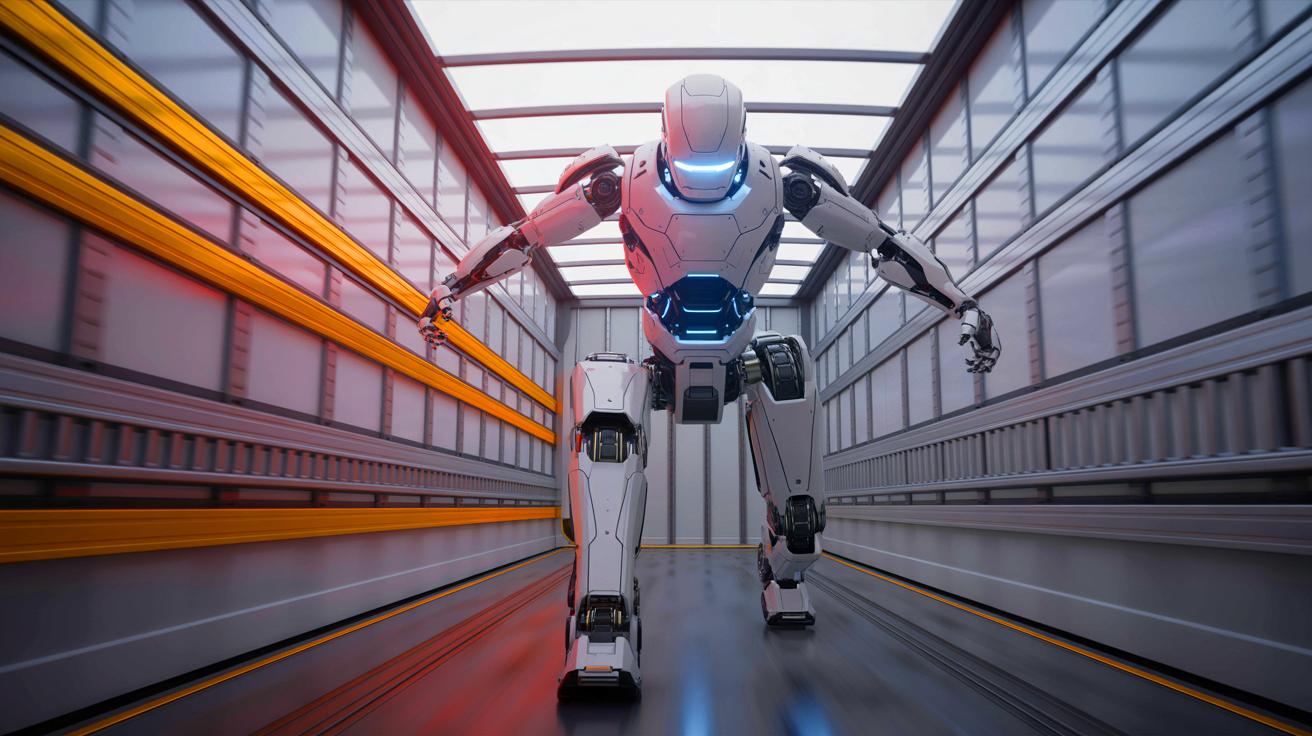
Equipped with advanced motion control algorithms and user-friendly operation modes, Tron 1 is ready for remote use upon installation. A detailed user manual simplifies the deployment process, making it accessible even for teams with limited experience in complex robotic systems. The new video showcases Tron 1’s advanced balance and stability. Positioned at the back of a moving truck without external support, it maintains its posture amid sudden stops, rapid accelerations, and sharp turns, demonstrating its capability to adapt to dynamic and unpredictable environments.
NASA Sounds Alarm: This Gigantic Chinese Project Will Slow Down Earth’s Rotation
Flexible Robotic Framework
The bipedal robotic platform, Tron 1, offers hardware and software flexibility for advanced robotics development. It features a fully open software development kit (SDK) and a hardware interface, supporting both model-based approaches and learning-based methodologies. The robot is equipped with internally designed joint actuators specifically crafted for leg locomotion, significantly enhancing motion control and dynamic stability.
Tron 1 provides access to joint control algorithms through its hardware interface, allowing researchers to refine performance for complex verification and validation tasks. Its research and development environment supports full integration with Python, eliminating the barrier of learning low-level languages like C++. With a one-click Sim2Real deployment , users can effortlessly transfer algorithms from simulation to the real world, a significant advantage for reinforcement learning projects.
Compatibility and Extensibility
The Tron 1 platform is compatible with widely-used simulation tools such as NVIDIA Isaac, Mujoco, and Gazebo. It also includes code examples and development guides to accelerate project initiation. Utilizing a unified robot description format (URDF) helps bridge the Sim2Real gap and enhances testing efficiency.
Designed to be extensible, Tron 1 offers multiple expansion ports to integrate components such as LiDAR, robotic arms, cameras, and dual-spectrum gimbals. According to LimX, this adaptability makes it suitable for academic research, industrial testing, algorithm development, and educational use. The new video emphasizes Tron 1’s dynamic stability, a crucial aspect for robots operating in environments shared with humans, such as factories, warehouses, or even households.
Future Applications and Implications
The possibilities presented by Tron 1 pave the way for diverse applications across sectors like logistics, industry, and even healthcare. Its ability to maintain balance under complex movement conditions makes it an ideal candidate for tasks requiring human interaction or operations in uncertain environments. The platform’s adaptability also enables researchers and engineers to test new robotic technologies without the usual constraints.
With the continuous development of Tron 1’s technology, it is feasible that such innovations will transform how robots interact with their environments and collaborate with humans. As we observe these advancements, one question remains: how will these technologies redefine our daily lives, and what new frontiers in robotics will we explore?
This article has been enriched using artificial intelligence.
Did you enjoy this? 4.6/5 (26)