
| IN BRIEF |
|
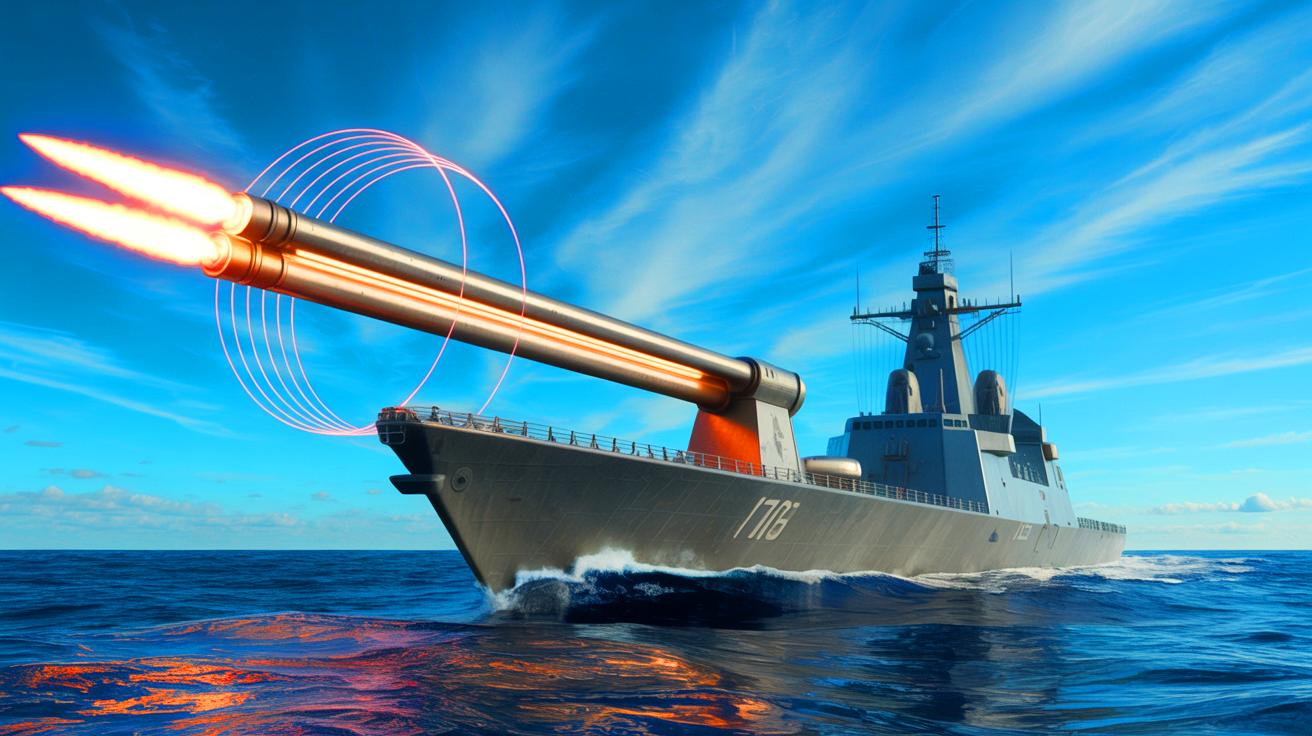
Japan has recently reached a critical milestone in the field of defense by successfully conducting a railgun test from a ship at sea. This technological advancement showcases the country’s commitment to modernizing its military capabilities in response to contemporary challenges. The railgun, an electromagnetic weapon, is generating increasing interest in the military sector, not only for its impressive firing speed but also for its potential to transform defense strategies. What implications does this technological development have on the international stage, and how is Japan integrating this innovation into its overall defense arsenal?
The Railgun: A Major Technological Advancement
The railgun, or electromagnetic cannon, represents a significant leap in modern defense weaponry. Unlike traditional weapon systems, the railgun utilizes electromagnetic forces to propel projectiles at extremely high speeds. The projectiles, which are devoid of explosives, cause damage primarily through their kinetic energy, reaching speeds of up to Mach 7. This technology promises to revolutionize defense systems by offering rapid-fire and long-range capabilities, making it ideal for countering missiles, aircraft, and even enemy ships.
The prototype developed by Japan’s Acquisition, Technology, and Logistics Agency (ATLA) demonstrated impressive performance beginning in 2018, with a firing speed of 2,230 meters per second. The success of the at-sea test not only confirms the feasibility of this technology but also its successful integration into Japan’s naval defense systems. This advancement highlights Japan’s commitment to equipping itself with sophisticated defense tools to face emerging threats.
An Integrated Defense Strategy
Japan is not solely relying on the development of the railgun in isolation; rather, it is adopting a comprehensive approach by integrating various cutting-edge technologies into its defense arsenal. The newly developed battle direction system by the Japan Maritime Self-Defense Force (JMSDF) now includes railguns, high-power microwaves, and laser weapons. This multifaceted strategy is designed to address a variety of aerial threats, particularly those posed by countries like China, North Korea, and Russia.
The defense enhancement program, launched in December 2022, emphasizes ongoing research and development of innovative technologies like the railgun. This program underlines the importance of bolstering Japan’s defensive capacities against potential airborne threats, with the railgun positioned as a central element in this strategic vision. By incorporating these avant-garde technologies, Japan is preparing for a future where threats are increasingly sophisticated.
Investment and Ongoing Development
Japan’s efforts to integrate this advanced technology into its defense systems are supported by significant investments. Earlier this year, the JMSDF signed a contract worth 10.8 billion yen for the temporary installation of railguns on its ships. While the contracting entity remains unidentified, Japan Steel Works, Ltd. is widely believed to play a crucial role in this ambitious project.
The Japanese Ministry of Defense has allocated substantial budgets for the fiscal years 2022 and 2023 and plans a significant budget for 2024, demonstrating its commitment to enhancing defense capabilities through railgun technology. This financial backing reflects Japan’s determination to remain at the forefront of military innovation. By investing in these technologies, Japan ensures its position as a leader in the defense domain, ready to meet the challenges of tomorrow.
Toward a Strengthened National Defense
The success of the at-sea firing test marks an important milestone in Japan’s quest for advanced defense systems. By continuing to push the boundaries of technological innovation, the country solidifies its position as a leader in defense. The implications of these developments are extensive. Japan is considering the creation of a missile interception system based on magnetic projectiles to counter threats from hypersonic weapons.
This ambition aligns with the defense enhancement program, emphasizing Japan’s commitment to protecting its citizens and territory through advanced technological means. The question remains how these advancements will influence the dynamics of regional and global security. How will these technological innovations shape defense strategies in the coming years?
The author utilized artificial intelligence to enrich this article.
Did you enjoy this? 4.6/5 (26)