
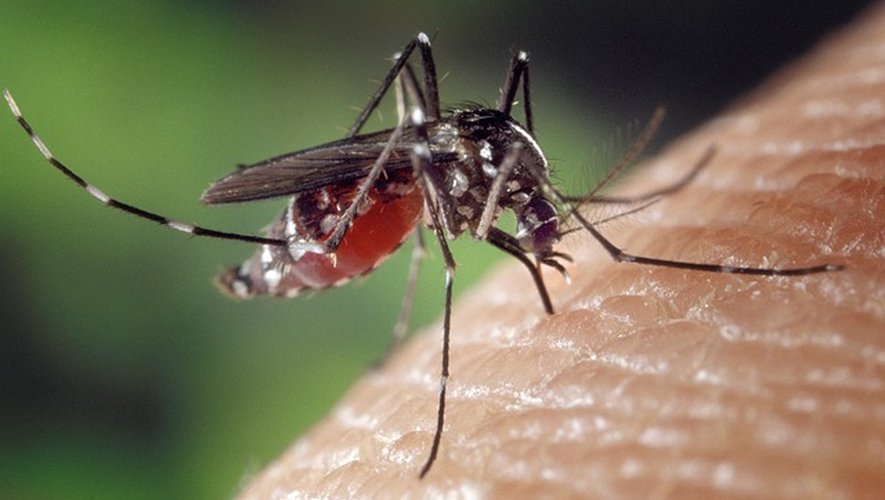
As warmer weather arrives, so does the tiger mosquito , an invasive species that poses a significant public health risk. Since May 1, 2025, an intensified surveillance period has been in effect as this mosquito continues to establish itself across more regions of metropolitan France . With 84% of departments now reporting this pest’s presence, areas like Marne, Haute-Marne, and Haute-Saône have recently become hotspots for the species.
The tiger mosquito (Aedes albopictus) is particularly notorious for its ability to transmit tropical diseases such as Zika , dengue , and chikungunya . The alert level is currently at its peak in 2025, especially with ongoing chikungunya outbreaks in Mayotte and ongoing dengue cases in La Réunion, which have reached thousands since the start of the year.
Between May 1 and May 27, 2025, metropolitan France reported 341 imported cases of chikungunya and 247 imported cases of dengue. Currently, only one single case of Zika has been acknowledged in the Provence-Alpes-Côte-d’Azur region.
Is the Tiger Mosquito Present in Your Area?
The French National Agency for Food, Environmental and Occupational Health Safety (Anses) provides an interactive map to help you determine whether the tiger mosquito has established itself in your municipality. This data was last updated on November 8, 2024 .
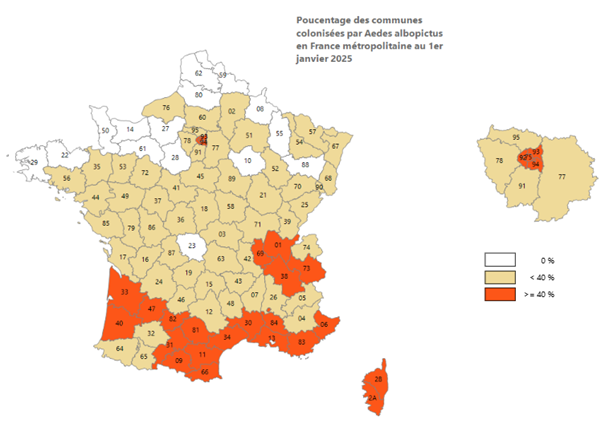
The interactive map reveals that the presence of the tiger mosquito is still limited to a few municipalities in northern France, despite a broader influence over several departments. In contrast, the mosquito is prevalent along the Mediterranean coast, as well as in the Atlantic coastline areas of Gironde , Landes , and Pyrénées-Atlantiques . The species is extremely widespread in Occitanie and the Lyon region .
According to the Ministry of Health, the following departments have over 40% of their municipalities colonized by the tiger mosquito: Haute-Corse , Corse du Sud , Alpes-Maritimes , Var , Bouches-du-Rhône , Vaucluse , Gard , Hérault , Aude , Pyrénées-Orientales , Ariège , Haute-Garonne , Tarn , Tarn-et-Garonne , Lot-et-Garonne , Gironde , Landes , Val-de-Marne , Essonne , Hauts-de-Seine , and Paris .
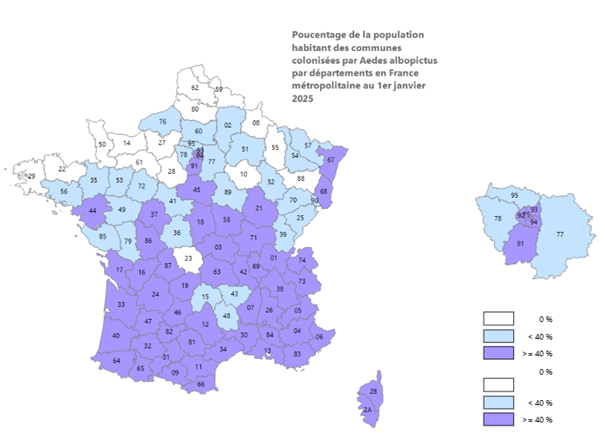
Moreover, in many departments, more than 40% of the population is exposed to the tiger mosquito, which prefers to settle in large urban areas:
As the tiger mosquito continues its spread, understanding its territory and the associated risks is vital for the public. Effective measures to combat its proliferation are critical, not only to ensure the safety of the population but also to mitigate the diseases it potentially carries. Awareness and proactive behavior will be key in addressing this ongoing public health issue.
General News – 2