
| IN SHORT |
|
The pursuit of a clean and inexhaustible energy source has always been a significant goal for scientists worldwide. Among the many avenues explored, nuclear fusion stands out due to its immense potential. Recently, Swiss researchers from the École Polytechnique Fédérale de Lausanne ( EPFL ) have made a promising discovery concerning tokamak reactors , which could mark a turning point in this energy quest. With the invention of the X-point Target Radiator (XPTR) , it now seems possible to prevent overheating in these reactors and improve their efficiency.
The Fusion: The Energy Grail
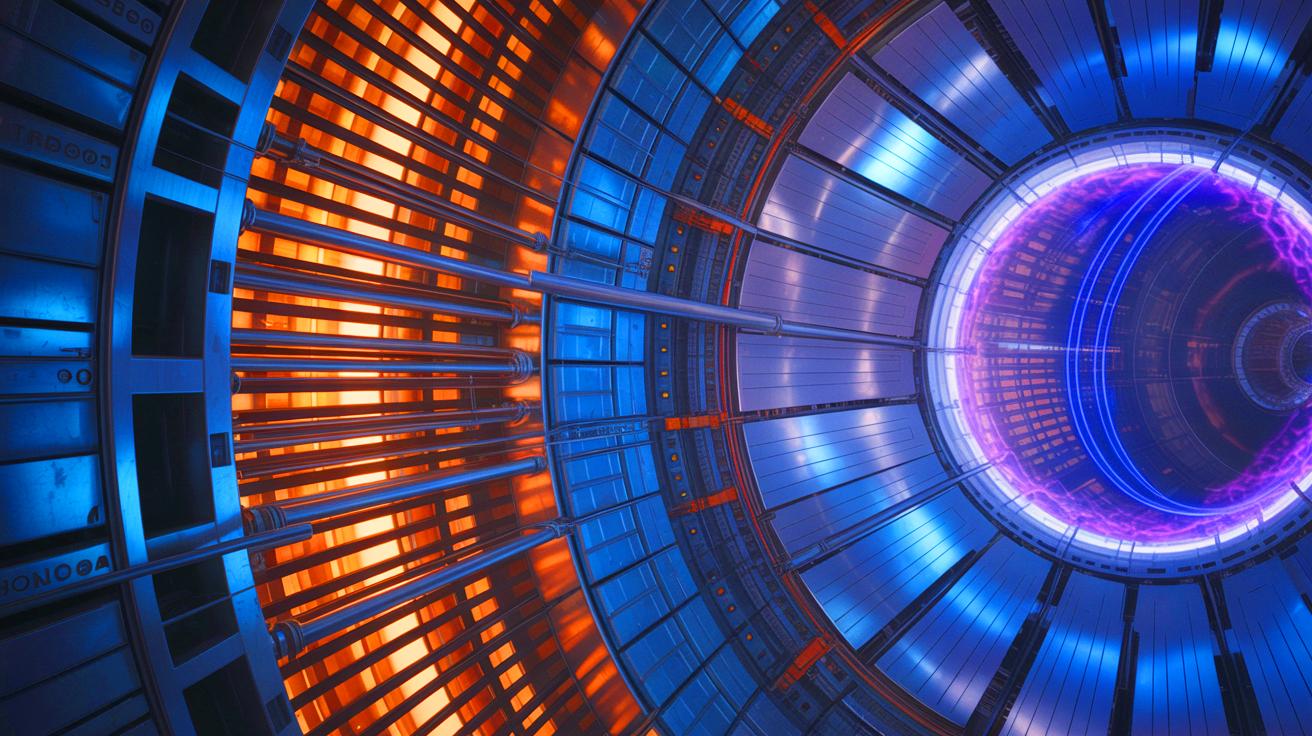
Nuclear fusion represents a dream for the scientific community: the ability to replicate the clean and unlimited energy of the Sun on Earth. Tokamak reactors , which use powerful magnetic fields to confine and heat a very hot plasma, are one of the promising technologies to achieve this goal. Plasma, when it reaches adequate temperatures, allows the fusion of light nuclei, releasing a colossal amount of energy without greenhouse gas emissions. However, managing plasma and the heat it generates poses considerable challenges. Heat leaks, particularly at the divertor level, can damage the internal walls of the reactor, making continuous operation difficult. The innovation introduced by the EPFL team could provide a solution to this problem.
Cooler and More Efficient Tokamaks
By adding a second X-point along the plasma outlet channel, researchers have successfully dispersed heat more evenly and further away from the reactor’s core. This innovation reduces damage to the most vulnerable areas of the reactor while maintaining the plasma’s stability, essential for the continuation of fusion. Moreover, this configuration does not affect the central plasma, which is crucial for the proper execution of fusion reactions. The promising results from these initial experiments have already led to their integration into the SPARC project , a next-generation reactor currently being built by MIT and Commonwealth Fusion Systems .
| Feature | Benefit |
|---|---|
| Secondary X-point | Reduction of heat on walls |
| XPTR Device | Improvement of efficiency and reliability |
A Step Towards Practical Fusion Energy
This technological advancement represents a significant step towards the realization of fusion energy, long considered the holy grail of energy sources. By reducing thermal loads on the divertor, the XPTR technology could prolong the lifespan of tokamak reactors and reduce maintenance costs, thereby making nuclear fusion economically more viable. EPFL researchers are currently engaged in additional simulations and experiments to refine this technology and prepare it for use in future power plants.
The Future of Nuclear Fusion
As the quest for safe and clean energy intensifies, innovations such as the X-point Target Radiator bring a glimmer of hope for the future of fusion energy. While challenges remain, the ability to effectively manage heat is a crucial step towards functional large-scale reactors. The question lingers: how will these new technologies influence the global energy transition, and how quickly will we see their implementation in our daily lives?
The author utilized artificial intelligence to enhance this article.
Did you enjoy this? 4.6/5 (20)