
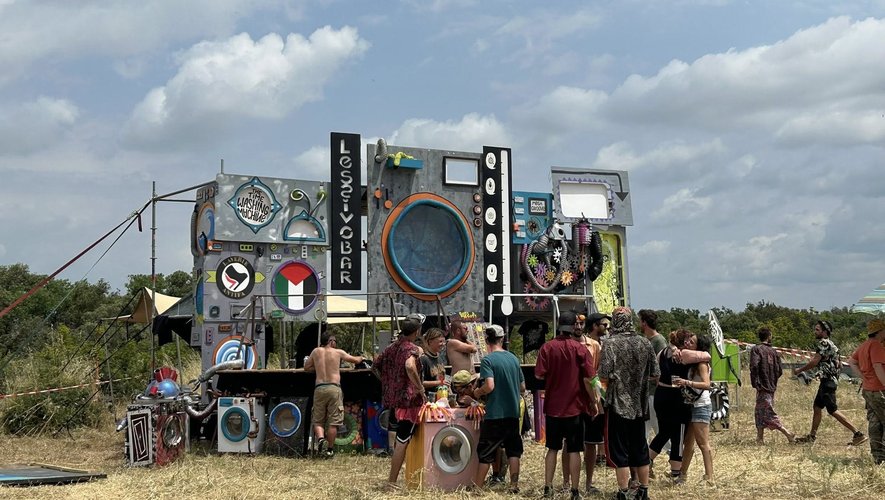
Since early Saturday morning, an illegal rave party has been taking shape in the department of Hérault . Approximately 5,000 people are expected to gather for this event, which is slated to continue until Monday evening in the town of Nizas .
The rave party began at 5 AM on June 7, with hundreds of vehicles illegally entering the private lands of the former aerodrome in Nizas, as reported by Midi Libre and confirmed by the Hérault prefecture in an official statement.
“This is the third rave on this site; there have already been gatherings here in 2015 and 2017 ,” emphasized Marie-Claude Sempéré , the first deputy mayor of Nizas, to our colleagues. The history of the site seems to contribute to a growing interest in such events within the community.
5,000 People Expected
According to Daniel Renaud , the mayor, “there could be 5,000 people ” in his municipality, which is traversed by the A75 highway. The mayor and his team have taken precautions by explaining preventive measures to the organizers and installing a bin for waste on site.
As a safety measure, a medical tent , a risk reduction cell , as well as an information and assistance stand for “bad trips” have been set up. The local authorities are striving to ensure that, despite the gathering being unauthorized, people can have access to help if needed.
Currently, the event is mobilizing local emergency services, including firefighters from Hérault , about 20 gendarmes, the departmental road safety squad , and the DDE (Direction Départementale de l’Équipement). These teams are on hand to ensure safety and address any potential emergencies that may arise throughout the gathering.
After Lot and Lozère
It’s important to note that this is the third such meeting in a month in the Occitanie region, following the 10,000 attendees who gathered from May 9 to 12 in the Lot department in the towns of Montvalent and Rocamadour. There was also a failed attempt at a gathering in Lozère on May 28, where local farmers intervened to stop the event.
The increasing frequency of these gatherings raises questions about the socio-cultural dynamics at play within the youth demographic of the region. As local governments struggle to manage these events effectively, the events often draw attention from law enforcement and emergency services, showcasing the ongoing tensions between personal freedoms and public safety.
For many attendees, raves represent a form of artistic expression and community bonding, often associated with electronic music culture. However, the illegal nature of these gatherings complicates perceptions and responses from local authorities. Many residents have mixed feelings about the potential disruption to their community, while others see the events as `an opportunity for artistic and personal freedom.`
In the face of growing attendance and previous experiences from past events, local authorities might need to consider establishing regulated spaces for such activities. This could allow for the continuation of the cultural expression embodied in raves while ensuring public safety and minimizing disruption to local life.
As the current event unfolds, it will be interesting to observe the community’s response and the effectiveness of the safety measures in place. The fulfillment of expectations regarding attendance and the behavior of participants will be crucial in shaping future policies regarding similar gatherings.
While the debate surrounding illegal raves continues, it is clear that they have become a central point of cultural expression for a significant number of individuals. As we look ahead, the potential need for dialogue and understanding between local authorities and the community’s youth may very well dictate how these events are perceived and managed in the future.