

| IN BRIEF |
|
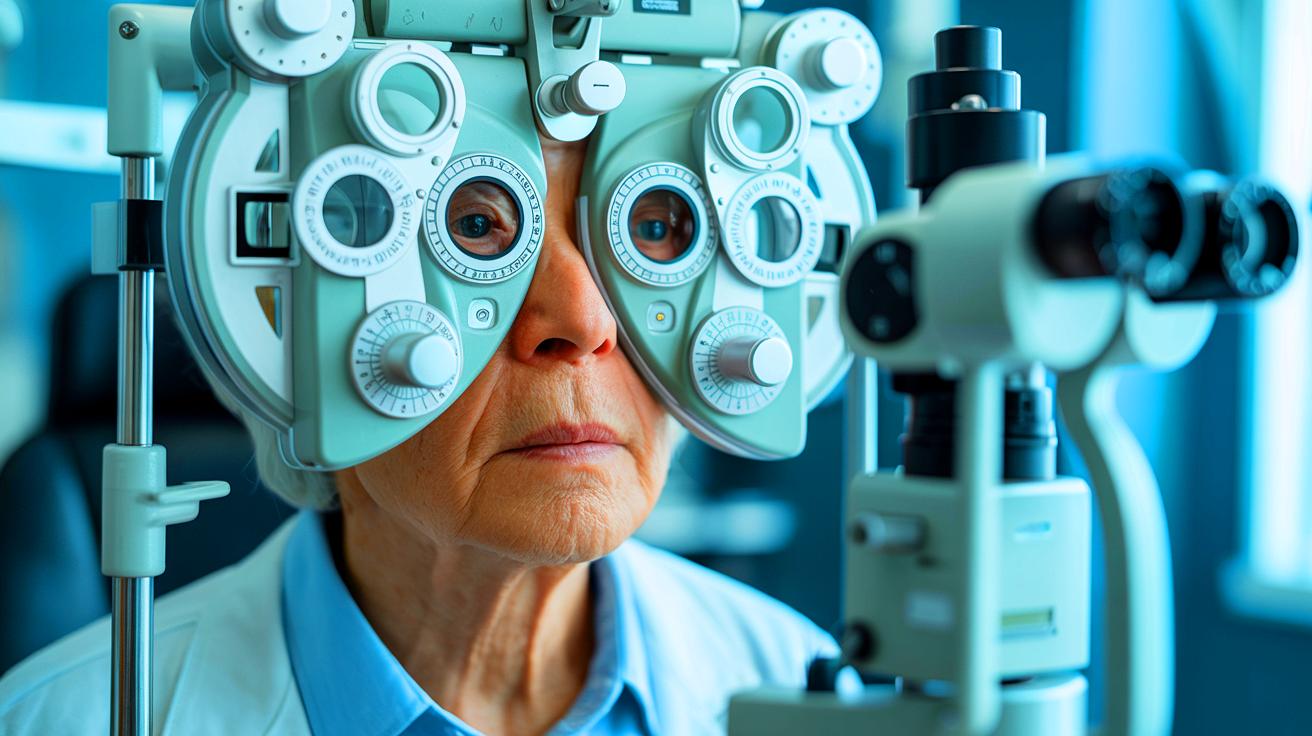
A groundbreaking study highlights the importance of eyes in the early detection of cognitive issues like dementia. Researchers examined healthy participants over several years and found that visual sensitivity could predict the onset of dementia well before formal diagnosis. These findings could reshape how we approach early detection of neurodegenerative diseases, offering a valuable insight into early signs that are often overlooked. As we delve into these findings, it becomes crucial to understand how our eyes may provide a unique window into our brain health.
Visual Sensitivity and Dementia Prediction
A recent study conducted in Norfolk, England, involved 8,623 healthy participants. Over the years, 537 of them developed dementia, allowing researchers to analyze predictive factors. A visual sensitivity test was administered at the outset, where participants were required to identify a triangle appearing among rapidly moving dots as quickly as possible. It turned out that those who later developed dementia were significantly slower in recognizing this triangle.
The explanation may lie in the fact that toxic amyloid plaques, characteristic of Alzheimer’s disease, first impair areas of the brain linked to vision. Thus, a vision test could detect deficits long before memory tests do. This approach could revolutionize the early detection of dementia, identifying signs long before more obvious symptoms arise.
Face Recognition and Dementia
The ability to recognize faces is often impaired in individuals with dementia. These individuals process new faces ineffectively, not following the typical scanning pattern (from eyes to nose, then to mouth). This can make social interactions challenging and contribute to feelings of isolation.
Doctors who work with dementia patients frequently notice this challenge. When a person fails to adequately “imprint” a face, they may appear lost or disoriented, even in familiar environments. This problem goes beyond simple memory issues, underscoring the importance of a deeper understanding of the mechanisms underlying dementia.
Can Eye Movements Improve Memory?
The relationship between visual sensitivity and memory performance is well-established, even in non-visual tests. Prior research has shown that eye movements can potentially enhance memory. For instance, rapid left-to-right scanning has been linked to improved autobiographical memory.
Activities such as watching television or reading, which involve constant eye movements, may be beneficial for memory. Individuals who engage in these activities tend to have better memory and lower risk of dementia. However, further research is necessary to fully understand these effects, particularly why certain benefits seem limited to right-handed individuals.
Ocular Tracking Technology: Untapped Potential
Despite promising results, the use of eye movements as a diagnostic tool is not yet commonplace. One of the main obstacles is the limited access to ocular tracking technologies, which are expensive and require specialized training. However, advancements in this field could pave the way for early diagnostic methods for Alzheimer’s disease.
Researchers at Loughborough University are actively exploring these possibilities. More accessible technology could transform how we diagnose and treat cognitive disorders. The development of affordable and easy-to-use tools could facilitate early detection outside laboratory settings, offering new perspectives for elderly care.
As research on the connection between vision and cognitive health progresses, it raises crucial questions: how can these discoveries be integrated into everyday clinical practice? Could vision tests become a standard method for early dementia detection? Might the future of preventive medicine be influenced by a deeper understanding of visual perception?
The author has relied on artificial intelligence to enrich this article.
Did you like it? 4.5/5 (25)
General News – 2