
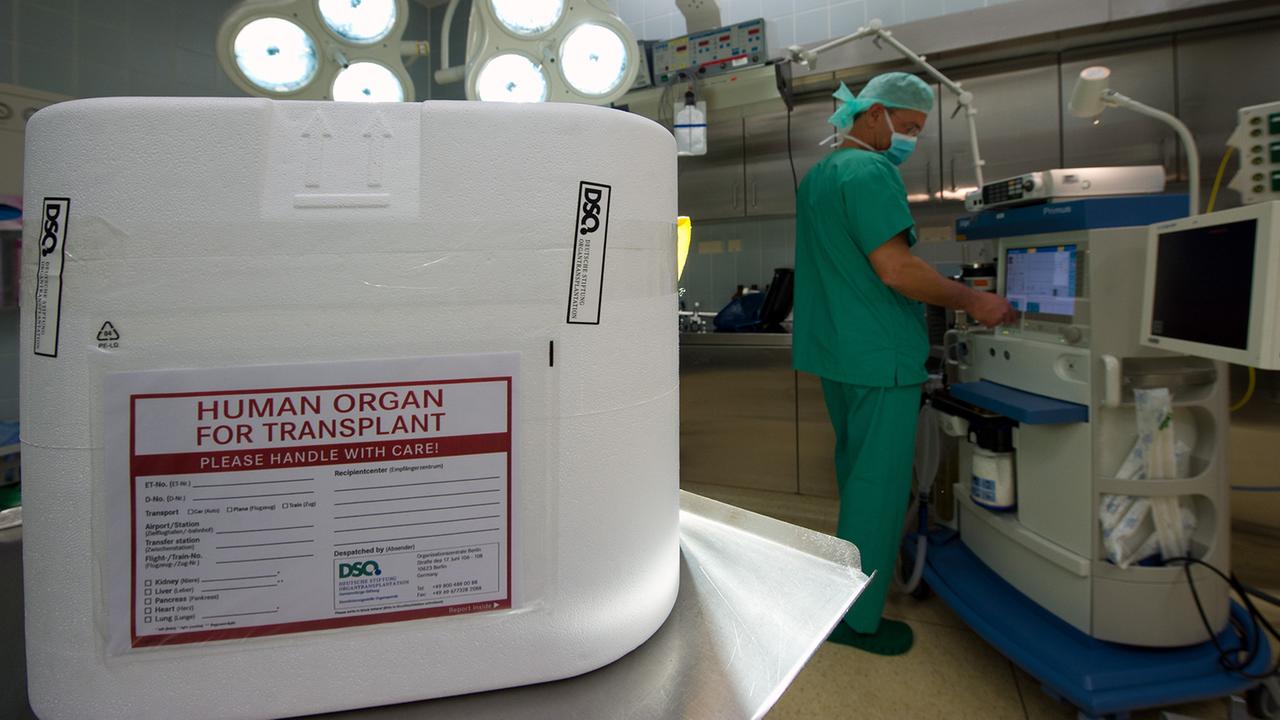
The Health Ministers of the states and physician representatives want every German citizen to be potentially an organ donor unless they specifically object. On Organ Donation Day, they are pushing for a new political initiative.
Consent or objection? The previous government was unable to decisively regulate organ donation in Germany. Now the health ministers of the federal states are applying pressure. Together with the Federal Medical Association, they advocate for the so-called objection solution. Under this concept, every German citizen would be a potential organ donor unless they explicitly dissent.
It is incomprehensible to them, “why we let people die on waiting lists simply because we cannot decide on the objection solution,” said the chairperson of the Health Ministers’ Conference, Thuringia’s Health Minister Katharina Schenk (SPD), to the Ärzte Zeitung on Organ Donation Day last Saturday.
Currently, Germany follows a consent solution. This means that only those who have explicitly agreed to organ removal during their lifetime can be considered donors.
Draft Bill to be Resubmitted
Schenk is now advocating for the cross-party group application from members of the old Bundestag to be reintroduced in parliament. This approach is supported by the states. At the next Health Ministers’ Conference next week in Weimar, Federal Health Minister Nina Warken (CDU) will hand over an appropriate letter from the health ministers.
From the perspective of Medical Association President Klaus Reinhardt, introducing an objection solution would “send a strong signal of solidarity.” At the same time, there needs to be an expansion of living organ donation. Here, individuals can donate a kidney or parts of their liver or lung to benefit severely ill patients.
Call for Simplified Living Donations
Currently, the Transplantation Law specifies that living donations are only possible for “persons with a personal connection.” This is intended to prevent organ trafficking and commercialization of organ donations. However, Reinhardt pointed out that family members are not always biologically compatible. Therefore, “cross-donation” among living donors should be permitted.
Affected families, where there are willing donors but no compatibility, could be allowed to exchange with other suitable donor-recipient pairs. Anonymous donations should also be made permissible.
Germany Imports Organs
In general, Germany urgently needs more organ donations, according to the medical association. The Marburger Bund, a physicians’ organization, is also advocating for the objection solution. Germany has been an importing country for human organs for years—primarily from countries where the objection solution is practiced, said Chairperson Susanne Johna. It is “time for a regulation that has proven effective in many European countries.”
In 2024, according to the German Foundation for Organ Transplantation, 953 people donated organs after their death. In total, including living donations, 2,854 donor organs were removed. Currently, 8,100 patients are on the waiting list, with most waiting for a kidney. Hundreds die each year because suitable transplants cannot be found.
The German Foundation for Organ Transplantation has called on the people of Germany to engage with the question, “Organ donation – yes or no?” The goal is for as many people as possible to make a self-determined decision and document it.