
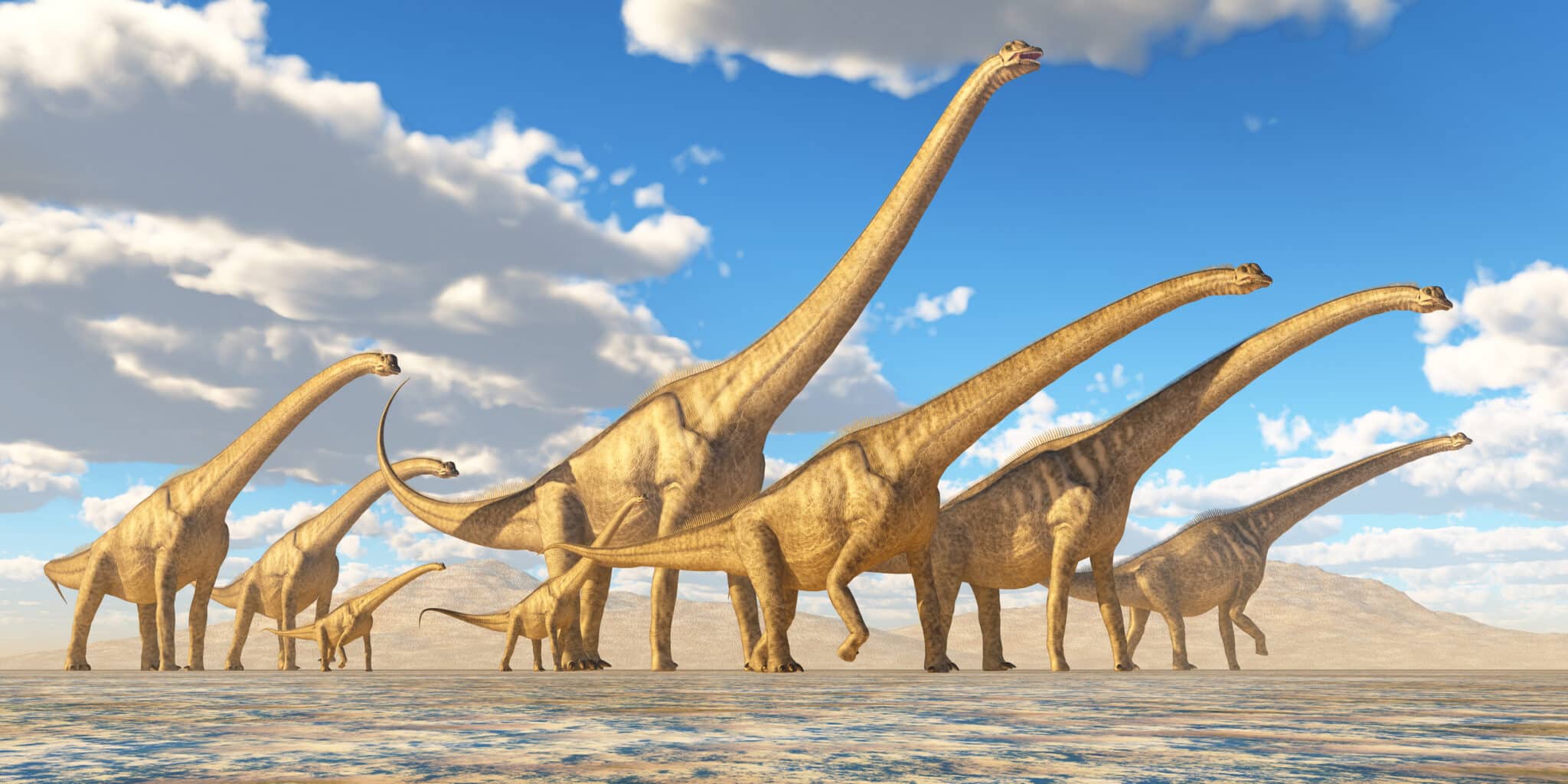
About three years ago, Damien Boschetto, a young paleontology enthusiast, stumbled upon a bone during a walk with his dog in a forest near Montouliers, France. Realizing it might be an important discovery, Boschetto quickly shared his finding with the Cultural, Archaeological, and Paleontological Association (ACAP) of the nearby town of Cruzy. Analyses eventually revealed that this bone belonged to the fossil of a nine-meter-long titanosaur, a giant long-necked dinosaur that roamed the Earth over 70 million years ago.
A Nine-Meter Giant Dinosaur
The initial bone was discovered after a landslide at the edge of a cliff exposed various skeletal bones. After a few days of excavation, it became clear that the bones were interconnected. The fossil turned out to be approximately 70% complete. However, the discovery remained a secret for two years to prevent the risk of theft or damage to the bones. Recently, it was carefully transported to the museum in Cruzy after being delicately excavated by ACAP volunteers.
As mentioned earlier, this dinosaur was a titanosaur. These animals formed a group of sauropod dinosaurs, characterized by their enormous size, long necks, and tails (adapted for reaching high vegetation). Some individuals even reached lengths of over thirty meters. This particular one was about eight to nine meters long. It is believed that the animal was trapped in a sandstone barrier during flooding.
Francis Fage, the founder of the museum, reminds us that the region is known for having produced over 25 new dinosaur species. The discovery site suggests that all these animals likely died simultaneously during a sudden flood, showing signs of bites from crocodiles or carnivores.
A Very Different Landscape
Although France is not as famous as other locations for titanosaur discoveries, sauropod fossils have previously been found in various parts of the country. These fossils can vary in size and degree of preservation, but they all contribute to our understanding of dinosaur diversity in the region during the Cretaceous period.
It’s important to note that during this period, France was situated in a different geographical position compared to today. The region was actually covered by shallow seas, lagoons, and plains. Environmental conditions varied, and different areas were characterized by coastal environments, humid forests, swamps, and other habitats.
The flora and fauna included various dinosaurs, marine reptiles, invertebrates, and plant life. As sauropods, the titanosaurs were likely present in terrestrial environments, feeding on abundant vegetation.
ACAP and the Cruzy museum now plan to conduct an in-depth study of this titanosaur skeleton and envision displaying it to the public, offering a unique opportunity to admire such a well-preserved dinosaur.