
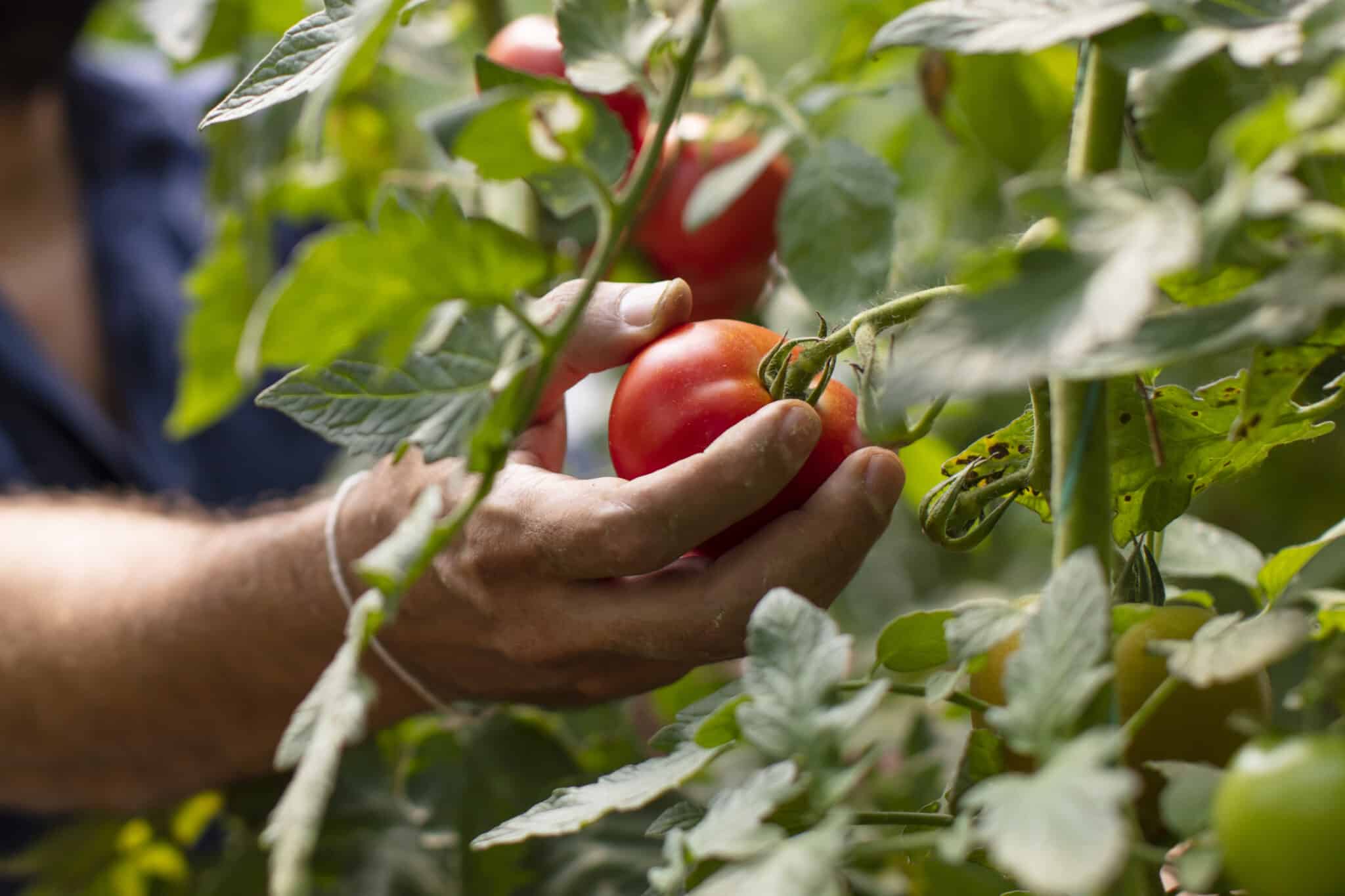
In Israel, researchers have recently succeeded in cultivating tomatoes that offer numerous advantages. These tomatoes are of high quality, yield an interesting output, and, most importantly, allow for significant water savings.
Increasing Yields Even During Drought
Self-sufficient for 95% of its food needs, Israel faces several challenges, including drought. A significant player in the field of agronomy, Israel is home to many researchers whose goal is to find solutions to tomorrow’s challenges. In 2024, a team from Tel Aviv University developed a new variety of drought-resistant tomatoes, as documented in a publication in the journal PNAS.
This research was initially motivated by a desire to increase crop yields for tomatoes at all times, including during drought periods. During prolonged dry spells, the plants close their stomata—tiny openings that allow for gas exchange with the atmosphere. This leads to a reduction in photosynthesis due to a decreased amount of CO2 being absorbed, and logically, a decline in the sugar content of the tomatoes.
In general, farmers often experience lower harvests, coupled with smaller fruit sizes and reduced sugar levels.
Credit: iStock
Credits: Bonottomario / iStock
Highly Promising Results
The authors of the study employed the famous CRISPR genetic editing scissors to target the ROP9 gene in tomatoes. The deletion of this gene could allow for a partial closure of the stomata, which would be beneficial during the hottest parts of the day when plants experience peak transpiration. Although the differences in stomata behavior compared to conventional tomatoes may be minimal for most of the day, the modified plants manage to absorb enough CO2 to mitigate the relative losses in sugar production.
According to the researchers, the experiments showed no negative effects on photosynthesis, the quality of the tomatoes, or the overall yield, including sugar content. Interestingly, the authors also discovered a new mechanism for the opening and closing of stomata, which is linked to the levels of reactive oxygen species (ROS).
Ultimately, this research may pave the way for the development of new cultivable plants, such as drought-resistant eggplants, wheat, and bell peppers. Experts note that the ROP9 gene in tomatoes shows many similarities to the ROP genes in other aforementioned plants. However, while the researchers mentioned potential water savings, these have not been quantified as of yet.