
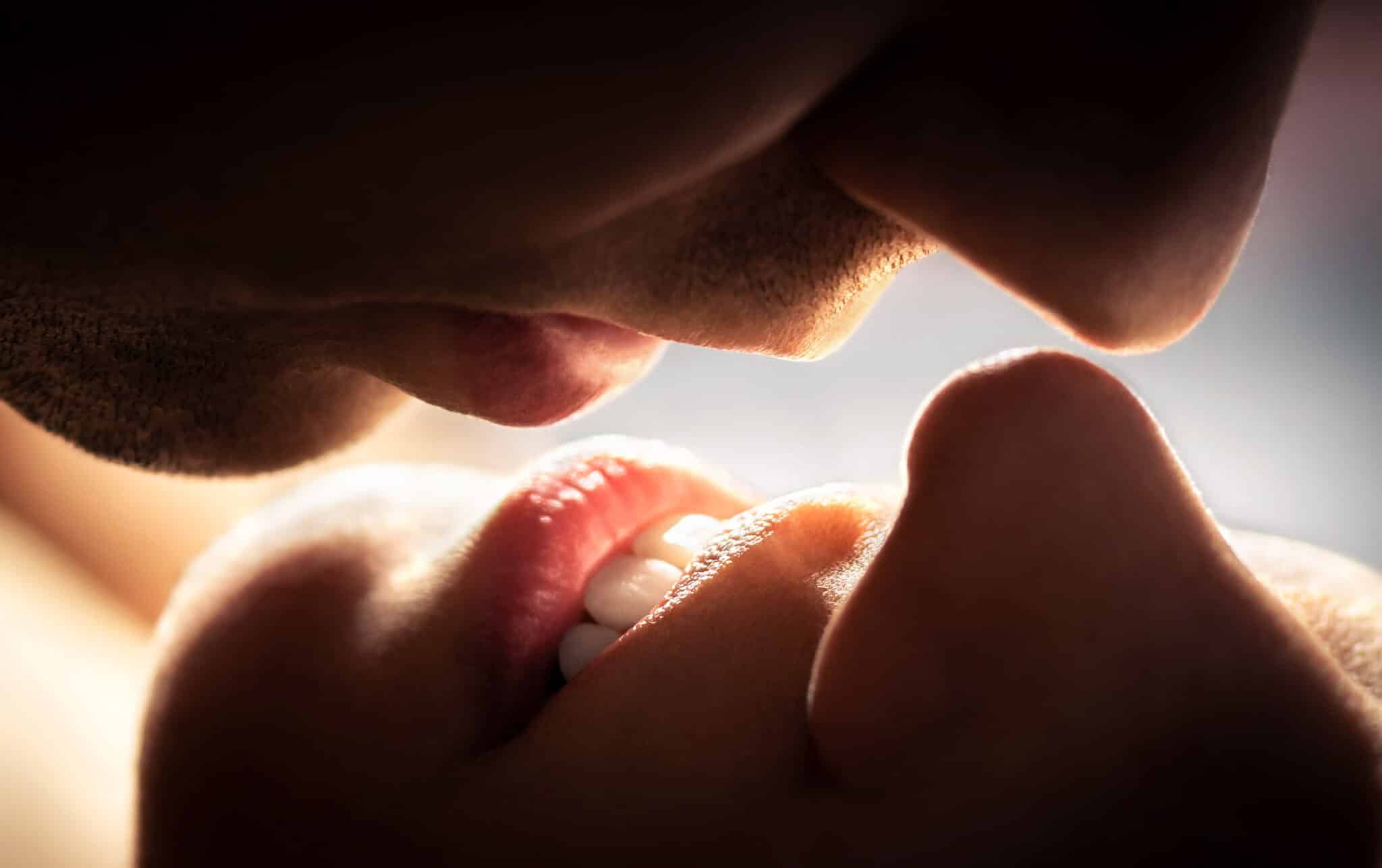
The kiss , a universal symbol of love and intimacy , also raises an intriguing question: can it serve as a vector for psychological disorders such as anxiety and depression? This thought-provoking notion is the focus of a groundbreaking international study that delves into the effects of the oral microbiome —the invisible ecosystem of bacteria residing in our mouths—on our mental health .
Even more surprisingly, these microorganisms may be transmitted between partners during intimate contact, potentially impacting the brain and our emotions .
A Link Between Oral Bacteria and Mental Health
While the crucial role of the gut microbiome in our health is gaining recognition, the oral microbiome remains largely underexplored. However, various recent studies have already associated it with a range of conditions, including Alzheimer’s disease , schizophrenia , autism , as well as anxiety and depression .
In a recent study published in the journal Exploratory Research and Hypothesis in Medicine, researchers from universities in Iran, India, Italy, and the United Kingdom sought to take this investigation further: can the oral microbiome not only influence mental health but also be transmitted from one individual to another in an intimate setting such as a marriage?
A Study on Young Married Couples
To address this question, the scientists tracked 268 young couples who had been married for less than six months. In each pair, one partner struggled with chronic insomnia along with symptoms of depression and anxiety, while the other reported good mental and physical health.
Over six months, the researchers examined:
the composition of the oral microbiome (via swabs from the tonsils and pharynx),
salivary cortisol levels, a key stress hormone,
along with scores of insomnia, anxiety, and depression assessed through standardized questionnaires.
Throughout the study, the couples were instructed to maintain their eating and hygiene habits to eliminate the effects of external changes.
Credit: iStock
Credits: EyeEm Mobile GmbH/istock
Physiological and Psychological Changes
The results were surprising: after six months of shared life, partners who initially reported good health began developing symptoms of stress, anxiety, and depression. Their salivary cortisol levels increased, and their oral microbiome shifted closer to that of their struggling partner.
Notably, these effects were more pronounced in women. This trend has been observed in other mental health research involving couples, but it still requires further understanding.
Oddly Sufficient: The Kiss as an Underestimated Vector
Researchers suggest an intriguing hypothesis: oral bacteria might be transmitted through kisses and other forms of close contact, potentially altering the psychological balance of partners.
This phenomenon echoes other types of biological synchronizations well-documented in couples, including:
the synchronization of heart rates,
the alignment of sleep cycles,
and even cross-hormonal changes.
The idea that mental health could also influence biological factors within a couple is, therefore, a serious consideration.
A New Approach to Relational Medicine?
Of course, the authors exercise caution. They acknowledge several limitations: the methodology is based on self-reports, the samples didn’t cover the entire oral microbiome, and the causal link remains to be established.
Nonetheless, the implications are significant. If this link between oral microbiome and mental health is confirmed, it could reshape our understanding of psychological well-being as a collective phenomenon rather than purely an individual one.
Towards a More Holistic Medicine
This study paves the way for new avenues of research in psychiatry , immunology , microbiology , and preventive medicine . It might also strengthen interest in personalized and relational approaches to mental health , accounting for the social and intimate environments of patients.
So, the next time you kiss your partner, remember: you’re not only sharing a moment of affection but perhaps also a part of your psychological equilibrium .