
L’Asco, the world-renowned conference organized by the American Society of Clinical Oncology, is being held in Chicago until Tuesday, June 3. This gathering is a crucial event for oncologists globally and showcases promising advancements that bring hope to cancer treatment.
What can we expect from artificial intelligence (AI) in cancer care? Are there new treatment options on the horizon for the most dire cancer prognoses? Are we moving towards a therapeutic de-escalation ? The ASCO conference, bringing together 40,000 oncologists from around the world, is generating buzz about these intriguing questions and more.
AI Transforming Imaging and Diagnosis
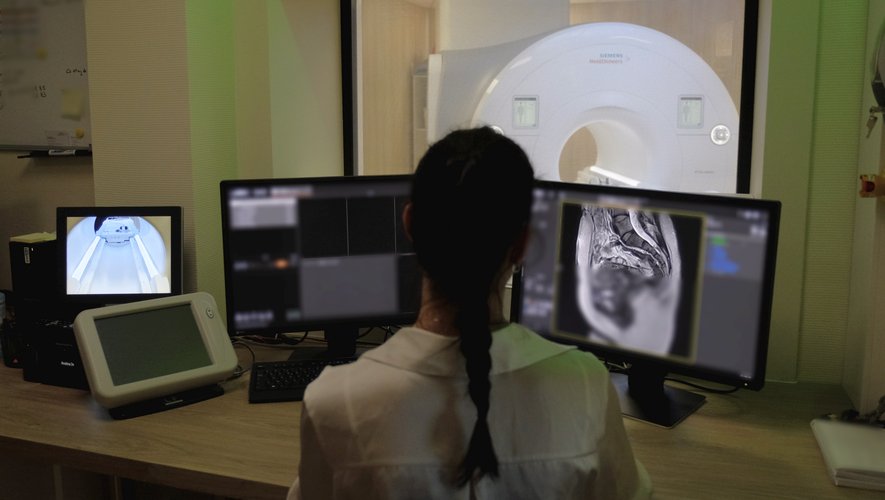
Artificial Intelligence is playing an invaluable role in making cancer management more effective. From enhanced early diagnosis to personalized radiotherapy and liquid biopsies, the integration of AI is continuously pushing the boundaries in cancer care.
For instance, a presentation at the conference highlighted that AI has improved the diagnostic accuracy of one of the most challenging breast cancer types, HER2-positive cancer , from 66.7% to 88.5% . Such advancements greatly reduce wait times for patients, allowing them to receive targeted treatment without unnecessary delays.
A Breakthrough for Pancreatic Cancer?
Pancreatic cancer is notorious for its poor prognosis , with over 14,000 new cases diagnosed annually in France alone, contributing to 400,000 global deaths each year. At ASCO, Ipsen announced results from a Phase 3 study on a new treatment that offers a median survival of 19.5 months among patients with metastatic pancreatic cancer—significantly better than the typical survival rate of less than one in five making it past the one-year mark.
“This represents a significant advancement for a cancer that is notoriously difficult to treat, as data of this nature are rare,” remarked Sandra Silvestri, Executive Vice President at Ipsen, emphasizing that “patients usually live just 4 to 6 months after being diagnosed with pancreatic adenocarcinoma.”
The Institut Curie also expressed optimism regarding hormone-dependent metastatic breast cancer. The institute is pioneering an approach to intercept treatment resistance through liquid biopsies , a promising development in the ongoing battle against this disease.
On the front of small cell lung cancer , the CHU de Toulouse has made headlines by taking part in an international Phase 3 trial evaluating a new treatment, tarlatamab , which invigorates the immune system to target cancer cells. Initial findings indicate that this therapy extends survival rates— 13.6 months compared to 8.3 months with standard chemotherapy—while also presenting fewer side effects.
Myeloma: A Shift Away from Chemotherapy
Again, CHU de Toulouse shines in its approach to managing multiple myeloma, a bone marrow cancer that impacts 6,000 new patients each year. The Midas clinical trial , which involves 791 patients and is led by Professor Aurore Perrot, examines the potential of targeted immunotherapy as a substitute for standard chemotherapy. Early results are promising: the treatment may alleviate the need for one or even both stem cell transplants in the most challenging cases.
Hope for Effective Vaccines?
The Institut Curie has announced “promising results for the world’s first individualized ORL vaccine”. This early-stage, Phase 1 study reveals that “none of the patients who received the vaccine experienced a relapse.” This breakthrough could pave the way for tailored vaccinations in treating various forms of cancer.
Additionally, Curie is also exploring a vaccine targeting pancreatic cancer, which could offer a new layer of hope for patients and families affected by this devastating illness.
With the convergence of innovative technologies and cutting-edge research , the advancements revealed at ASCO 2025 underscore the potential shifts in how we view and treat cancer. As researchers and oncologists collaborate globally, the future of cancer care appears ever more hopeful, with promising therapies paving the way toward better management , enhanced survival rates, and a renewed sense of possibility for patients and their loved ones.