
| IN BRIEF |
|
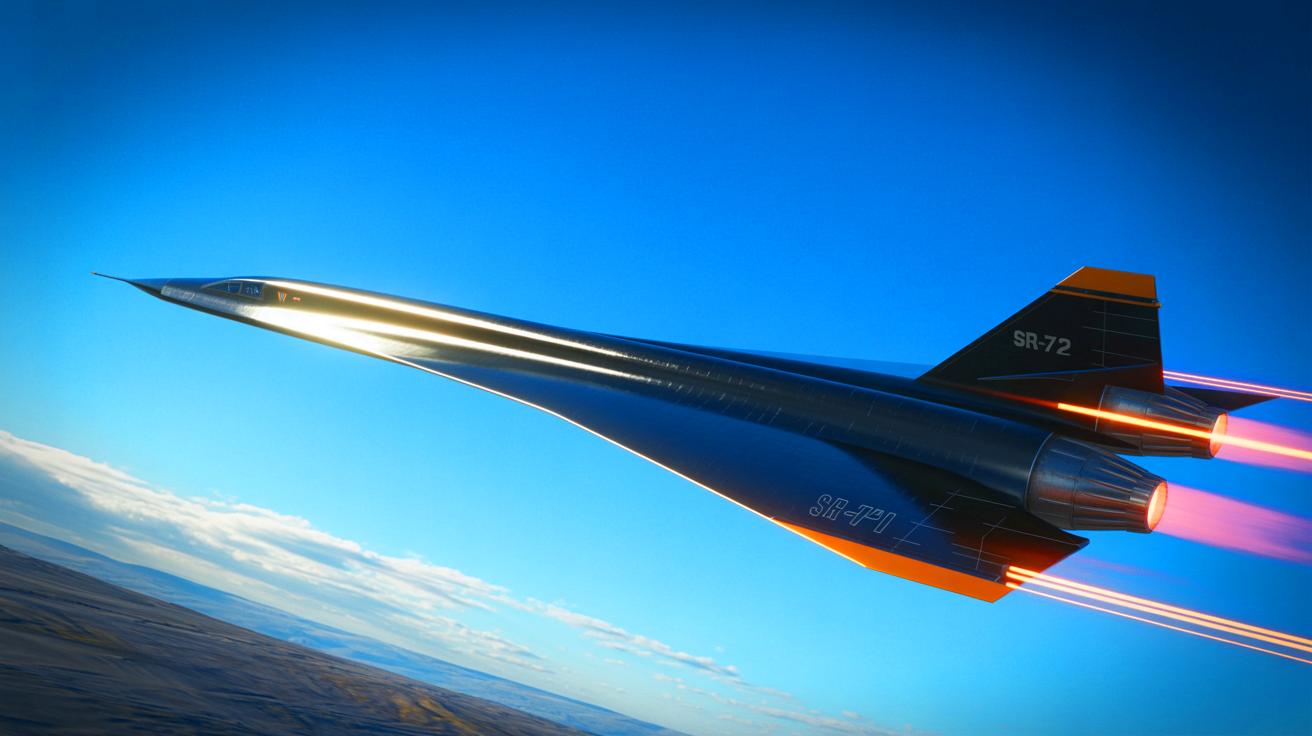
The development of the hypersonic aircraft SR-72 marks a significant leap in aviation history, set to become the fastest operational airframe ever designed. With a top expected speed of over Mach 5, this secretive device is poised to redefine military capabilities in intelligence, surveillance, and reconnaissance. As the successor to the legendary SR-71 Blackbird, the SR-72 promises unprecedented speed and strategic range, potentially altering the landscape of modern warfare. Let us delve into the complex details of this ambitious project, its innovative propulsion technology, and the challenges it faces ahead.
The Secret SR-72 Project
Often referred to as the “Son of the Blackbird,” the SR-72 is being developed by the Skunk Works team at Lockheed Martin. According to The National Interest, Lockheed suggests that a prototype could be finalized by the end of 2025. Designed to surpass the iconic SR-71, the SR-72 aims to achieve a top speed exceeding Mach 5—around 6,400 km/h. This unprecedented speed will allow the aircraft to conduct strategic intelligence, surveillance, and reconnaissance missions in contested environments where conventional piloted platforms face significant risks.
In contrast to its crewed predecessor, the SR-72 will be an uncrewed , reusable aircraft capable of executing missions autonomously. Its hypersonic speed is designed to penetrate advanced integrated air defense systems while minimizing interception risk. Additionally, the SR-72 could serve as a launch platform for hypersonic strike weapons, integrating the hypersonic strike weapon currently under development. This revolutionary project builds upon the operational legacy of the SR-71, enhancing both speed and survivability with a fundamentally different propulsion architecture.
Revolutionary Hypersonic Speed
The hypersonic speed of the SR-72 redefines strategic mobility, enabling it to travel from the continental United States to Europe or Asia in approximately 90 minutes. This rapid global reach offers rapid intelligence and strike capabilities , allowing commanders to make quicker decisions in dynamic operational environments. However, the SR-72 program faces significant technical and financial hurdles. While preliminary discussions have taken place with U.S. government stakeholders, full funding for a demonstration model and engine development has yet to be secured.
The alignment of the program with the U.S. Air Force’s hypersonic roadmap suggests a potential operational date by 2030. However, this timeline hinges on resolving propulsion, thermal management, and material challenges inherent in sustained hypersonic flight. The SR-72’s high-speed profile is designed to counter modern air defense systems by reducing time on target and exposure windows, thus marking a transformative step in aerial reconnaissance and striking capabilities.
Innovative Propulsion Technology
The core of the SR-72’s capabilities lies in its revolutionary propulsion system. The aircraft is expected to feature a combined cycle propulsion system based on a turbine (turbine-based combined cycle, or TBCC), merging a traditional turbofan engine with a supersonic combustion ramjet (scramjet). This dual-mode propulsion is crucial because no single engine can effectively operate across the entire flight envelope from subsonic to hypersonic speeds. The turbofan is employed during subsonic operations such as takeoff and landing, while the scramjet maintains speeds above Mach 5.
This state-of-the-art propulsion system is vital for the SR-72 to meet its operational requirements. Leveraging next-generation propulsion technologies and an uncrewed systems architecture, the SR-72 aims to redefine how the United States projects power in denied-access environments. The TBCC configuration is not merely a performance enhancement but an operational necessity that allows the SR-72 to conduct missions with unprecedented speed and efficiency .
Future Implications and Challenges
Successfully deploying the SR-72 would mark a significant advancement in military aviation, offering unparalleled speed and strategic range. However, the program must overcome multiple challenges, including securing funding and navigating the technical hurdles associated with hypersonic flight. The development of the SR-72 aligns with the U.S. Air Force’s long-term goals for hypersonic capabilities, but the road to operational deployment is riddled with complexities.
As the SR-72 program progresses, addressing propulsion, thermal management, and material challenges will be crucial to achieving sustained hypersonic flight. The aircraft’s ability to operate at speeds and altitudes beyond interception ranges could redefine aerial reconnaissance and strike capabilities, providing a strategic advantage in contested environments. As the world watches eagerly for the SR-72’s debut, the question remains: can the United States overcome the technical and financial challenges to realize the full potential of this revolutionary aircraft?
The author drew upon artificial intelligence to enrich this article.
Did you enjoy this? 4.4/5 (27)