

| IN BRIEF |
|
The launch of the CSO-3 satellite marks a pivotal step in the reconnaissance and identification program, known as Musis, designed to enhance military surveillance of the Earth. This third satellite is set to complete a constellation that plays a critical role in national defense and security. After several delays caused by technical issues with the Ariane 6 launcher, the launch is finally scheduled for March 6 from the Kourou spaceport in French Guiana. This initiative, led by the French General Directorate of Armament (DGA) and the National Centre for Space Studies (CNES), represents a strategic investment for the French Army.
A Constellation for National Security
The CSO/MUSIS project is an ambitious initiative integrated into a broader national defense and security strategy. Equipped with three satellites, this constellation aims to observe the Earth with unparalleled precision. CSO-3 enhances the capabilities of this constellation by increasing the number of revisits, which refers to the frequency with which the same point on Earth is observed in a single day. The existing CSO-1 and CSO-2 satellites have been operational since 2018 and 2020, respectively, operating at different altitudes for specific missions. While CSO-1 is stationed at 800 km for reconnaissance tasks, CSO-2 , at 480 km, focuses on identification, offering exceptional image resolution.
The deployment of CSO-3 , originally scheduled for 2022, has been postponed for three years due to technical stumbling blocks with the Ariane 6. This delay has generated considerable anticipation among military and space communities eager to see the constellation completed. This launch is crucial for maintaining France’s technological and strategic superiority in the realm of space observation.
Giant “Cameras” for a Global Vision
The CSO satellites are often likened to giant “cameras,” capable of capturing accurate images of any point on the globe at any time, thanks to their infrared equipment. This technology enables continuous and detailed surveillance, which is essential for modern military operations. The French Air and Space Force relies on these satellites for strategic information that directly influences operational decisions.
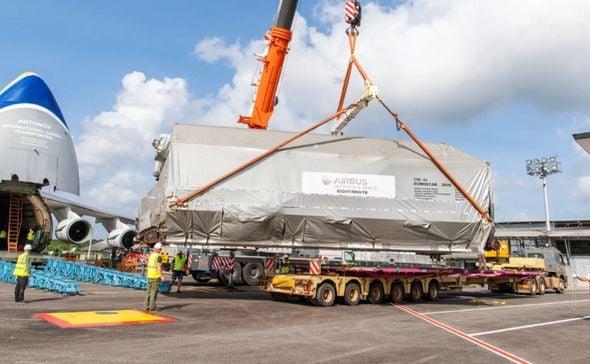
Lieutenant Colonel René from the Space Command emphasizes that reconnaissance and identification missions are complementary. CSO-1 , operating at a higher altitude, offers broader coverage, while CSO-2 , closer to Earth, provides exceptionally clear images. CSO-3 will follow in the footsteps of CSO-1, thereby increasing observation frequency and improving responsiveness to global events.
Exceptional Performance and Capabilities
The CSO satellites stand out for their ability to achieve up to 800 images per day, moving at an impressive speed of 25,000 kilometers per hour. The resolution of captured images is about thirty centimeters for very high-resolution (THR) missions, while extreme high-resolution (EHR) missions offer even finer detail. These capabilities position the CSO satellites as unparalleled tools in Europe.
During its launch, the CEO of Thales Alenia Space stated that CSO-2 was the most powerful camera ever built in Europe. This distinction underscores the strategic and technological importance of the Musis program within the European space landscape. Continuous advancements in satellite technology are enhancing image quality and expanding surveillance capabilities to unprecedented levels.
Space: A New Battleground
The Musis program operates within a geopolitical context where space has become a battlefield in its own right. Threats to satellites have multiplied, particularly amid recent international tensions, such as the conflict in Ukraine. CSO satellites, operated by military personnel, play a crucial role in intelligence gathering, complementing missions conducted by airplanes and drones.
Lieutenant Colonel René explains that space offers a level of protection, although threats are rapidly evolving. By developing its own launch capability with Ariane 6 , France reinforces its sovereignty and its ability to respond to current space challenges. This dynamic places space at the heart of contemporary strategic concerns, necessitating increased surveillance and protection of our space assets.
As the launch of CSO-3 approaches, a pressing question arises: how will France continue to develop and secure its space capabilities in the face of increasingly intense international competition?
The author has leveraged artificial intelligence to enrich this article.
Did you enjoy this? 4.5/5 (26)