
| IN BRIEF |
|
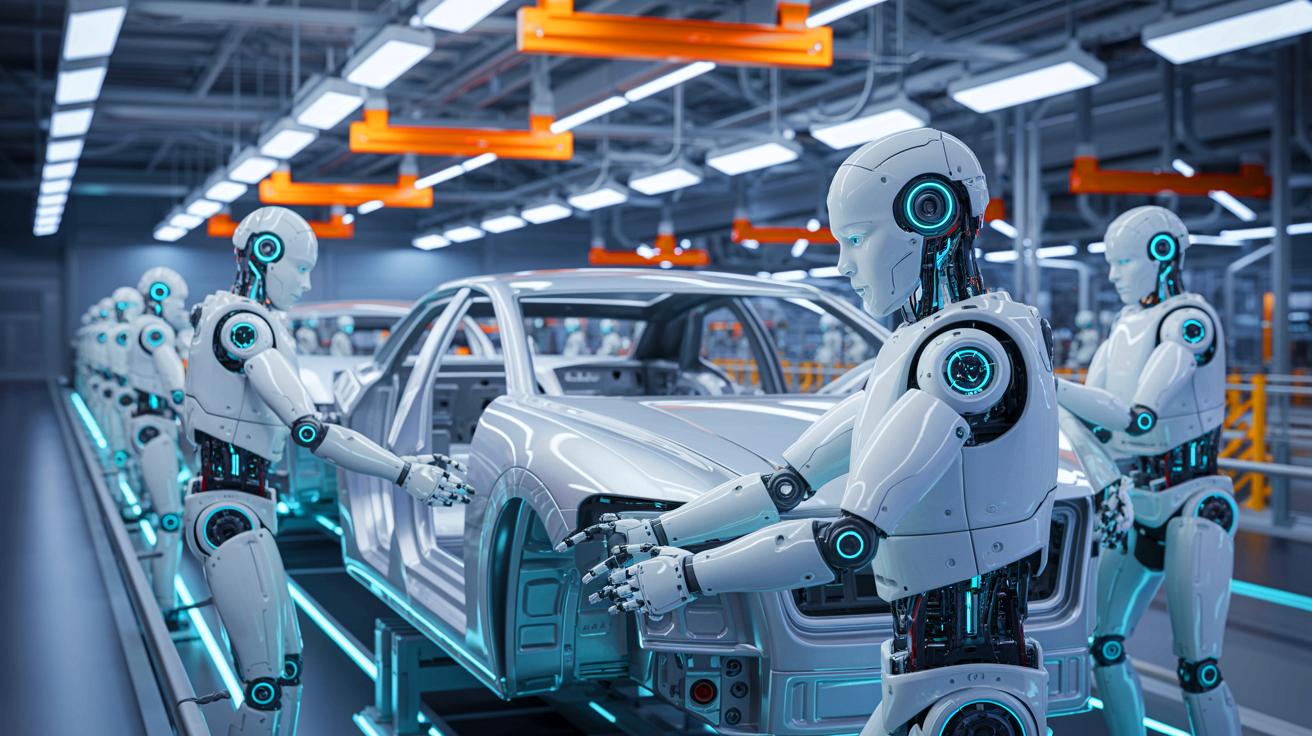
XPeng, a key player in the electric vehicle industry, is now venturing into the realm of humanoid robots . This strategic move aims to revolutionize factory production and bolster industrial automation. By making substantial investments in this technology, the Chinese company intends not only to enhance its own efficiency but also to position itself at the forefront of global competition, especially against giants like Tesla. How does XPeng plan to drive this ambitious transformation, and what impacts could it have on the industry?
XPeng Accelerates in Humanoid Robots
Recently, XPeng, a renowned Chinese manufacturer, announced a colossal investment of 100 billion yuan (approximately $13.8 billion) into developing humanoid robots. He Xiaopeng, the CEO of the company, explained that this commitment falls within a long-term strategy aimed at transforming the industrial landscape. Since 2020, XPeng has showcased its prowess in robotics with the launch of its first model, Iron, last November. Designed to compete with the Tesla Bot, Iron aims to enhance factory productivity through its capabilities for integration within industrial environments.
This ambitious initiative marks a turning point for XPeng, which does not plan to stop here. The company envisions expanding its humanoid workforce over the next two decades. Although the initial funds allocated are modest, XPeng is determined to intensify its investments to remain at the cutting edge of technological innovation. The development of humanoid robots appears to be a critical step in the evolution of the industrial sector.
An Industrial Revolution in the Making
XPeng is not the only player interested in humanoid robots. Leapmotor, another Chinese manufacturer backed by Stellantis, is also exploring their use in automotive assembly. These initiatives aim to improve production line efficiency while reducing reliance on human labor. During AI Day 2024, XPeng presented Iron, a humanoid robot standing 1.73 meters tall and weighing 70 kilos, equipped with 60 joints and offering 200 degrees of freedom. Its technological heart relies on the Turing chip, capable of processing complex AI models.
With these advancements, XPeng hopes not only to increase the precision and speed of manufacturing processes but also to redefine the standards in the automotive industry. The integration of robots like Iron could fundamentally transform how vehicles are assembled, paving the way for a new era of automation.
China’s Quest for Technological Leadership
The development of humanoid robots is part of a broader national strategy. The Chinese government actively encourages tech companies to invest in artificial intelligence and automation, aimed at enhancing national sovereignty. Beijing aspires to make China a global leader in robotics, and XPeng is at the forefront of this effort.
In the face of competitors like Tesla, whose Optimus robot is in advanced stages of development, XPeng is doubling its efforts to refine its prototypes. This rivalry fuels innovation and propels Chinese manufacturers to invest heavily in this sector. By transforming the automotive industry, these advancements could also have repercussions in other areas, fundamentally altering the interactions between humans and machines.
The Future Implications for the Industry
XPeng’s commitment to humanoid robots could have significant implications for the automotive industry and beyond. By investing in this technology, XPeng is not only improving its own efficiency but is also influencing how other sectors approach automation. The potential of humanoid robots extends far beyond production lines , as they could transform various aspects of society and industry.
As XPeng and its competitors continue their investments in this cutting-edge technology, the question remains: how will these innovations shape the future of the industry and society at large? Will we be ready to embrace these transformations and fully harness the potential of humanoid robots?
The author relied on artificial intelligence to enrich this article.
Did you enjoy this? 4.4/5 (27)