
| IN BRIEF |
|
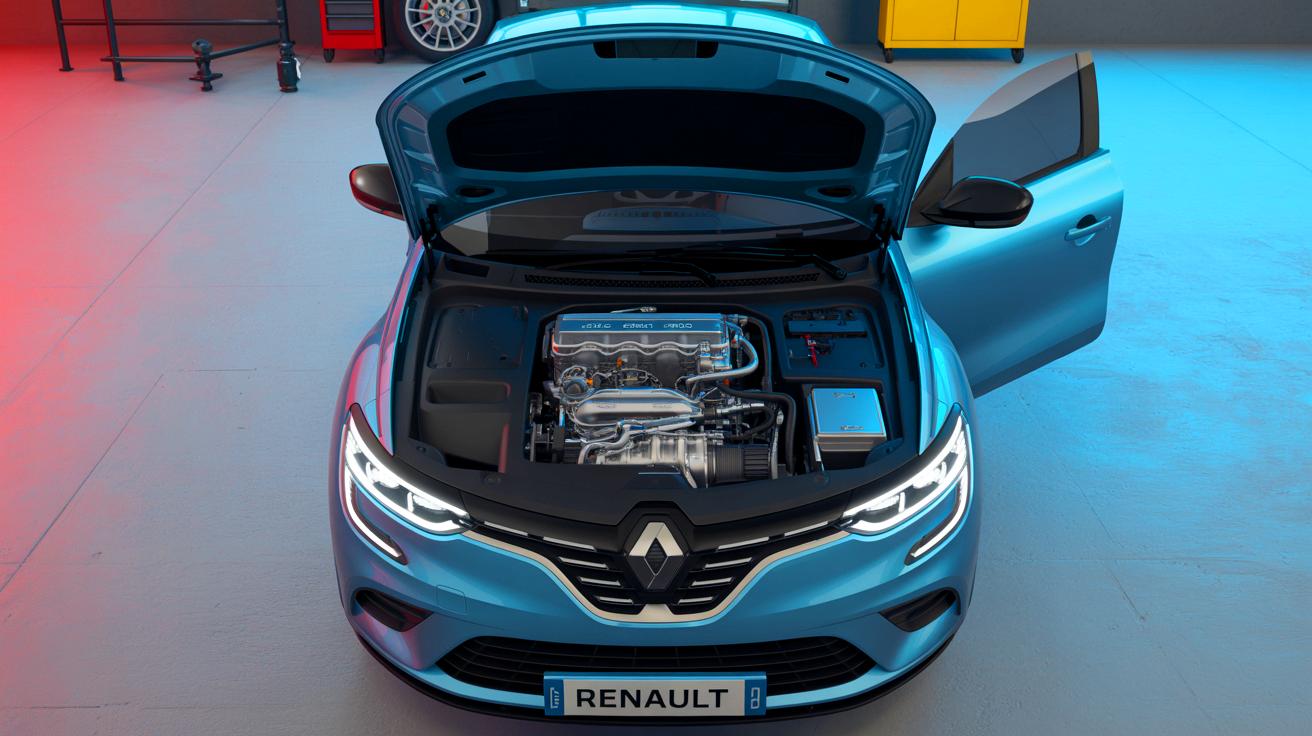
The automotive sector is undergoing a significant transformation, and Renault, in partnership with its Brazilian joint venture Horse, is firmly stepping into this dynamic with the launch of the innovative H13 engine. This technological advancement marks an important stride towards more sustainable transport solutions while addressing the growing environmental demands. The H13 engine is designed to operate on both gasoline and ethanol, aligning with strategies to reduce CO2 emissions and optimize local energy resources.
The H13 Engine: A Major Technological Leap
Renault, in collaboration with Horse, has unveiled the H13, a 1.3 turbo flex-fuel engine that can efficiently use either gasoline or ethanol. This four-cylinder engine is notable for its capability to switch between these two fuels without requiring complex adjustments or manual interventions. Power delivery varies slightly based on the fuel being used: it achieves 164 horsepower with gasoline and 167 horsepower with ethanol. The torque remains constant at 250 Nm from 1,600 rpm, guaranteeing smooth driving in urban settings.
This innovative technology offers the user flexibility, ideal for regions where fuel supply can fluctuate. The use of ethanol, often derived from renewable sources like sugarcane or corn, also helps to reduce the carbon footprint of vehicles equipped with this engine. The performance of the H13 demonstrates that the automotive industry can harmonize energy efficiency with environmental respect.
An Optimized Injection System for Ethanol
To meet the specific requirements of ethanol, Renault and Horse engineers have completely rethought the direct injection system. The components of the engine are designed to withstand the more corrosive nature of ethanol, thereby ensuring enhanced longevity and reliability. The six-port injectors operate under a pressure of 200 bars, allowing for optimal fuel atomization.
This innovation enables the engine to automatically adapt to the type of fuel used, with no driver intervention needed. Whether the tank contains gasoline or ethanol, the engine adjusts its performance in real-time, ensuring smooth and seamless transitions. This clever system underscores Renault’s commitment to more ecological mobility while providing drivers with an improved driving experience.
Targeted Markets and Expansion Potential
Initially, the H13 engine will equip Renault and Dacia models destined for specific markets like Latin America, Africa, and Asia. In these regions, ethanol is often used as an economical and ecological substitute for gasoline, thanks to its local production from renewable resources. This strategic choice allows Renault to reinforce its presence in markets where the demand for alternative energy solutions is high.
In Europe, the H13 engine could be introduced in a hybrid format, combining the advantages of flex-fuel technology with electric power. This would provide a more sustainable option for European consumers, who are increasingly conscious of environmental issues. Given that infrastructure for ethanol in Europe is still limited, market adaptation will be crucial for the success of this technology on the continent.
Investments and Future Prospects
Renault and Horse have invested €100 million in the development of the H13 engine, with the ambitious goal of producing 600,000 units annually. This significant production capacity aims to reduce manufacturing costs and make bi-fuel technologies more accessible to the public. This industrial project reflects Renault’s commitment to sustainable mobility and aligns with a strategy similar to that adopted for diesel engines in the 2000s.
The success of the H13 could encourage other manufacturers to explore similar technologies, thus expanding the options available to consumers regarding alternative fuels. While Stellantis already offers ethanol-compatible models in France, increased competition could catalyze innovation and hasten the adoption of these technologies in the European market. The energy transition is underway, and thermal engines, far from obsolete, still play a vital role in this transformation.
The H13 engine from Renault and Horse opens new perspectives for the global automotive industry. By offering a viable alternative to traditional fuels, this innovation could well redefine the standards of sustainable mobility. As infrastructure for ethanol continues to develop, one question remains: what will the next steps be to integrate these technologies on a large scale in Europe and beyond?
The author utilized artificial intelligence to enrich this article.
Did you enjoy this? 4.4/5 (25)