
Memorials Under Attack: The Troubling Trend of Vandalism Against Stolpersteine
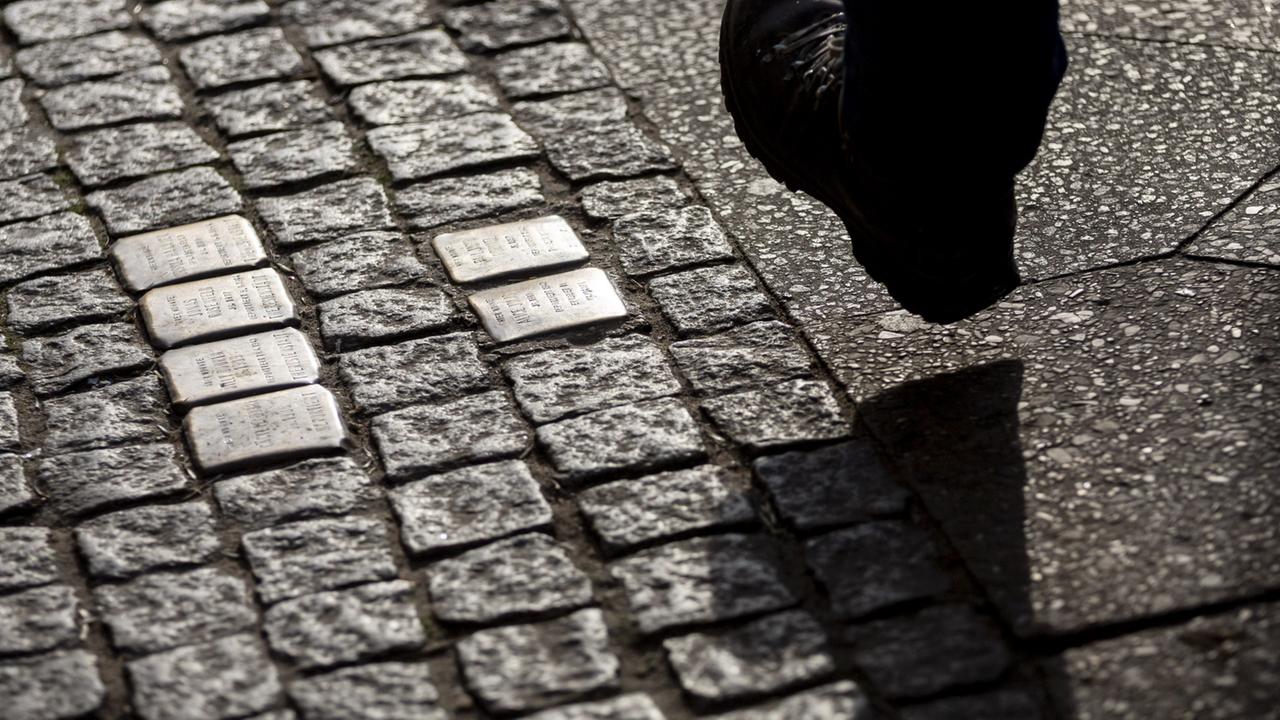
Stolpersteine, small brass memorials embedded in the pavement, commemorate the lives of individuals persecuted and murdered by the Nazis. Over the past few years, their presence has expanded dramatically across Europe, with around 120,000 Stolpersteine installed to honor victims, primarily placed in front of their former residences. Each stone serves as a stark reminder of the atrocities of the Holocaust, giving a name, a face, and a place back to those who suffered immensely.
Unfortunately, incidents of vandalism or theft of these stones have become increasingly common. Recent thefts in Kaiserslautern, where four Stolpersteine were forcibly removed, have brought public outcry and introspection. Journalist Alexandra Dietz, through street surveys, captured public reactions, with many expressing shock and disgust. One young woman, overwhelmed by emotion, articulated her fears about the implications of such actions on her generation, stating, “It makes it hard to have any perspective, knowing that there are people in society who harbor such contempt.” This reflects a growing concern about the state of societal values and attitudes.
The Impact of Vandalism on Public Memory
As these incidents occur in various cities — including Magdeburg, Lünen, and Gotha — the statistics surrounding Stolpersteine vandalism remain alarmingly vague. A spokesperson from the Federal Criminal Police Office (Bundeskriminalamt) clarified that vandalism against Stolpersteine is not categorized under a universal national statistic. While such acts fall under politically motivated crimes, the lack of a standard procedure means many incidents go untracked.
The 2024 figures from the Federal Criminal Police Office report just nine cases of theft and 25 cases of vandalism, suggesting that these numbers are likely gross underestimations. For instance, in Berlin alone, only six cases were recorded, which brings into question the overall accuracy of anti-Semitic incident reporting in Germany.
Escalating Anti-Semitic Trends
Further complicating the landscape, the Research and Information Center on Anti-Semitism (RIAS) documented a significant rise in anti-Semitic incidents related to Stolpersteine, with 102 such cases reported last year. This represents a steep increase from the previous year, indicating an unsettling trend. Nikolas Lelle from the Amadeu Antonio Foundation has noted that although the motives of perpetrators are often unclear, there seems to be a correlation with rising extremism in broader society, fueling further anti-Semitic sentiments.
The Possible Motivations Behind Attacks
Understanding the motivations behind these attacks is complex. Most identified offenders tend to belong to right-wing extremist groups. They harbor beliefs that dismiss the importance of Holocaust remembrance, viewing it as an affront to their ideology. Some speculate a connection between anti-Semitic actions and political protests, hinting that instances of Stolpersteine vandalism may also manifest as misguided expressions of protest against contemporary geopolitical issues.
For example, the theft of ten Stolpersteine coincided with the anniversary of the Hamas attack in October 2023, suggesting a nuanced and troubling intersection of current events and historical memory. Critics argue that attacking these memorials is a misguided attempt to challenge a particular narrative, link society’s historical transgressions directly to current political situations, and undermine efforts to remember the Holocaust.
A Community Response to Vandalism
Interestingly, attempts to erase these memorials have instead led to a vibrant resurgence of community engagement. This phenomenon, known as the “Stolperstein Effect,” describes how thefts and vandalism often prompt public interest and financial support for replacement stones. In Berlin and Leipzig, for instance, citizens have begun producing replicas using 3D printers and organizing fundraisers to ensure the continuation of this vital memorial practice.
In Kaiserslautern, local activists organized a “Critical Mass” event to raise awareness, honoring the stones and their historical significance through educational talks. This grassroots response underscores the resilient nature of remembrance culture—that it thrives when local communities participate actively in preserving their history.
As social philosopher Lelle aptly points out, this is indeed a bottom-up culture of remembrance . While the Stolpersteine project was initiated by artist Gunter Demnig, its ongoing existence relies on local efforts and initiatives. Communities are proving that they will not be silenced by those who seek to erase their history; instead, they will rise in response, ensuring that the memory of those who suffered is kept alive in tangible, impactful ways.