
The Future of Lunar Mining: Exploring Helium-3 Extraction
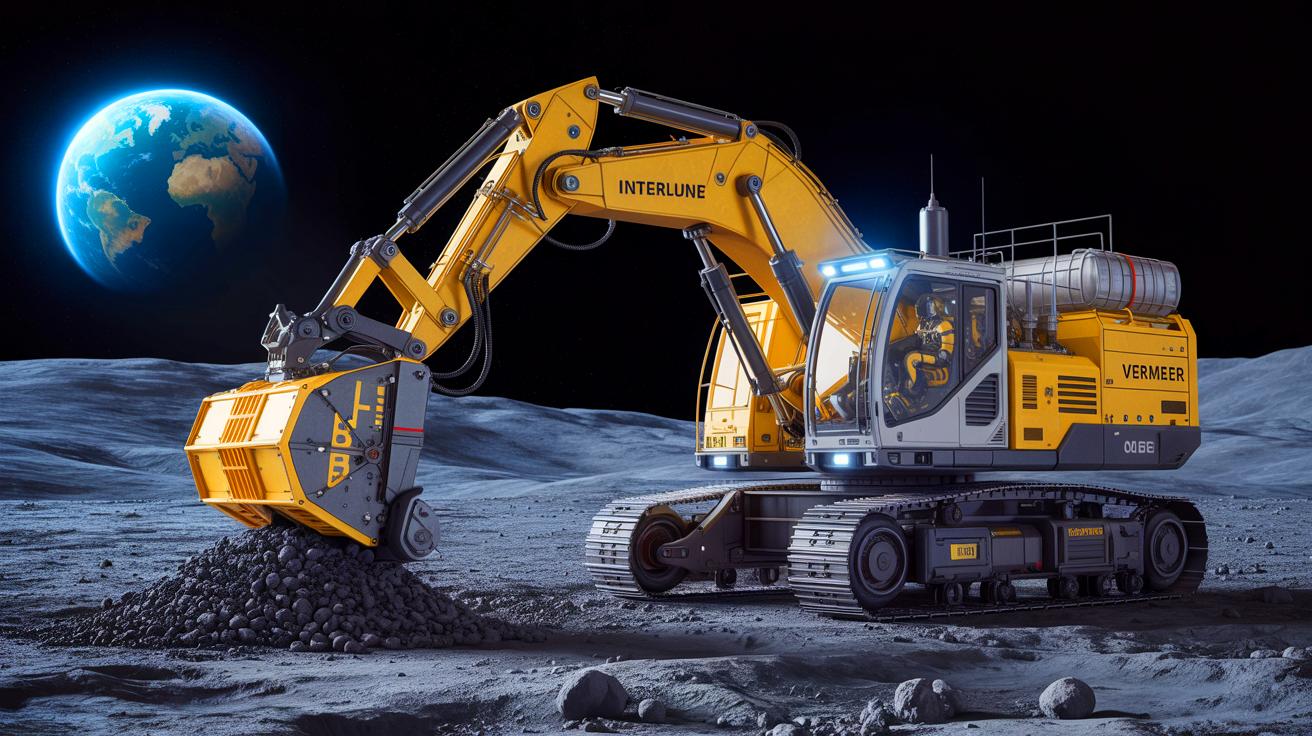
As technology continues to advance, humanity is increasingly looking towards extraterrestrial resources to meet growing energy demands. One of the most promising projects underway is lunar mining, initiated by startup Interlune in collaboration with industrial equipment manufacturer Vermeer. Together, they have developed a lunar excavator capable of extracting valuable resources like helium-3, an isotope that is rare on Earth but abundant on the Moon. This project, supported by NASA and the U.S. Department of Energy, could revolutionize how we produce energy and utilize advanced technologies.
Challenges of Lunar Mining
The idea of mining the Moon for its resources isn’t new, but it is becoming increasingly feasible thanks to recent technological innovations. The lunar excavator developed by Vermeer and Interlune is designed to extract up to 100 metric tons of lunar regolith per hour. This extraction rate is essential for making the extraction of helium-3 and other precious materials economically viable. However, these operations face unique challenges, particularly because of the Moon’s extreme conditions—temperatures can range from +110°C to -170°C.
To tackle these challenges, the excavator has been designed to be autonomous and resilient, capable of operating in the vacuum of space and withstanding temperature variations. Reliability and performance are crucial, as emphasized by Rob Meyerson, CEO and co-founder of Interlune. He insists that collaboration with Vermeer—a company with 75 years of innovation—was a natural choice for such an ambitious project.
Helium-3: Geopolitical Stakes
The potential of helium-3 extends far beyond its industrial applications. This material could play a pivotal role in the development of nuclear fusion, often regarded as the "Holy Grail" of energy production. Currently, terrestrial reserves of helium are limited and declining, prompting the technology and energy sectors to explore alternative sources.
The control of helium-3 reserves could provide a considerable strategic advantage in both technology and geopolitics. Whoever holds this resource could significantly influence the global energy economy and potentially alter geopolitical balances. It is a race against time with potentially vast implications for our collective future.
Objectives and Advances by Interlune and Vermeer
Despite international competition, notably from Japanese giant Komatsu, which is also developing lunar excavators, Interlune and Vermeer have a head start with their large-scale prototype. This equipment is not only larger but also more efficient, benefiting from significant financial and governmental support.
Interlune aims to launch a lunar mission by 2030, aspiring to achieve high excavation rates to extract substantial amounts of helium-3. Gary Lai, co-founder and CTO of Interlune, emphasizes that speed and efficiency in testing have been key to progressing quickly towards this goal. This initiative could signal the beginning of a new era of lunar industrialization, comparable to the early oil explorations on Earth.
Future Perspectives and Implications
As Interlune’s project advances, other nations and companies are also preparing to enter the race for lunar mining. The combined efforts of Vermeer and Komatsu illustrate the dawn of lunar industrialization—a new frontier that could revolutionize our approach to natural resources and energy.
The potential impact of these developments is immense. Not only could it transform how we generate and consume energy, but it could also redefine international relations surrounding the control of space resources. One question persists: who will be the first to sustainably and profitably exploit lunar resources?
The author has relied on artificial intelligence to enrich this article.
| EN BREF |
|
With ongoing technological advancements, humanity is increasingly turning to extraterrestrial resources to meet its growing energy needs. One of the most promising projects currently underway is lunar mining, initiated by the startup Interlune in collaboration with the equipment manufacturer Vermeer. Together, they have developed a lunar excavator capable of extracting precious resources such as helium-3, a rare isotope on Earth but abundant on the Moon. This project, supported by NASA and the U.S. Department of Energy, could transform our energy production methods and the utilization of advanced technology.