
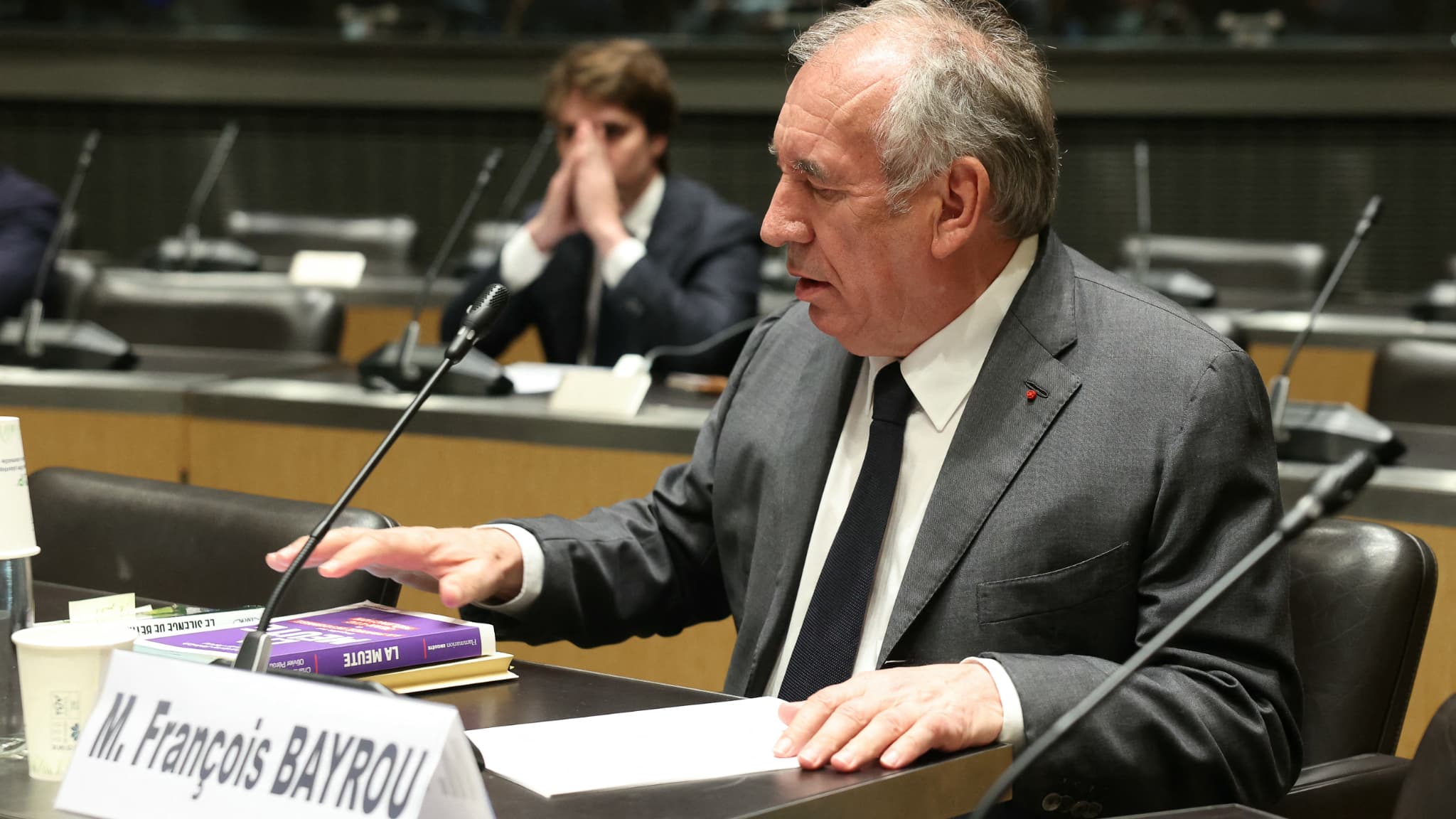
François Bayrou: Navigating Controversy and Claims of Innocence
Prime Minister François Bayrou has recently found himself embroiled in a significant controversy surrounding allegations tied to the Notre-Dame-de-Bétharram institution. As the investigative commission continues its scrutiny, Bayrou’s efforts to assert his innocence and counter the accusations have dominated headlines.
The Allegations Against Bayrou
The scandal dates back several decades, encompassing serious claims of violence and abuse within the now-infamous private school. These allegations, which touch on historical incidents, have sparked an ongoing police investigation into nearly 200 separate complaints. Critics argue that Bayrou’s position as a former Minister of Education during a crucial period exacerbates the scrutiny around his actions and inactions during his tenure.
Documents Released in Defense
In an attempt to clear his name, Bayrou recently released a series of documents he states will provide crucial evidence for his defense. Following a cyberattack that temporarily compromised access to this information, Bayrou transferred the documentation to prominent news outlets for public examination. Among these documents are press articles, educational circulars from his time as Minister (1993-1997), and a report from a 1996 pedagogical inspection at the Bétharram institution.
Bayrou claims these materials document his efforts to confront the issues at Bétharram and establish a semblance of accountability. Responses from the investigation suggest, however, that the evidence may not be as compelling as he hopes.
The Author of the Claims
A particularly challenging aspect for Bayrou comes in the form of accusations made by Françoise Gullung, a mathematics teacher who has been vocal about alleged incidents during her tenure at Bétharram. Her statements assert that the reality of violence within the institution was difficult to ignore, making Bayrou’s tenure particularly suspect.
Counterarguments to Gullung’s Claims
In his defense, Bayrou has aggressively challenged Gullung’s credibility, arguing that her memories contain contradictions. He states that her timeline of events does not align with the documented history of administrative changes in the school. For Bayrou, questions surrounding Gullung’s credibility form a critical pillar of his defense strategy.
The Meeting with Judge Mirande
Central to the controversy is Bayrou’s alleged encounter with former Judge Christian Mirande in 1998. Mirande claims that during their private meeting, he discussed ongoing allegations involving the school, but Bayrou has repeatedly stated he does not recall such a discussion. This contradiction leads to charges of selective memory on Bayrou’s part. Mirande’s assertion that he shared critical information raises serious questions regarding Bayrou’s knowledge of the unfolding events—questions that the Prime Minister insists are unfounded.
Bayrou’s Continued Defense
Bayrou remains firm in his stance, insisting he did not influence the judicial process surrounding the allegations. He claims he acted purely in good faith based on the information available at the time. The Prime Minister has also pointed toward his record while in office, highlighting efforts made to investigate abuse claims and bolster regulations for private educational institutions.
In presenting these arguments, Bayrou is aware that failing to convince the commission could have catastrophic implications for his political future. In his view, the core of the allegations revolves around misunderstandings and misrepresentations of the facts.
Critique of the Judicial Process
Bayrou’s defense also critiques the investigation’s approach. He contends that the judicial process has been unduly influenced by public sentiment, which has effectively framed him as guilty in the court of public opinion. He notes the importance of separating political motivations from judicial determinations to ensure a fair investigation.
The Future Uncertain
As the inquiry wraps up, all eyes remain on the commission’s report, which is scheduled for release at the end of June. The implications of this report could decisively shape Bayrou’s political trajectory, as the findings may either reinforce his arguments of innocence or lay the groundwork for potential accountability.
The stakes are indeed high for the Prime Minister, not just in terms of his political future but also regarding his personal reputation. Acknowledge or dismiss the allegations, the Prime Minister’s role in the unfolding drama emphasizes the intersection between politics, justice, and social accountability, indicating a widespread demand for transparency and reform within private educational institutions, especially those with troubling pasts.
Conclusion
The unfolding events concerning François Bayrou highlight a significant intersection of political responsibility and ethical accountability. As the Prime Minister endeavours to clear his name amidst serious allegations, the outcome will likely play a pivotal role in shaping future governance and educational oversight in France.
Après avoir dénoncé “une cyberattaque” sur son site qui devait fournir des preuves de son innocence dans ce dossier, le Premier ministre a transmis ces documents à BFMTV et RMC. Ils reprennent ses éléments de défense devant la commission d’enquête le 14 mai dernier.
Promesse tenue pour François Bayrou. Huit jours après avoir expliqué devant l’Assemblée nationale qu’il publierait “la totalité des documents” qui prouve son innocence dans l’affaire Bétharram, le Premier ministre les a transmis à BFMTV et RMC.
Sur notre antenne ce mardi, le chef du gouvernement a assuré avoir procédé à leur publication le week-end dernier sur son site mais avoir été victime d’une “cyberattaque” dans la foulée. Les documents que nous dévoilons récapitulent en grande partie la défense du Premier ministre, longuement auditionné par la commission d’enquête le 14 mai dernier.
Les députés planchent maintenant depuis des semaines sur les violences dans le cadre scolaire et notamment le dossier de Notre-Dame-de Bétharram, un établissement privé au cœur d’un scandale de violences et viols s’étalant sur plusieurs décennies. Le parquet de Pau enquête actuellement sur près de 200 plaintes.
François Bayrou a joué très gros devant les députés. Dans une atmosphère très tendue, le Premier ministre qui a réaffirmé son innocence, sans toujours convaincre, doit maintenant attendre les conclusions de la commission d’enquête prévues fin juin.
De quoi pousser le locataire de Matignon à jouer la carte de l’offensive. On trouve dans les textes transmis à BFMTV et RMC “des faits et documents” qui “ont été difficiles à faire apparaître”, assure le centriste.
On y lit cependant des articles de presse, plusieurs circulaires publiées par François Bayrou quand il était ministre de l’Éducation nationale entre 1993 et 1997, toutes déjà accessibles en ligne sur le site Légifrance, le rapport de l’inspection pédagogique menée à Bétharram en 1996, déjà publié par Le Figaro ou encore le récapitulatif de la défense de François Bayrou devant la commission d’enquête.