
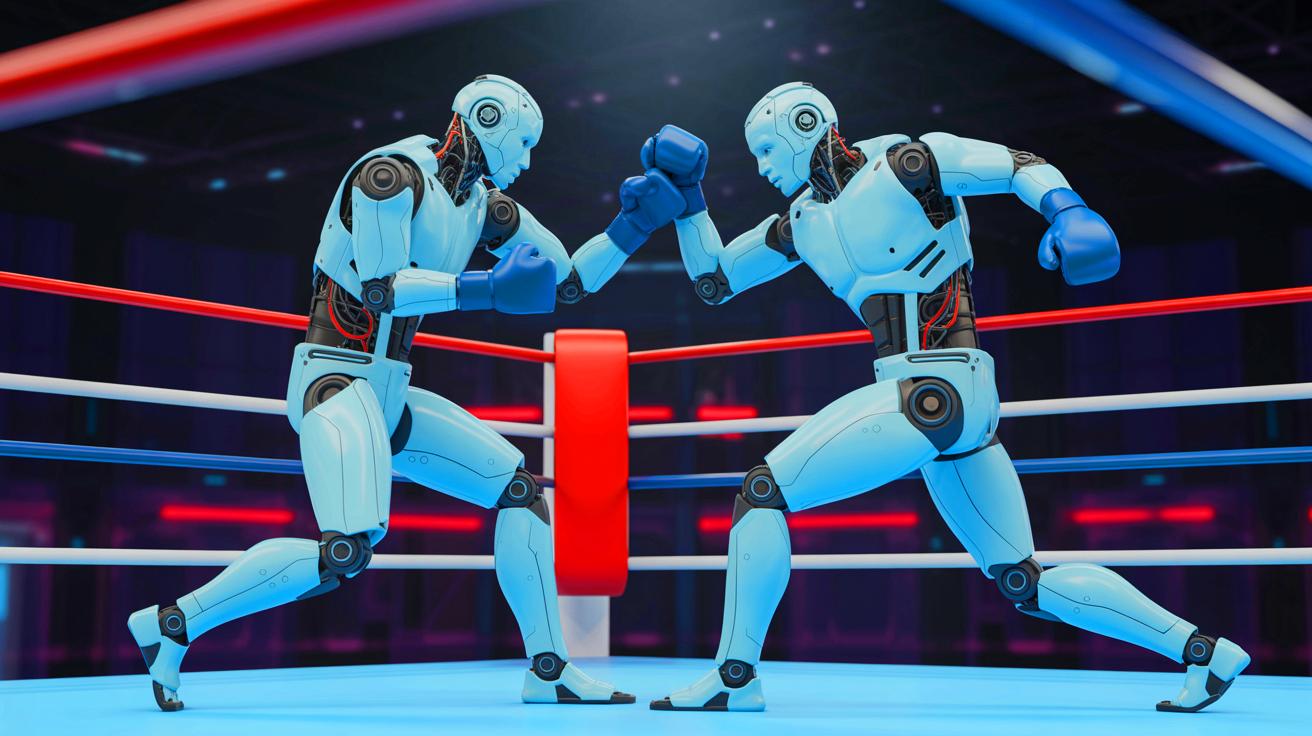
The Future of Humanoid Robotics: A New Era of Combat Sports
The world of robotics has taken a significant leap with the inaugural humanoid boxing match held in Hangzhou , Zhejiang Province, China. This event showcased the dexterity and precision of Chinese robots capable of executing complex movements similar to human beings. During the competition, these robots displayed a variety of combat techniques , including straight punches, hooks, side kicks, and even aerial spinning kicks. Spectators were amazed by their ability to recover after a fall, illustrating not just their endurance but also their impressive coordination .
Human Operators Control the Matches
The boxing matches were orchestrated by four teams of human operators , each managing the movements and strategies of their respective robots. The robots’ boxing abilities were put to the test not just in one-on-one duels but also in group battles, allowing for evaluations of their reactivity and agility in high-pressure scenarios. This event not only highlighted the expertise of the robots in dynamic situations, but it could also stimulate innovation in sensing , control , and execution technologies in robotics.
One of the participants, G1 from Unitree Robotics, demonstrated the capacity to deliver punches with precision. However, some movements revealed synchronization failures , where robots occasionally struck air while their opponents were situated elsewhere. This inconsistency serves as a reminder of the challenges that still exist in the field of robot control .
A Black-Helmeted Robot Emerges as Champion
The first boxing match was won by a robot sporting a pink helmet. However, the overall tournament champion was a bipedal robot donned in a black helmet . This champion managed to counter powerful blows from its opponent, a robot wearing a green helmet , demonstrating remarkable balance that allowed it to stay upright while its adversary succumbed to the ground. In the final match, both robots exhibited advanced techniques, captivating the audience with their impressive performances.
Chen Xiyun, a marketing representative from Unitree Robotics, emphasized that the robot combats were conducted in a collaborative human-machine mode . He also pointed out that these machines displayed movements ranging from straightforward punches to more complex aerial techniques, showcasing their remarkable ability to return to standing after falling.
The Importance of Balance and Mobility
The robots were trained to be combat-ready, with developers emphasizing the significance of having a sufficient self-balancing capability . Mobility and movement precision were vital for their participation in these boxing matches. The G1, with its fluid control over movements, illustrated skills closely resembling those of humans during combat. Standing at 1.32 meters tall, this robot was designed by Unitree to operate effectively in various challenging conditions, offering improved flexibility and agility .
Experts also revealed that the boxing match highlighted China’s advances in artificial intelligence and robotics. Such events facilitate the evaluation of remote-controlled robots’ performances as they prepare for combat and adapt to confrontation scenarios.
Looking Towards the Future of Robotics
The first humanoid robot boxing competition opens fascinating prospects for the future of robotics. By showcasing advanced physical capabilities and whole-body coordination , these robots are part of a broader evolution within combat sports. These events allow for assessing how robots learn and adapt, providing a platform to develop more sophisticated remote control technologies.
As the fields of robotics and AI continue to progress rapidly, what new applications and innovations will emerge in the coming years as a result of these impressive technological advancements? The potential for automated combat sports is just one of the many possibilities on the horizon.
The author has utilized artificial intelligence to enhance this article.
| EN BREF |
|