
India Enhances Defense Autonomy Amid Regional Tensions
India is taking significant steps toward enhancing its defense capabilities, particularly in light of growing tensions with neighboring countries, notably China and Pakistan. As one of the largest importers of arms globally, India has made the modernization of its military a top priority. This effort comes at a crucial time, marked by recent military confrontations that have heightened security concerns within the region.
Strengthening Military Autonomy
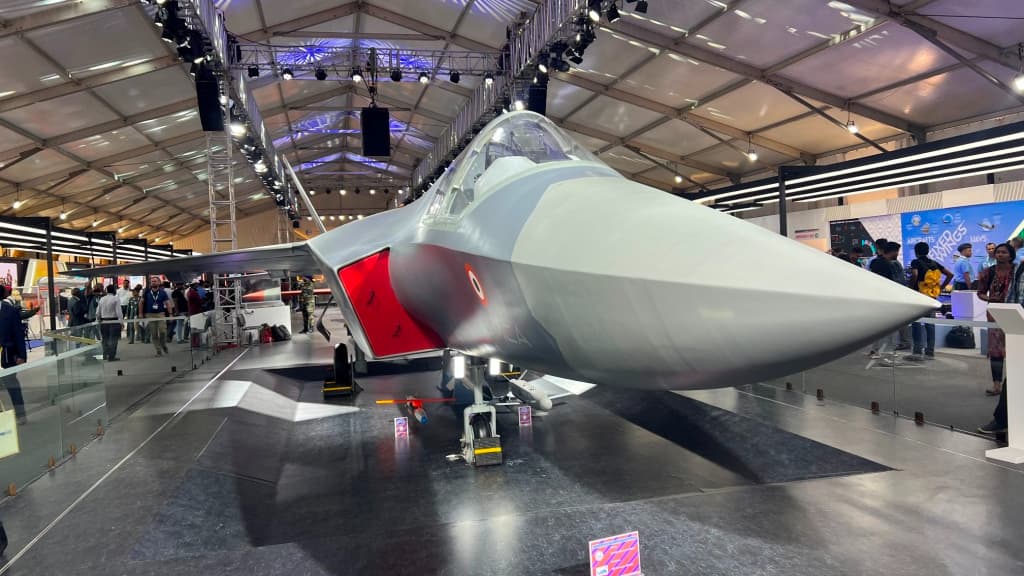
In a recent announcement, India has approved a program aimed at developing a prototype of an advanced fifth-generation combat aircraft (AMCA). This initiative seeks to bolster the nation’s defense autonomy, especially following a military standoff with Pakistan. The Ministry of Defense revealed that this project will be executed through an industrial partnership, which signals a commitment to self-reliance in the defense sector.
The Advanced Medium Combat Aircraft (AMCA) project is expected to represent a major leap toward achieving self-sufficiency in aerospace capabilities. With a weight of 25 tons, the aircraft will include an internal payload of 1.5 tons and an external payload capacity of 5.5 tons, alongside 6.5 tons of fuel. Such specifications demonstrate India’s commitment to developing indigenous military technology that can meet its strategic needs.
Shift in Arms Import Strategies
India’s approach to arms imports is notably shifting. Historically dependent on Russia for military supplies, India is now gravitating toward western nations for defense partnerships. In the period from 2019 to 2023, it was reported that arms purchases constituted approximately 10% of India’s total imports, marking the nation as one of the largest defense importers globally.
As part of its evolving relationships, India has entered into contracts for 156 locally manufactured light combat helicopters and is deepening ties with countries like the United States, Australia, and Japan through groups such as the Quad. These alliances reflect a shared concern regarding China’s increasing military influence and expansion in the region.
The India-France Defense Partnership
India is also solidifying its longstanding defense relationship with France, which has been instrumental in supplying advanced military technology. As of April, India confirmed the order of 26 Rafale aircraft for its naval forces, building on a previous commitment in 2016 for 36 Rafale jets to enhance its air force capabilities.
These transactions indicate a robust strategic partnership that has been developing over the last 70 years, with France accounting for approximately 28% of India’s arms imports between 2020 and 2024. This synergy is not only crucial for India’s military capabilities but also reinforces France’s position as a key exporter of defense equipment.
Recent Confrontations and Military Losses
The complexities of India’s defense landscape became evident during its recent military confrontation with Pakistan, which marked the most intense engagement between the two nations in decades. Following an attack that resulted in civilian casualties, India executed a military operation culminating in a ceasefire announcement.
Reportedly, six Indian aircraft, including three Rafale jets, were allegedly downed by Pakistani forces during the clash. While India has not officially confirmed these losses, the situation raises critical questions regarding the operational effectiveness of its advanced aircraft.
Implications for the Future
The recent military actions and evolving defense partnerships illustrate that India is navigating a precarious security environment. The shift toward autonomy in defense capabilities is emblematic of a broader strategy to establish strategic independence while simultaneously engaging in international defense relations.
Aiming for Self-Sufficiency in Aerospace
The AMCA project, coupled with other modernization initiatives, is paving the way for India to become a self-reliant defense manufacturer. This ambition is fueled by rising regional threats and the necessity for an advanced military infrastructure that can operate independently of foreign dependency.
The Indian government’s commitment to this cause is evident in its investments in technology and partnerships within the aerospace sector. The Aeronautical Development Agency (ADA) has received directives to move forward with this project, indicating that the nation is fully engaging in endeavors to innovate and produce sophisticated military hardware.
Conclusion: A New Era in Indian Defense
India’s pursuit of military modernization is not simply about expanding its arsenal; it is a strategic overhaul aimed at ensuring its sovereignty and security in an increasingly volatile region. As it embarks on this journey, the implications are monumental, promising to transform India’s defense landscape and redefine its engagement in global defense alliances.
L’Inde qui a représenté à elle seule 28% des exportations d’armement de la France est prête à avancer dans son autonomie en matière de défense. Le pays a fait de la modernisation de son armée une priorité absolue notamment en raison des tensions avec la Chine et le Pakistan.
L’Inde a approuvé mardi un programme visant à développer un prototype d’avion de chasse, un projet destiné à accroître son autonomie en matière de défense, près de trois semaines après la confrontation militaire avec le Pakistan, a annoncé le ministère de la Défense.
Le ministre de la Défense, Rajnath Singh, a approuvé le prototype d’un avion de combat avancé de 5e génération (AMCA), selon un communiqué de son ministère.
L’Agence de développement aéronautique (ADA) de l’Inde, qui dépend du ministère de la Défense, “est sur le point d’exécuter ce programme via un partenariat industriel”, a-t-elle ajouté, affirmant que “ce sera une avancée majeure vers l’autosuffisance dans le secteur aérospatial”.
L’entreprise d’état indienne HAL (Hindustan Aeronautics Ltd) avait annoncé en mars la fabrication du premier bord d’attaque du prototype de cet avion de combat.
Cet AMCA, d’une masse de 25 tonnes, aura une charge utile interne de 1,5 tonne et une charge utile externe de 5,5 tonnes en addition de 6,5 tonnes de carburant, indique le Gifas sur son site. Il sera disponible en version furtive et non furtive.
10% des importations indiennes
L’Inde a fait de la modernisation de son armée une priorité absolue notamment en raison des tensions avec la Chine et le Pakistan, deux pays voisins dotés de l’arme nucléaire.
Le pays est l’un des plus grands importateurs d’armes au monde.
En moyenne, les achats d’armement ont représenté près de 10% de ses importations en 2019-2023, a affirmé l’an dernier l’Institut international de recherche sur la paix de Stockholm (SIPRI).
L’Inde s’affirme également de plus en plus au sein d’alliances multilatérales comme le “Quad”, comprenant le Japon, l’Australie et les États-Unis, de plus en plus préoccupés par l’influence militaire et économique de la Chine.
Dans le même temps, elle se détourne lentement de la Russie, son allié traditionnel et principal fournisseur d’armement depuis des décennies, pour privilégier des contrats avec des pays occidentaux.
Fin mars, New Delhi a annoncé la signature d’un accord en vue d’acheter 156 hélicoptères de combat légers fabriqués localement. L’Inde est aussi un client de Dassault Aviation. Fin avril, New Dehli a acté la commande de 26 Rafale français pour sa marine. Le pays avait déjà acheté 36 Rafale en 2016, pour équiper ses forces aériennes. Un potentiel contrat de 40 appareils supplémentaires serait par ailleurs en cours de discussion entre l’Inde et la France.
L’intérêt de l’Inde pour les avions français n’est d’ailleurs pas nouveau: le pays est client de Dassault Aviation depuis plus de 70 ans. Le premier achat datant de 1953. Sur la période 2020-2024, l’Inde a représenté 28% des exportations d’armement de la France, selon les données du Stockholm International Peace Research Institute.
Au cours de la dernière décennie, l’Inde s’est dotée de son premier porte-avions fabriqué localement, de navires de guerre et de sous-marins.
L’Inde est également devenue l’un des six pays ayant des capacités de frappe nucléaire sur terre, mer et air après avoir testé un missile balistique depuis son premier sous-marin nucléaire produit localement.
Un Rafale perdu au combat
L’Inde et le Pakistan se sont affrontés quatre jours ce mois-ci, leur pire confrontation depuis des décennies, jusqu’au cessez-le feu annoncé le 10 mai.
Cette opération militaire a été lancée par l’Inde en représailles à l’attaque qui a fait 26 morts, tous des civils, le 22 avril dans une ville touristique du Cachemire indien.
Islamabad a affirmé que ses avions de chasse, construits par la Chine, avaient abattu six appareils indiens – dont trois Rafale de fabrication française. L’Inde n’a pas confirmé officiellement la perte d’avions.
Un haut responsable de la sécurité a indiqué à l’AFP que trois appareils se sont écrasés sur le territoire indien sans préciser leur modèle ou la cause.
Selon un haut gradé français, les Indiens ont perdu “non pas trois, mais un Rafale” au cours du conflit, dans des circonstances qu’il reste à établir. “Toutes les hypothèses sont sur la table”, selon cette source.