
The Growing Trend of Adults-Only Venues
In recent years, a notable trend has emerged within the hospitality industry: the proliferation of establishments that restrict entry to those under 16 years old. This movement, which many claim caters to their desire for a more tranquil dining or vacation experience, has stirred debate among the public and professionals alike.
Understanding the motivation behind these adult-only policies is essential. Many patrons express frustration at the noise and disruptions that accompany children while they seek to enjoy their time. These establishments, often marketed as "adults only", aim to provide a serene environment free of the sounds associated with children.
The Voices in the Debate
However, the implementation of such policies has been met with opposition, particularly from prominent figures in society. One notable critic is Laurence Rossignol, a French senator, who recently spoke out against this trend. She argues for legislative changes that would extend existing anti-discrimination laws to include children, stating, “Children should live with us, beside us. We need to love and sometimes tolerate them because a society without children is a society that retreats."
This highlights a key point in the debate: the role of children in society. Critics of adult-only venues believe that segregating families and children is a step backward. They argue that children have a rightful place in public spaces, and we must adapt to coexist with them.
The Influence of Media Discussions
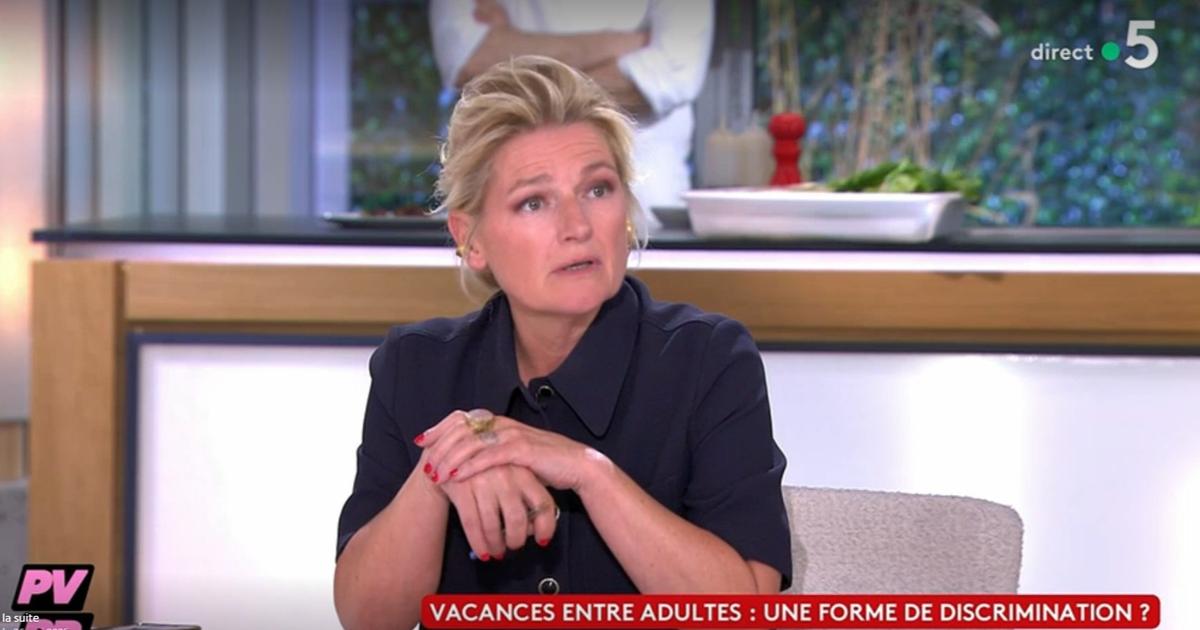
Specific discussions within the media further illuminate these viewpoints. On a recent episode of "C à vous," journalist Mohamed Bouhafsi discussed a report indicating that the number of hotels designated for adults has doubled worldwide. During this segment, host Anne-Elisabeth Lemoine voiced her disapproval, stating, "I find this appalling." Her comment, although made amidst a discussion, was captured on camera, drawing attention to the public’s response to the growing trend.
Such dialogues illustrate how media serves as a platform for public discourse, pushing the conversation surrounding these contentious topics into the limelight. Viewers are not merely passive observers; they engage with these issues, often aligning with the opinions expressed by well-known figures.
Finding Common Ground
Interestingly, amid the diverging opinions, some individuals, like Stéphane Bern, represent a more nuanced perspective. He acknowledged the challenges that noisy children present but also shared that he cherishes their presence. He remarked, “I am against spaces without children. I love children.” However, he did express concern, suggesting that children should ideally be in bed by 9:30 PM when dining occurs.
Here, Bern reflects a common socio-cultural dilemma: balancing the enjoyment of adults with the rights and presence of children in public spaces. The issue rests not merely on inconvenience but also on societal responsibilities — both to nurture children and accommodate adults.
A Personal Reflection on Society’s Norms
In her passionate comment, Anne-Elisabeth Lemoine reiterated her disdain for this trend, emphasizing that adults can often be louder than children. This sentiment resonates with many who believe that reliance on adult-only policies fails to address the root concerns: which are the behaviors of the patrons themselves.
The idea that adults are not exempt from creating noise or disturbances is an important point in this discussion. Observations like “I know adults who make much more noise than children” serve as a reminder that noise levels in communal spaces can be subjective.
Conclusion: The Need for Dialogue
Ultimately, the discussion surrounding adult-only establishments raises questions about inclusivity and understanding among different age groups. As society evolves, so too must our approaches to coexistence in public spaces. As pointed out by various commentators, it is essential to rethink what it means to create inclusive atmospheres.
This ongoing debate reflects much more than opinions on silence during dinner or tranquility at hotels; it embodies the larger question of how we choose to navigate our shared social spaces. Balancing the desires of adults with the dynamic, often unpredictable nature of children is a challenge but also presents an opportunity for a richer communal experience.
L’animatrice de «C à vous» n’a pas réussi à contenir son opinion tandis que son confrère présentait un sujet sur les établissements interdits aux moins de 16 ans.