
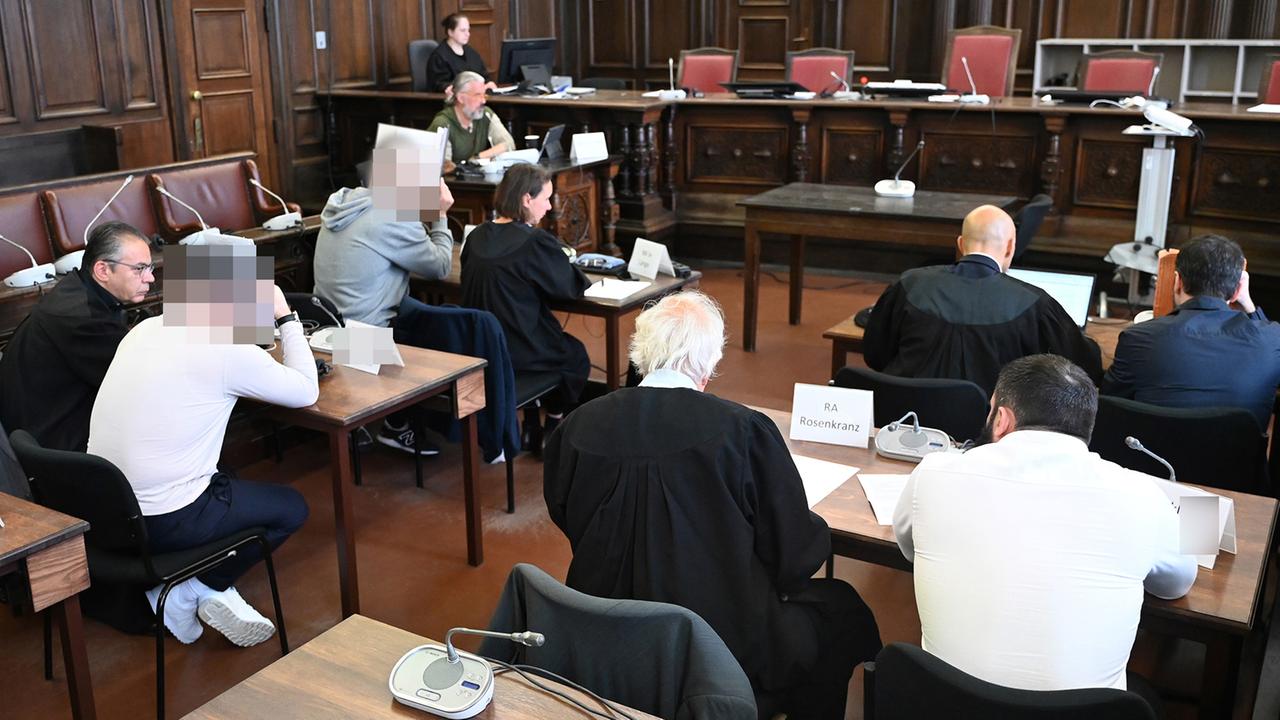
The Trial of Four Chechen Nationals in Hamburg
The recent trial involving four Chechen men in Hamburg has drawn significant media attention. These individuals are accused of raising funds for Islamic State (IS) members and their families. According to federal prosecutors, the accused formed a criminal organization beginning in 2022, aiming to collect money to support terrorist activities. The severity of these allegations has compelled the court to take decisive actions.
Overview of the Accusations
The federal prosecution asserts that these individuals utilized social media and Telegram groups to solicit donations. They allegedly managed to collect substantial sums, amounting to over €174,000, which were designated for IS members. In asserting the gravity of the situation, Senior Public Prosecutor Stefan Freuding listed numerous instances of financial transactions during the court proceedings. One defendant reportedly raised €65,000 before directing these funds to members of the terrorist group.
Profile of the Defendants
Among the four defendants, three were born in Chechnya, while one hails from Kazakhstan. Their residence spans across major cities in Germany, including Berlin, Hamburg, and Schleswig-Holstein. Authorities arrested three of the men in July 2024, while the fourth was detained in January 2025. All four men, aged between 35 and 45, have been in pre-trial detention since their arrests.
Funds for Mothers and Fighters
According to the charges, these funds were primarily raised from Germany, France, Belgium, and Austria. The money was intended for female IS members and fighters in northern Syria. An illustrative case involves a mother who planned to send €1,160 to her daughter in a detention camp in Syria. In another instance, funds were earmarked for the release of two women and their five children from the notorious Al Hol camp in northern Syria.
The collected funds, often in hundreds to several thousand euros, were reportedly converted into US dollars or cryptocurrencies. Subsequently, these were transferred to two intermediaries located in Turkey. Prosecutor Freuding characterized these intermediaries as IS affiliates who were responsible for moving the funds into northern Syria by untraceable means.
One notable case in the prosecution’s documentation involves a fighter named Valid Umarov, who allegedly purchased three AK-47 rifles for the purpose of facilitating donations during his time in Afghanistan in 2022. Additionally, a transfer of $5,000 was reportedly allocated for the release of a fighter in Ukraine in 2024.
IS: A Resilient Threat
The prosecutor emphasized that the IS organization has not been completely eradicated despite the death of its leader, Abu Bakr al-Baghdadi, and the loss of its territories in 2019. Estimates suggest that between 4,000 to 6,000 fighters continue to operate in border areas of Syria and Iraq. The IS has conducted thousands of attacks both within and outside the region, establishing affiliates in nations like Egypt and Khorasan in Afghanistan.
In detained camps managed by Kurdish forces in northern Syria, approximately 65,000 individuals remain. Reports indicate that the women in these camps exert coercive pressure on other inmates to adopt IS ideology and wear full-body coverings. Disturbingly, children in these facilities are reportedly groomed to become future IS fighters.
Allegations of Humanitarian Intent
One of the defendants, Zelimkhan D., maintains that he aimed to collect money for humanitarian and religious purposes. His legal representative claims that the funds were intended for earthquake victims in Turkey and other charitable causes. According to him, individuals from Chechnya traditionally join their husbands in Syria to lead pious lives.
He stated that if the funds were misappropriated for terrorist endeavors, it was due to his lack of awareness. Money transfers were purportedly organized through established Hawala networks for their speed and reliability, which allowed them to evade scrutiny by German authorities.
Claims of Protecting Women
In a similar vein, Abdulraschid D. also refuted the allegations, asserting he was collecting funds solely for humanitarian initiatives, specifically to protect women in Syria from execution. He claimed that discussions in group chats contained various perspectives and that he participated in a meeting unrelated to external support for IS fighters.
The other two co-defendants indicated their intention to provide statements later in the trial proceedings. During court sessions, they maintained a defiant and optimistic demeanor, expressing solidarity with families and friends attending the trials.
Conclusion
The ramifications of this trial extend deep into discussions about global terrorism, fundraising networks, and the complexity of humanitarian versus criminal intent in conflict zones. With 17 more court sessions scheduled until mid-October, the unfolding of this legal battle presents significant implications for the understanding of terrorism financing and will likely incite further analysis regarding the involvement of individuals from Europe in these global networks.
Vier Tschetschenen müssen sich vor dem Oberlandesgericht in Hamburg für Spenden verantworten, die der Bundesanwaltschaft zufolge an IS-Mitglieder gingen. Zwei Angeklagte gaben hingegen an, sie hätten Landsfrauen in Not helfen wollen.