
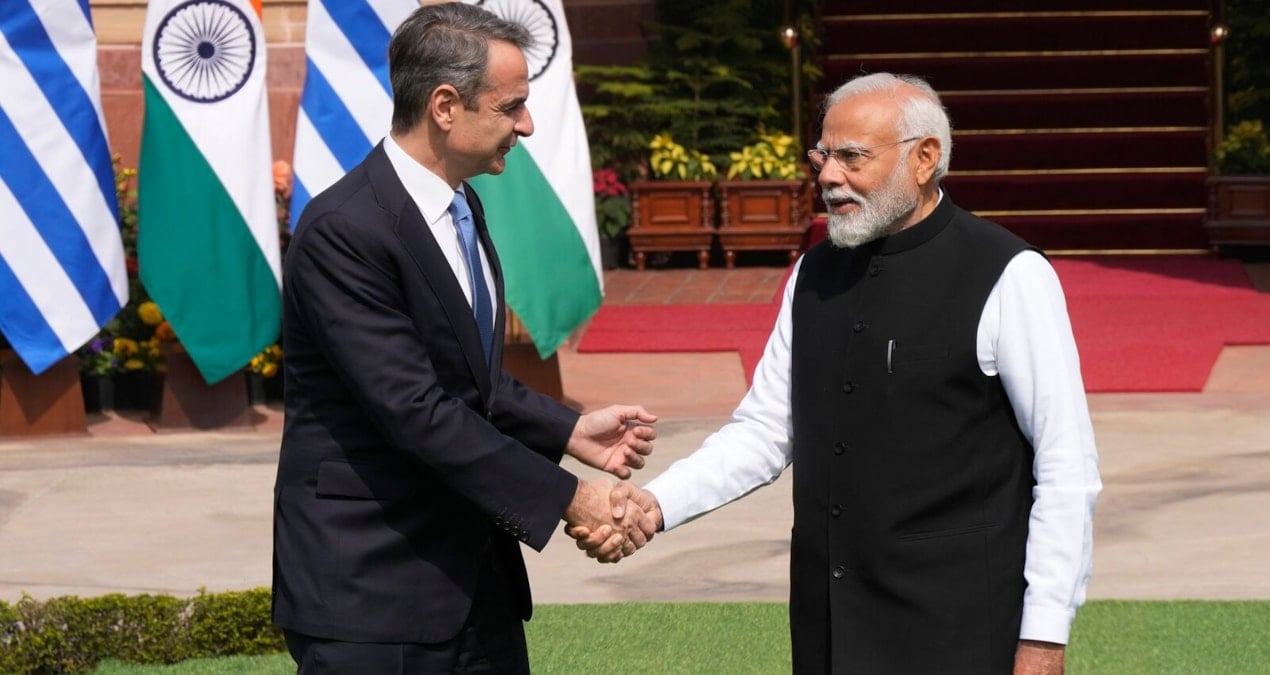
HINDUSTAN TURNS TO GREECE: A STRATEGIC SHIFT
In recent months, there has been a noticeable shift in India’s foreign policy focus, particularly towards Greece . Once seen as a steadfast partner of Turkey, India is now contemplating strategic investments in various sectors within Greece. These include defense , ports , tourism , and labor agreements . This shift comes at a time when geopolitical dynamics in the region are evolving rapidly, prompting nations to reassess their alliances.
According to reports from Ekathimerini , India’s focus has been primarily on institutions such as the Hellenic Aerospace Industry (EAB) and Hellenic Defense Systems (EAS) . This initiative follows closely on the heels of defense agreements made between Greece and Israel . Furthermore, Indian defense companies have begun to establish initial contacts with Greek authorities, indicating a willingness to forge new partnerships.
A NEW PARTNERSHIP AVENUE
Greece is open to exploring new partnerships in Asia, while India is keen on finding a long-term strategic partner in Europe. The increasing reliance of Pakistan on Turkish-manufactured weapons and drones has nudged India towards supporting Greece, perceived as Turkey’s geopolitical rival. Ekathimerini points out that this cooperation does not merely rely on the geopolitical tensions between India-Pakistan and Greece-Turkey.
Instead, the publication claims that there is a “more comprehensive and long-term strategic calculation at play.” In light of these developments, the burgeoning relationship between India and Greece could signal a significant change in the geopolitical landscape of the region.
INVESTMENTS BEYOND MILITARY
Beyond defense , India’s interests extend to several other sectors, notably Greek ports and the tourism industry . The Port of Thessaloniki is emerging as a strategic alternative to Piraeus , particularly within the framework of the India-Middle East-Europe Economic Corridor . The significance of this port has grown, especially considering the U.S.-backed initiative aims to balance China’s influence within European infrastructure.
In this context, India’s investments in Greece could have ramifications that go beyond bilateral ties, touching upon the broader canvas of global competition . These agreements stem from a memorandum of understanding signed between Eurobank and the Indian Chamber of Commerce . Moreover, the India-Greece-Cyprus Business Council has also launched activities toward the end of the previous year, facilitating further collaboration in various industries.
SEASONAL WORKERS: A NEW DIMENSION
In a unique additional facet, India is reportedly in discussions with Greece regarding a seasonal labor agreement , akin to the one established with Egypt for agricultural workers. While a formal agreement has not yet been reached, a multi-party delegation of Indian parliamentarians is expected to visit Athens , showcasing the high-level political relations between the two countries.
This development underscores the interest of both nations in broadening their scope of cooperation beyond traditional areas. Such agreements could effectively address labor shortages in Greece’s seasonal agriculture while providing employment opportunities for Indian workers.
CONCLUSIONS AND FUTURE PROSPECTS
The growing ties between India and Greece reflect a confluence of interests that extend beyond mere defense and into economic cooperation and labor agreements. The geopolitical landscape is marked by new alliances, and India’s shift from Turkey to Greece represents a significant move that could reshape traditional diplomatic relationships in the region.
India’s strategic pivot may also encourage other nations to reassess their ties and alliances as they navigate the complexities of today’s international order. The evolving situation warrants close attention, as these developments may influence both regional stability and global dynamics in the coming years.
Turkey’s premature abandonment by India marks a pivotal moment, with both countries recalibrating their foreign relations. As India turns its attention towards Greece, we may witness a series of strategic collaborations unfold, ultimately redefining the geopolitical framework of Southeast Europe and South Asia .
Ultimately, India’s newfound interest in Greece signifies not just a shift but a broader recognition of the multifaceted nature of modern diplomacy—where mutual interests may forge stronger bonds than historical alliances.
Türkiye’ye sırtını dönen Hindistan, Yunanistan’da savunma sanayii, limanlar, turizm ve işgücü anlaşmaları gibi stratejik alanlara yatırım yapmayı değerlendiriyor.
Ekathmerini gazetesinin haberine göre Yeni Delhi, özellikle Yunan Havacılık Sanayii (EAB) ve Yunan Savunma Sistemleri (EAS) gibi kurumlara odaklanmış durumda.
Bu girişim, Yunanistan’ın İsrail’le yaptığı savunma anlaşmalarından hemen sonra geldi. Hindistanlı savunma şirketleri Yunan makamlarla ilk temasları kurmaya başladı.
HİNDİSTAN KÜSTÜ, YUNANİSTAN’I SEÇTİ
Atina, Asya’daki yeni ortaklık arayışlarına açık dururken, Hindistan da Avrupa’da kendine uzun vadeli bir stratejik ortak bulma niyetinde.
Pakistan’ın Türk yapımı silah ve İHA’lara başvurması, Hindistan’ın da Türkiye’nin bölgedeki jeopolitik rakibi Yunanistan’ı desteklemesine sebep oldu.
Ekathimerini’ye göre İşbirliği, sadece Hindistan-Pakistan ile Yunanistan-Türkiye gerilimleri arasında kurulan jeopolitik paralelliklere dayanmıyor.
Gazete, ‘daha kapsamlı ve uzun soluklu bir stratejik hesaplama söz konusu’ diye yazdı.
SADECE ASKERİ DEĞİL
Savunma dışında, Hindistan’ın ilgi gösterdiği diğer alanlar arasında Yunan limanları ve turizm sektörü bulunuyor.
Selanik Limanı, Pire’ye alternatif stratejik bir merkez olarak öne çıkıyor. Özellikle Hindistan-Ortadoğu-Avrupa Ekonomik Koridoru kapsamında bu limanın rolü artmış durumda.
Amerika Birleşik Devletleri’nin desteklediği bu koridor, Çin’in Avrupa altyapısındaki etkisini dengelemeyi hedefliyor.
Bu bağlamda Hindistan’ın adımı sadece ikili ilişkilere değil, küresel rekabet düzenine de temas ediyor.
Bu anlaşmalar, Eurobank ve Hindistan Ticaret Odası arasında imzalanan bir mutabakat zaptına dayanıyor.
Özel sektör cephesinde Hindistan-Yunanistan-Kıbrıs İş Konseyi geçen yılın sonlarında faaliyete geçti.
İŞÇİ BİLE GÖNDERECEKLER
Tarım işçileri için Mısır’la yapılan anlaşmaya benzer biçimde, Yunanistan’ın Hindistan’la mevsimlik işçi anlaşması yapmak üzere görüşmeler yürüttüğü belirtiliyor.
Ancak henüz somut bir anlaşma sağlanmış değil. Bu hafta Atina’ya gelmesi beklenen Hindistan milletvekillerinden oluşan çok partili heyet, iki ülke arasındaki siyasi ilişkilerin yüksek seviyede seyrettiğini bir kez daha gösterecek.