
Smart Dental Floss: A Revolutionary Health Monitoring Tool
In the realm of health technology, innovations are crucial for improving our understanding of well-being. One of the most promising breakthroughs comes from the Tufts University, where researchers are developing a smart dental floss that can measure cortisol levels in saliva. This small-scale yet impactful technology aims to revolutionize stress monitoring and enhance preventive health strategies.
Transforming Daily Routines into Diagnostic Tools
Imagine a world where your everyday dental routine not only keeps your mouth clean but also monitors your stress levels. Thanks to Sameer Sonkusale, a professor at Tufts University, this is now a reality. This smart dental floss is designed to easily integrate into daily habits, alleviating any additional stress. By leveraging the presence of cortisol in saliva, the floss provides a practical method for tracking health.
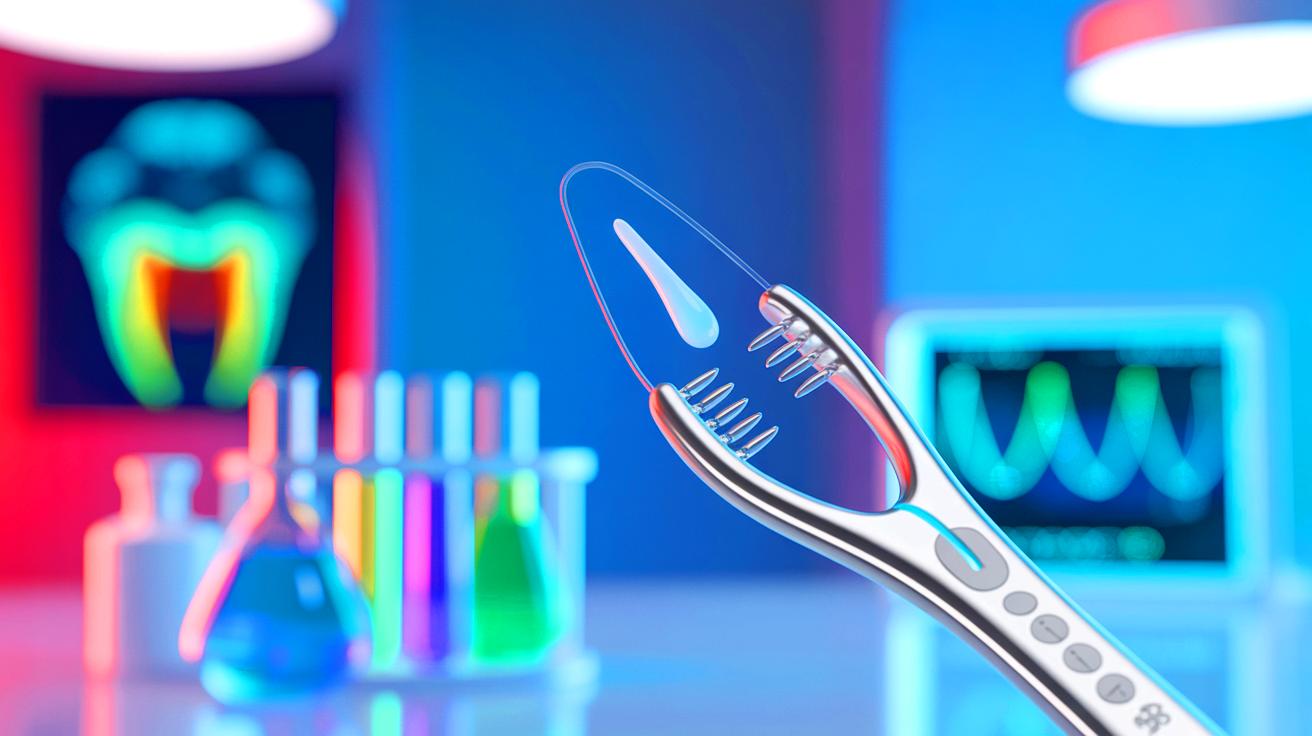
The floss functions through capillary action, allowing saliva to pass through it and into a series of electrodes located in the handle. These electrodes are reliably designed to detect cortisol levels, providing users with real-time insights into their stress status. This self-monitoring capability represents a significant leap forward in health technology.
A Look at How the Sensor Works
The secret behind the intelligent dental floss lies in its sophisticated sensor technology. The team at Tufts has utilized electrochemical molecularly imprinted polymers (eMIPs), a method pioneered nearly three decades ago. This process involves crafting a polymer around a cortisol molecule. Once the molecule is removed, the polymer retains an imprint of its form, enabling it to selectively capture new cortisol molecules.
The advantages of using eMIPs are numerous. They are not only chemically accurate but also cost-effective, reducing expenses associated with traditional antibody-based sensors. This technology is adaptable and can potentially expand its capabilities to detect various biomarkers in saliva, including hormones, glucose, and even markers for cancer.
Monitoring vs. Diagnosing: Understanding Limitations
While the smart dental floss is a groundbreaking advancement, it is vital to clarify its purpose. This device is not intended to diagnose medical conditions. Blood tests continue to be the gold standard for such purposes. However, it serves as an effective tool for health monitoring. Once a diagnosis is made, monitoring cortisol levels through dental floss could help track cardiovascular health and other conditions, enabling timely medical interventions when necessary.
The ease of use combined with effective monitoring presents a novel approach to preventive healthcare. The Tufts team is actively working on the commercial aspects of this promising innovation, aiming to make health monitoring accessible to a broader audience.
A New Era in Health Monitoring
This smart dental floss introduces a transformative shift in how we approach healthcare. By allowing us to monitor several biomarkers from saliva samples, it provides a comprehensive view of our health status. Researchers are already contemplating expanding the technology’s scope to facilitate the simultaneous detection of multiple substances.
Published in ACS Applied Materials and Interfaces, the study underscores the potential for this new tool. Continuous development may soon allow smart dental floss to become a cornerstone of preventive medicine, significantly altering our health management approach.
As this technology moves towards public availability, it raises questions about its integration into daily life. How will these advancements influence our understanding of well-being and stress management? What will public acceptance look like, and how will it transform our relationship with health?
The possibilities are endless, and they open the doors to a future where technology seamlessly blends into our daily lives, improving our understanding of health and well-being.
In conclusion, the innovative smart dental floss represents a promising avenue towards enhanced health monitoring. The unique combination of daily habits and sophisticated technology promises to transform the field of preventive healthcare.
| EN BREF |
|
In a world where chronic stress has become a silent epidemic, the scientific community is actively seeking innovative solutions. Stress, often underestimated, can lead to severe health problems such as cardiovascular diseases, immune disorders, depression, and anxiety. The central hormone in this response is cortisol, which is frequently discussed in relation to well-being. However, its role is often misunderstood. The ability to monitor cortisol levels could revolutionize our understanding of health, but current methods remain largely inaccessible. This is where the groundbreaking innovation of smart dental floss from Tufts University comes into play.