
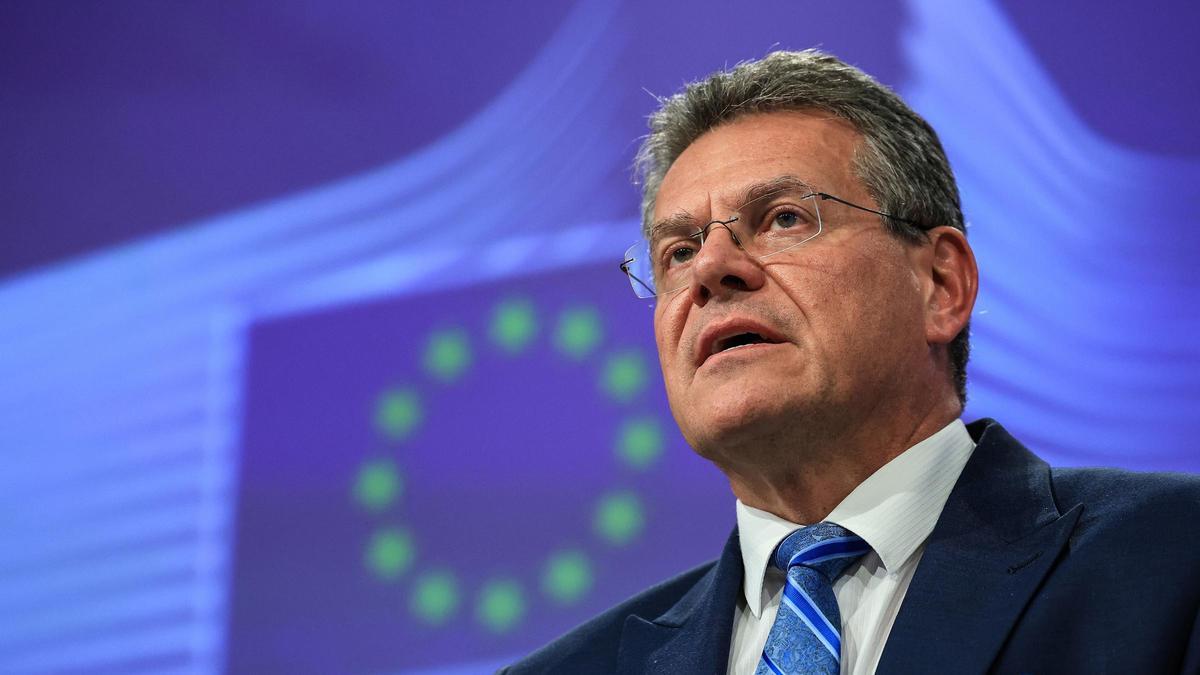
EU Trade Commissioner Affirms Commitment to Dialogue with the U.S.
The European Union’s Trade Commissioner, Maros Sefcovic, has recently expressed his full commitment to reaching a mutually beneficial agreement with the United States. This declaration comes in light of recent threats from U.S. President Donald Trump, who has threatened to impose a 50 percent tariff on European products starting July 1st.
Good Faith Efforts in Trade Relations
In a statement on the social media platform X, Sefcovic emphasized that the European Commission remains willing to work in good faith. He remarked that the trade relationship between the EU and the U.S. is unparalleled and should be guided by mutual respect rather than threats. Sefcovic further indicated that the EU is prepared to defend its interests in the face of these challenges. This sentiment reflects the EU’s longstanding commitment to a balanced and respectful trade relationship.
Recent Communications with U.S. Officials
These statements from Sefcovic were made following a conversation with U.S. Secretary of Commerce Howard Lutnick and the U.S. representative in this area, Jamieson Greer. This high-level communication indicates that both parties are invested in dialogue, despite the current tensions surrounding potential tariffs. The discussions are critical as they mark a crucial juncture in the trading relationship between two of the world’s largest economies.
Concerns Over Tariffs and Trade Negotiations
Just hours earlier, President Trump had called for a 50 percent tariff on European products, expressing his belief that trade negotiations between the two parties are "going nowhere." Trump’s comments signal a significant alteration in the dynamics of transatlantic trade relations. He has encouraged American companies to relocate their operations to the United States in order to avoid these impending tariffs.
The Impact of Tariffs on Global Trade
Tariffs can often lead to retaliation, and the imposition of such a steep tariff on European goods could escalate tensions significantly. International trade experts warn that such moves could further complicate an already intricate web of global trade agreements. High tariffs typically result in increased costs for consumers, reduced sales for producers, and broader economic ramifications that could stifle growth in both the U.S. and EU markets.
The Role of Negotiation in Trade Agreements
Negotiations in global trade are crucial for maintaining healthy economic relations. Sefcovic’s eagerness to reaffirm the EU’s commitment can be seen as a strategic move to engage the U.S. in constructive dialogue. Trade agreements often require patience and compromise, and both parties must balance their interests in order to foster a cooperative trading environment.
Long-Term Consequences of Trade Policies
The ongoing tensions highlight the fragility of international trade relations. A move towards protectionism could lead to long-term consequences that might reshape the economic landscape. Trade wars can precipitate a cycle of retaliation, which could ultimately alienate consumers and disrupt global supply chains.
Mutual Respect as Foundation for Trade
As highlighted by Sefcovic, the foundation of a stable trade relationship lies in mutual respect. Effective communication between the EU and the U.S. is essential not just for economic reasons, but also for diplomatic relations. Building trust and understanding can lead to better cooperation and joint initiatives, fostering a more profound partnership that could benefit both economies.
The Importance of Open Dialogue
Open and honest dialogue can pave the way for solutions to current disputes. Engaging directly with U.S. officials indicates that the EU is serious about addressing grievances without resorting to further escalation of conflict. This willingness to communicate could serve as a model for other nations grappling with trade-related tensions.
Looking Forward: The Future of EU-U.S. Trade Relations
As both sides navigate this complex situation, the potential for future collaboration remains viable. If both parties can find common ground, they may set the stage for a new chapter in EU-U.S. trade relations. This scenario not only includes stabilizing the current situation but also the possibility of engaging in broader discussions that encompass technology, environmental standards, and labor rights.
Through a sustained commitment to dialogue and respect, the trade relationship between the EU and the U.S. can evolve to be more resilient and mutually beneficial in the long run. The upcoming months will be critical in determining the path forward, requiring the participation and cooperation of stakeholders on both sides of the Atlantic.