
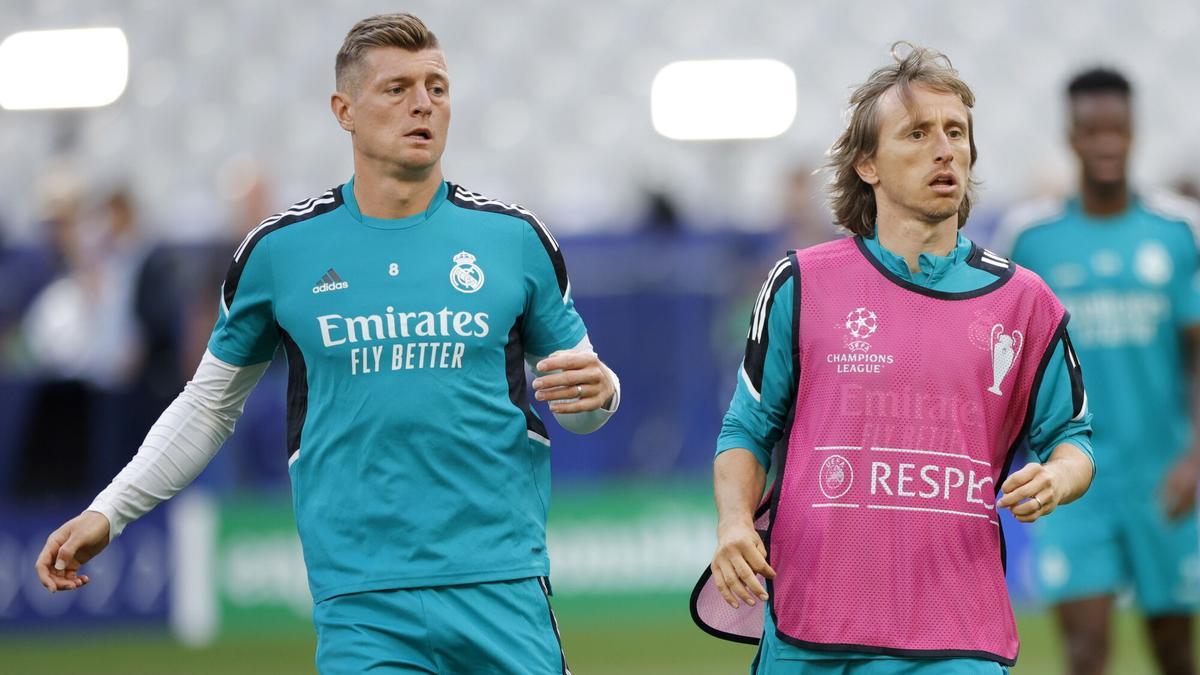
The End of an Era: Real Madrid’s Midfield Transition
With Luka Modric’s departure, a significant chapter in Real Madrid’s history comes to a close. The iconic midfield trio of Modric, Toni Kroos, and Casemiro brought immense success to the club, dominating crucial matches, particularly in Europe. This transformation symbolizes not just a shift in personnel, but the end of a formidable era that defined an entire generation of football at the Santiago Bernabéu.
The Impact of Modric’s Departure
While Modric’s exit may not induce a dramatic upheaval due to his decreased prominence last season, it undeniably magnifies the loss felt following Kroos’ departure just a year ago. Their complementary styles allowed Real Madrid to control the game’s tempo and dictate play effectively. This transition necessitates a new approach by the club’s management to revamp the team’s midfield dynamics.
The Need for a Playmaker
Real Madrid’s urgent requirement for a playmaking midfielder cannot be overstated. Last season exposed glaring deficiencies in this area. Fede Valverde, Eduardo Camavinga, and Aurelien Tchouameni do not naturally fit this role. Jude Bellingham has transitioned into a more goal-oriented player, making it imperative for the team to secure a talented playmaker capable of linking the attack while maintaining defensive responsibilities.
Key Decisions Ahead
The club faces a critical decision regarding its next playmaker. Competing at the level of Modric and Kroos may not be realistic, but the individual must possess enough talent to orchestrate matches effectively. This new midfielder will need to unify a squad filled with volatile attacking talents who may struggle to work cohesively on the defensive end. Finding such a player in the upcoming transfer window will be a challenging but necessary task.
The Dream That Is Rodri
Discussing suitable candidates leads us to Rodri—a name often highlighted as the ideal playmaker. His diverse skill set allows him to excel both offensively and defensively, addressing many of Madrid’s current weaknesses. However, securing Rodri, a pivotal player for Manchester City, remains a distant dream. With a contract running until June 2027 and a market value of approximately €130 million, Madrid’s aspirations for Rodri may prove impractical despite his undeniable talent.
Alternatives at Tier A: Vitinha, Barella, Enzo Fernández, and Mac Allister
In exploring other viable options, several players stand out as potential solutions, albeit with considerable price tags:
Vitinha
Vitinha, valued at roughly €60 million, has emerged as one of Europe’s elite midfielders since joining Paris Saint-Germain. His remarkable technical skills and physical presence could provide Real Madrid with the creativity it desperately needs. However, his long-term contract complicates any potential transfer.
Nicolò Barella
Barella of Inter Milan is another enticing prospect. A robust player with a similar market value to Vitinha, he brings a wealth of experience and tactical flexibility. Like Vitinha, securing his services will be an uphill battle due to his current club’s insistence on retention.
Enzo Fernández
Enzo Fernández is exceptional with his vision and passing ability, having recently secured a hefty transfer to Chelsea. He represents another missing piece in Madrid’s midfield puzzle, yet Chelsea appears unwilling to entertain offers for the 24-year-old.
Alexis Mac Allister
Finally, Alexis Mac Allister from Liverpool presents a unique skill set that combines creativity and work rate. Despite links to a potential move, Liverpool’s current stance limits Madrid’s options.
Tier B: More Feasible Options: Reijnders, Ederson, Stiller, and Hugo Larsson
Moving further down, Tier B presents prospects that may be more feasible to acquire. Reijnders, from AC Milan, is already drawing interest from multiple clubs. He has demonstrated the capacity to be an impactful playmaker, albeit not yet at the same level as those in Tier A. Ederson, still growing into his role, is attracting attention from various European clubs as well.
Stiller of Stuttgart offers a valuable skill set reminiscent of Kroos’s long-range passing while providing the ability to orchestrate from deeper positions. Lastly, Hugo Larsson, a promising 20-year-old, could pique Madrid’s interest as he showcases impressive technical abilities and vision, although his inexperience might be a concern.
Tier C: The Offensive Options
Finally, Tier C suggests more attacking-minded options who could function in an advanced supporting role. While not your classic playmaker, these players can flourish in a setup that emphasizes creativity and attacking fluidity. Florian Wirtz, for instance, could step in as an offensive midfielder, influencing the game from higher up the pitch.
In conclusion, Real Madrid’s midfield transformation is imperative for the club aiming to regain its dominance. Although players like Modric and Kroos have departed, the future remains bright with new prospects emerging. However, the right decisions in recruiting playmakers and midfielders will be pivotal in shaping the team’s successful comeback in the coming seasons. As the club navigates this transitional phase, fans and pundits alike will watch closely, hopeful for strategic acquisitions that will fortify Madrid’s midfield and inspire a new generation of success.