
Understanding the Crime Narratives in South Africa
In recent statements regarding South Africa’s crime dilemma, the Minister of Police, Senzo Mchunu, addressed the controversial claims made by former U.S. President Donald Trump. Mchunu pointed out that discussions concerning crime in South Africa have taken a disturbing turn, noting that the term "genocide" has been unnecessarily and forcefully introduced into public discourse.
The Reality of Farm Attacks
Mchunu clarified that the South African government does not categorize individuals by race as a principle. However, when analyzing the context of the genocide claims related to white farmers, he underscored a critical statistic: among the six individuals killed in farm attacks in 2025, five were Black South Africans. He emphasized that the history of farm murders in the nation has often been reported in a skewed and imbalanced manner. “The truth is that more Black South Africans have lost their lives in farm attacks over the years,” he stated, highlighting the need for an accurate representation of the situation.
Refuting Claims of Land Expropriation
Mchunu firmly rejected Trump’s assertions regarding the alleged land grabs from white farmers, asserting that the South African government does not support such policies. He explained that the acts of land occupation by some landless South Africans should not be conflated with land expropriation. "These acts are born out of desperation rather than any formal policy to seize land," he articulated, calling for a more nuanced understanding of the socio-political environment in South Africa.
Misleading Visual Evidence
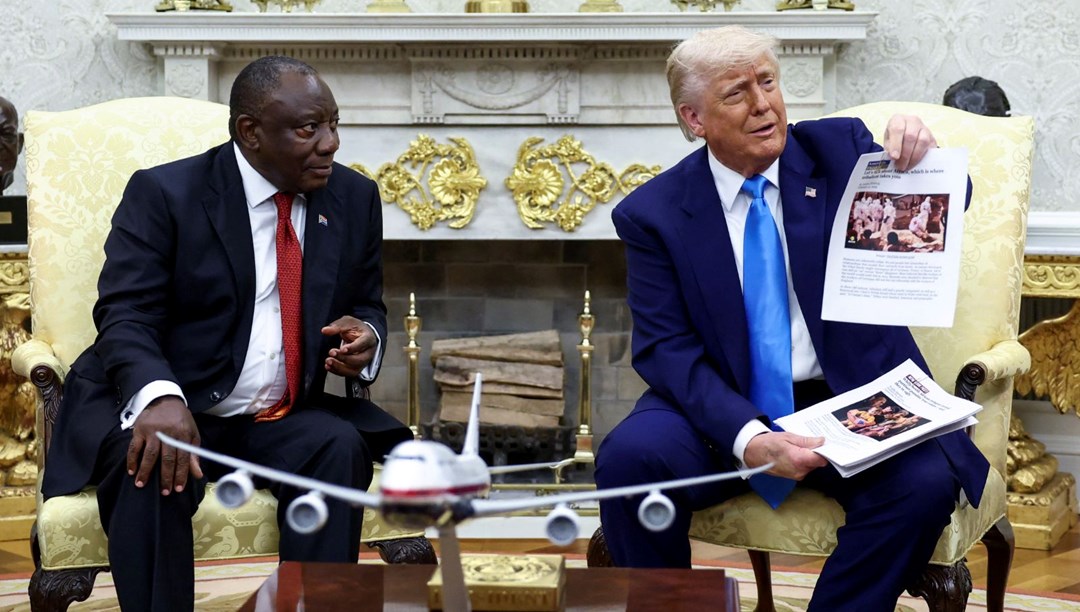
The Minister specifically addressed a video clip presented by Trump as "evidence" of genocide. The footage depicted hundreds of crosses purportedly marking white farmers’ graves, but Mchunu stated that these images do not represent the truth. He clarified that the crosses were a symbolic representation of murders that occurred over several years on farms, particularly following a high-profile murder case in KwaZulu-Natal in 2020. “They are not graves; they symbolize the tragic loss of lives resulting from crimes against individuals working in agriculture,” he said, emphasizing the need for factual integrity.
Respect for International Relations
Mchunu conveyed respect for the United States and its citizens, including President Trump, but he was unequivocal about the genocide narrative. "We have no respect for this genocide story—not at all. It is entirely unfounded and lacks evidence," he asserted, showcasing the South African government’s commitment to combating misinformation.
The Crime Rates in South Africa: A Harsh Reality
South Africa continues to grapple with alarming crime statistics, showcasing a pressing public safety crisis. Roughly 26,232 murders were recorded in the country in 2024, which translates to around 72 murders per day. Statistically, the first three months of this year have seen 5,727 murders, along with over 13,000 sexual assaults and more than 50,000 robbery incidents reported.
The Impact of Crime Across All Races
In response to Trump’s claims regarding a supposed genocide targeting white farmers, the South African government pushed back firmly, arguing that crime impacts individuals across racial and ethnic lines. Mchunu emphasized that the violence and crime in the country know no racial boundaries, underscoring the shared hardships faced by many South Africans regardless of their backgrounds.
A Call for Unity and Clarity
Minister Senzo Mchunu’s comments bring to light the complexities surrounding South African crime and the often-crude narratives that emerge from international perspectives. His focus on factual evidence reaffirms the need for a comprehensive understanding of the nation’s challenges. The narrative pushed forth by certain political figures abroad needs to be contextualized against the backdrop of a country still in recovery from years of social inequity and injustice.
Moving Forward with Honesty
As South Africa navigates the challenging landscape of crime, a drive for truthful dialogue is essential. Mchunu advocates for open conversations grounded in authentic experiences rather than hearsay. Addressing underlying issues such as socio-economic disparity and historical injustices is critical in moving forward to create a safer environment for everyone.
In conclusion, creating a balanced narrative about crime in South Africa compels audiences to differentiate between politically charged statements and the lived realities of citizens. As the country persists in its journey towards healing and unity, the importance of factual discourse cannot be overstated.