
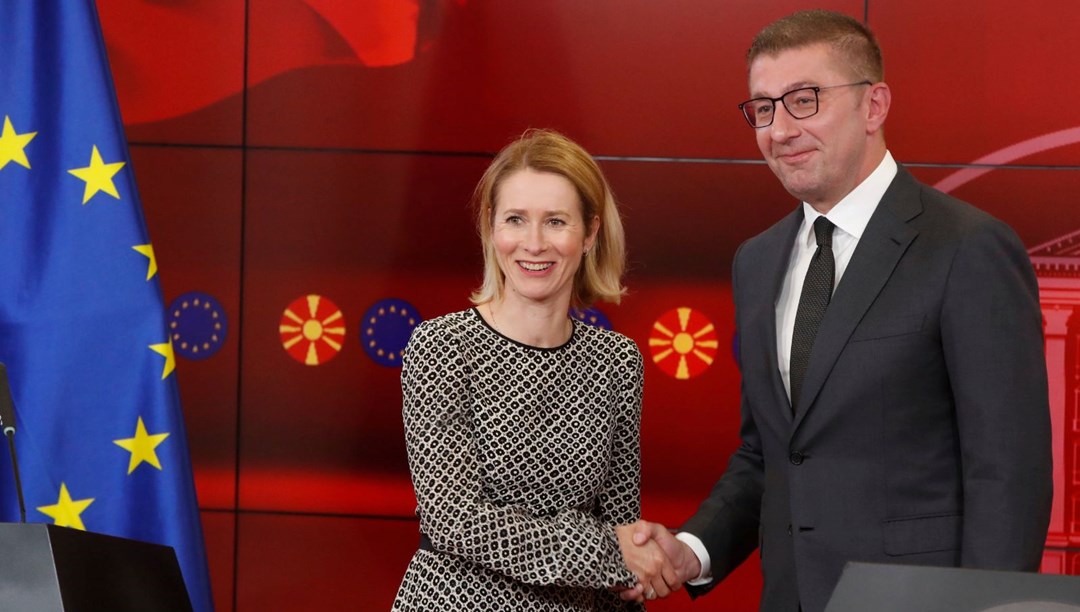
EU’s Commitment to North Macedonia: Kallas’s Visit to Skopje
The recent visit of Josep Borrell , the European Union’s High Representative for Foreign Affairs and Security Policy, to Skopje , the capital of North Macedonia, highlights the EU’s commitment to fostering stronger ties with the Balkan region . This visit, which is part of a broader Balkan Countries Tour, involved important dialogues focused on security , cooperation , and the European integration process.
Meeting with Prime Minister Hristijan Mickoski
During his visit, Kallas met with Prime Minister Hristijan Mickoski . They held discussions that centered around the path North Macedonia is taking toward joining the European Union . In a joint press conference after their meeting, Kallas emphasized that “North Macedonia belongs to the EU,” affirming the EU’s steadfast support for the country’s membership aspirations.
The sentiment shared by Kallas reflects the EU’s strategic aim for stability in the Western Balkans . “The integration of the Western Balkans into the EU is the best recipe for achieving peace and security throughout the region,” he asserted. This statement underscores the EU’s commitment to not only welcoming North Macedonia but also encouraging its neighbors to follow suit in the journey toward EU integration .
Importance of EU Support
Prime Minister Mickoski highlighted the significance of Kallas’s visit, stating that it sends a clear message that the EU has not forgotten the region. “This is an important message from the EU that they are looking out for this part of Europe,” Mickoski noted. He reiterated the need for a more explicit message and better support from the EU for North Macedonia.
Mickoski stated, “We belong to the EU because we have been building a democratic society for decades and have established good relations with our neighbors.” This assertion not only reflects North Macedonia’s commitment to democratic principles but also emphasizes the importance of regional stability and cooperation, which are essential factors for the EU’s enlargement strategy.
Further Engagements during Kallas’s Visit
Kallas’s itinerary included meetings with other key figures, such as Timço Mucunski , the Minister of Foreign Affairs and Trade. Their discussions were aimed at initiating a security and defense dialogue between the EU and North Macedonia, which holds critical importance in today’s geopolitical climate.
This meeting is particularly significant, given the ongoing global security challenges and the necessity for strong collaboration between EU member states and candidate countries. Kallas and Mucunski participated in an event at the Ministry of Foreign Affairs aimed at reinforcing the strategic partnership between the EU and North Macedonia.
Engagement with Defense Minister Vlado Misajlovski
Another important aspect of Kallas’s visit was his meeting with Defense Minister Vlado Misajlovski . This included a visit to the Balkan Medical Task Force’s headquarters in Skopje. The collaborations regarding defense not only underline North Macedonia’s role in regional security but also offer a pivot towards greater military cooperation within the framework of the EU’s Common Security and Defense Policy .
The focus on defense signifies a concerted effort to integrate North Macedonia further into the European security structures, which is crucial as the EU seeks to strengthen its capabilities in a rapidly changing geopolitical landscape.
Previous Visits: A Broader Perspective
Kallas had previously visited Serbia and Kosovo , showcasing a broader approach to engaging with the entire Balkan region. His trip aims to underscore the EU’s commitment to stabilizing the area, which has historically been marred by conflicts and challenges. The focus on these countries alongside North Macedonia indicates the EU’s strategy to encourage cooperation and dialogue across the region.
Such visits signal a renewed vigor in the EU’s engagement policy, aiming to bolster ties with the entirety of the Balkans. Kallas’s journey is a reflection of the EU’s ongoing efforts to support democratic transitions and processes that promote peace and security in the region.
Conclusion
The visit of Kallas to Skopje symbolizes a pivotal moment for North Macedonia and its aspirations for EU membership. As Kallas reiterated, the path toward integration should be met with unyielding support from the EU. The emphasized importance of regional stability and collaborative security approaches lays a foundation for stronger ties moving forward. North Macedonia stands at a crucial juncture that could determine its future within the European Union , encapsulating the hope for peace, stability, and prosperity in the Balkans and beyond.